
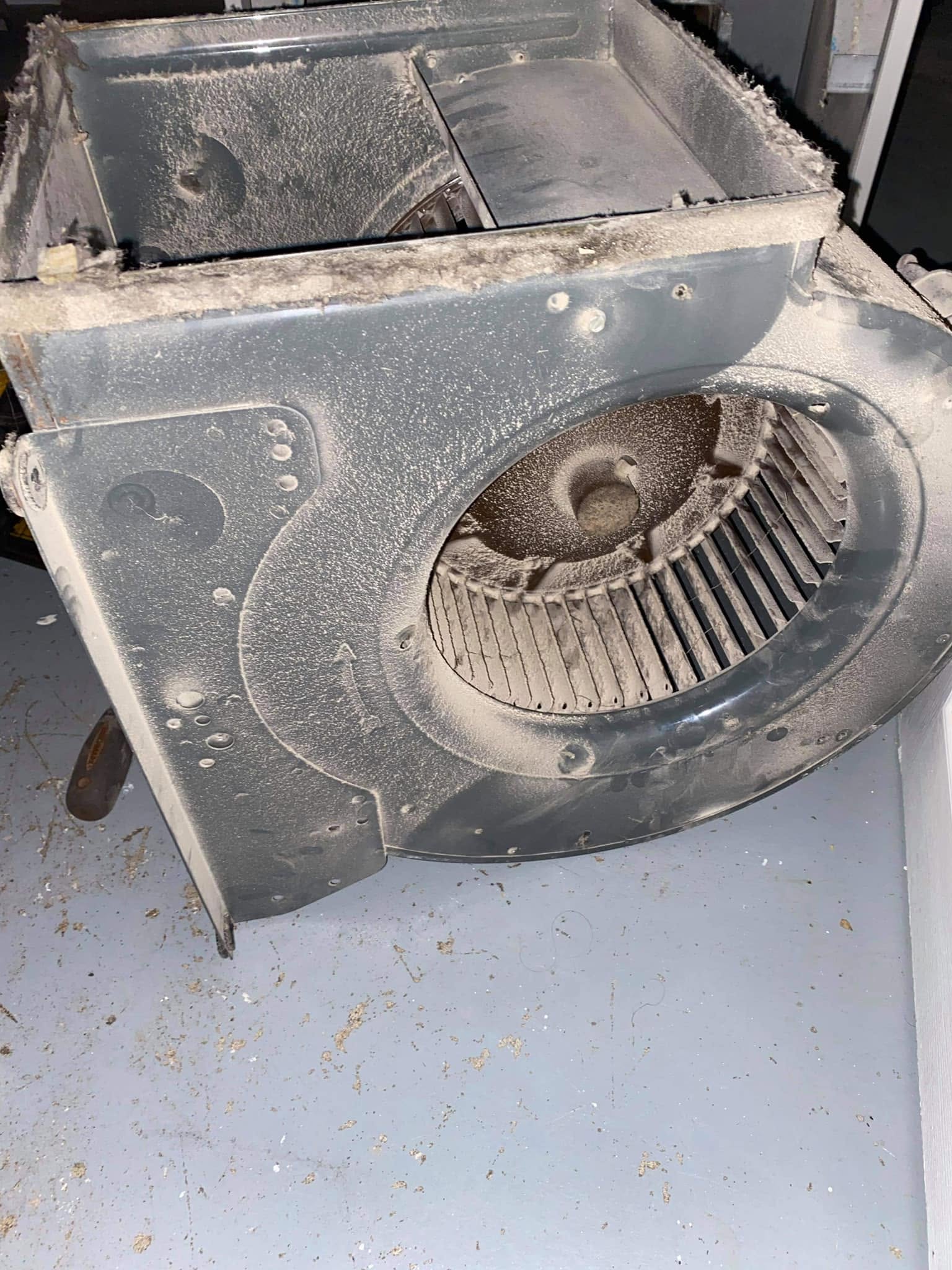
If you manage a commercial building in Saskatchewan, your HVAC system is doing more than keeping tenants comfortable — it’s also collecting a slow buildup of lint, dust, and debris that most property managers never think about until something goes wrong. That buildup isn’t just a housekeeping issue. The National Fire Protection Association identifies dust, fiber, and lint as a documented ignition source in structure fires, and it’s an indoor air quality factor too. Reliable hvac duct cleaning services are one of the more overlooked items on a commercial maintenance checklist, and skipping them long enough tends to catch up with a building all at once.
Quick Answer: Most commercial buildings in Saskatchewan need professional duct cleaning every 2-3 years, though high-occupancy spaces (restaurants, medical offices, daycares) and buildings with older or undersized HVAC systems often need it closer to annually. Lint and dust buildup inside commercial ductwork can become a fire-load and indoor air quality concern that may come up during maintenance, insurance, or safety reviews.
Why lint and dust buildup is a fire-risk issue
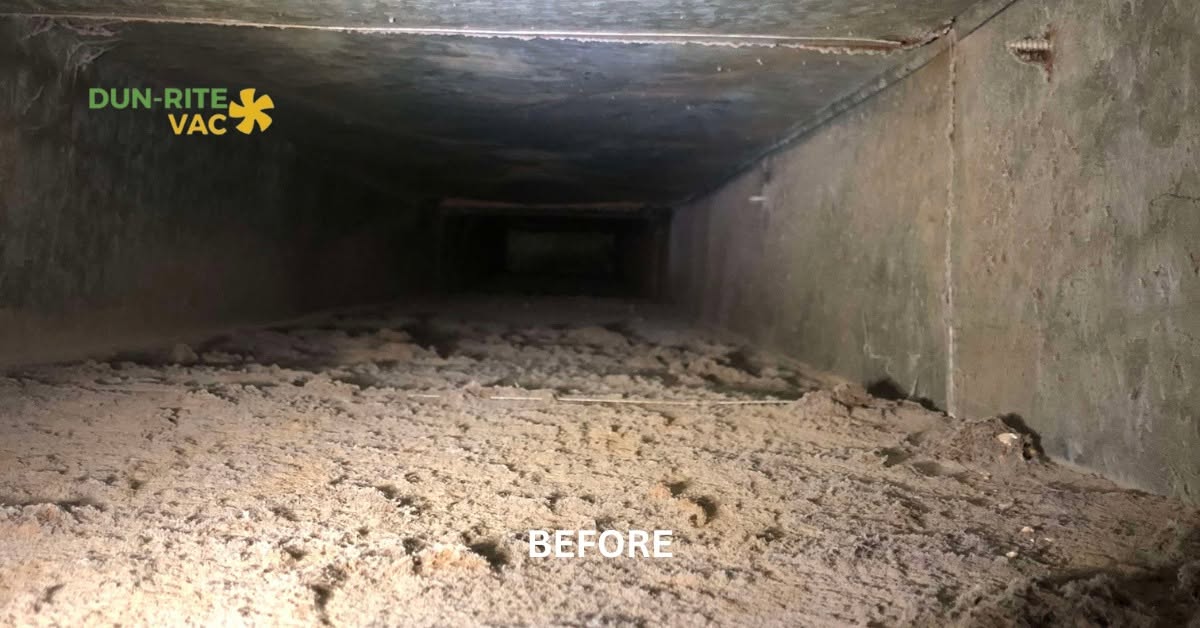
Dust and lint are combustible material, and commercial duct systems accumulate it constantly — from foot traffic, paper products, fabric, and whatever process is happening inside the building. In a residential system that buildup is mostly an air-quality nuisance. In a commercial system running longer hours, often with rooftop units, mechanical rooms, and return runs that don’t get looked at from one year to the next, it becomes fuel sitting next to heat-producing equipment.
Our technicians regularly find the heaviest buildup in spots no one walks past day to day: behind grilles in mechanical rooms, inside long horizontal duct runs above drop ceilings, and around rooftop unit connections exposed to Saskatchewan wind and dust. None of that is visible during a normal walkthrough, which is exactly why it tends to go unnoticed until a fire marshal, insurer, or maintenance audit flags it.
Tenant and employee health liability
Beyond the fire-risk side, a dirty duct system recirculates whatever has built up inside it — dust, allergens, and in older or humid pockets of a building, mold spores. For a landlord or property manager, that’s a direct line to tenant complaints, sick-day patterns, and in some cases formal liability if air quality issues can be traced back to neglected mechanical systems.
This is particularly relevant in multi-tenant office buildings, medical or daycare spaces, and older commercial buildings across Yorkton, Saskatoon, Regina, and Weyburn where the HVAC system may be original to the building. If tenant health concerns are pointing toward contamination rather than just dust, that’s a separate conversation from a standard cleaning — our HVAC sanitization service addresses mold, bacteria, and virus removal specifically, and it’s not a substitute for a physical duct cleaning, just a complement to it when the situation calls for it.
How often commercial HVAC ducts actually need cleaning
There’s no single number that applies to every building, and we’d rather tell you that upfront than oversell a schedule that doesn’t match your situation. As a general guideline:
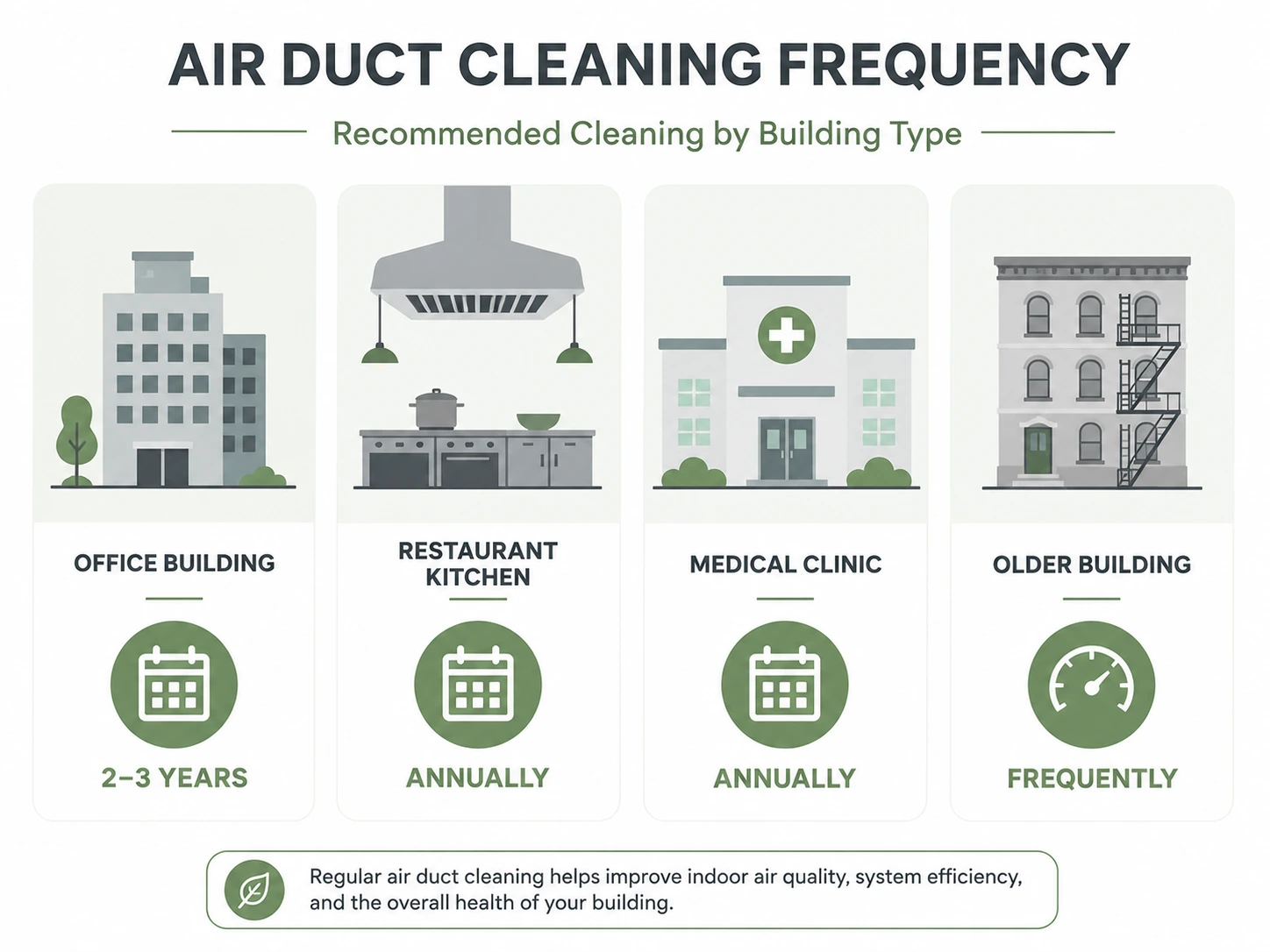
- Standard office or retail space: every 2-3 years
- High-occupancy spaces (restaurants, medical clinics, daycares, fitness facilities): closer to annually, due to higher particulate load and stricter tenant-health expectations
- Older buildings or units with undersized/older HVAC equipment: may need more frequent attention, since smaller systems accumulate buildup faster relative to airflow
- Buildings heading into a Saskatchewan winter with months of continuous heating ahead benefit from a pre-season cleaning, since that’s when systems run hardest and longest
If a building has gone through a recent renovation, had a pest issue, or sat partially vacant, those are also good triggers to move a cleaning up rather than wait out the standard interval.
What a commercial cleaning visit covers
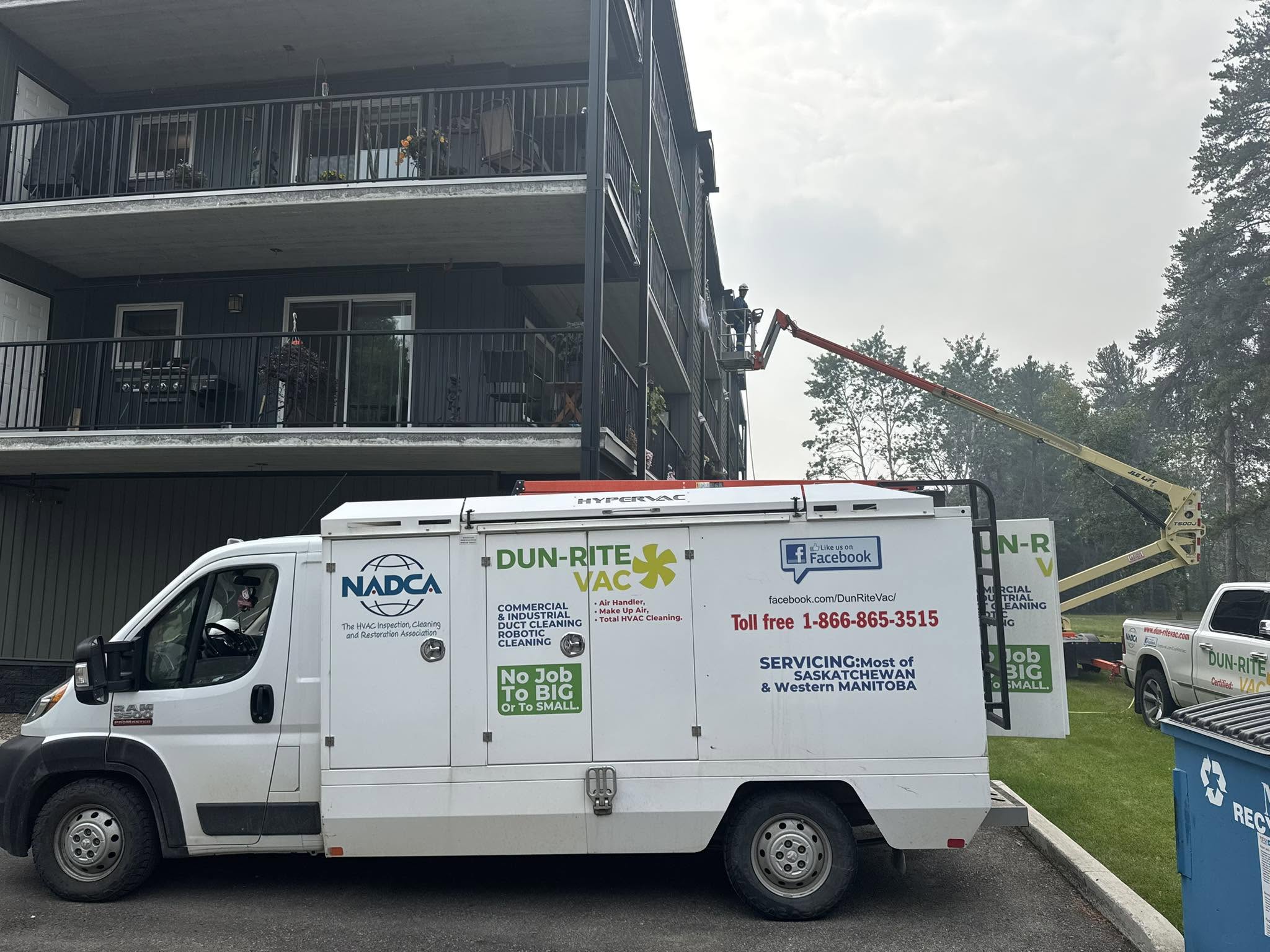
Our technicians are ASCS-certified and follow NADCA’s commercial cleaning standards, which matters more in this industry than people often realize — duct cleaning has a real reputation problem with operators who do a quick vacuum-and-go and call it done. A proper commercial visit includes a full inspection of accessible ductwork as part of the cleaning process, source removal of debris using negative-pressure equipment, and attention to the mechanical room and rooftop unit connections where buildup tends to concentrate.
We’ve been doing this work as a family-run, NADCA-certified company since 1998, with more than 50,000 completed jobs and an A+ BBB rating across Saskatoon, Yorkton, Regina, and Weyburn — enough volume to know that commercial systems each have their own quirks, and that a cleaning plan should be built around your building’s actual layout and occupancy, not a generic checklist.
What’s included in professional hvac duct cleaning services
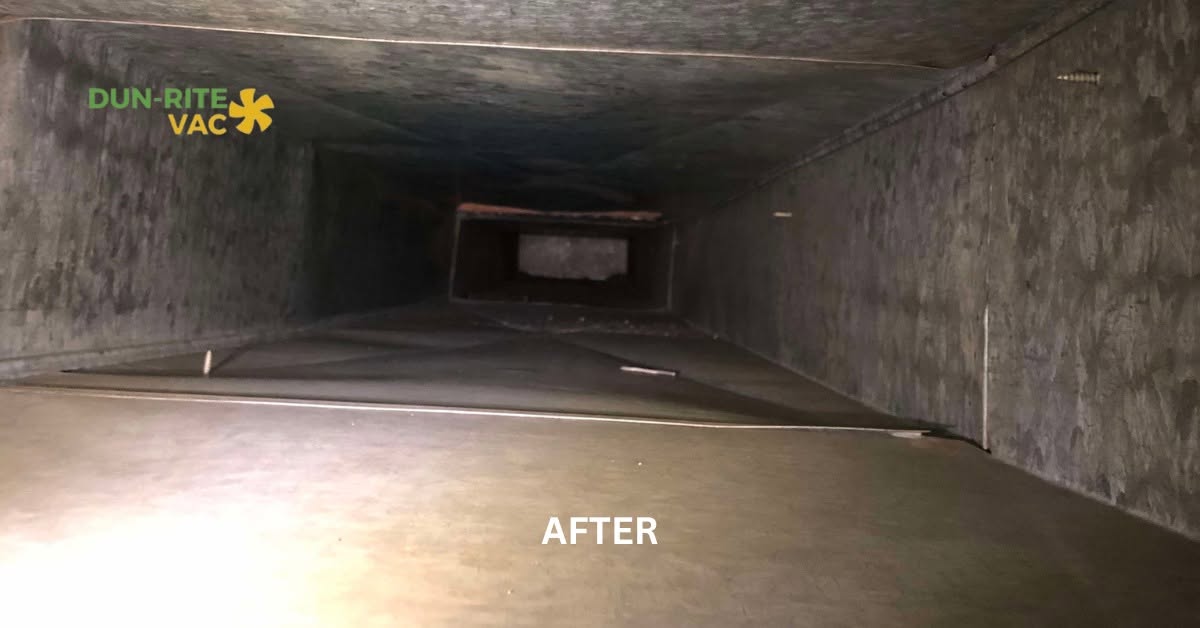
“Duct cleaning” means different things depending on who you call, which is part of why the industry has a trust problem. A complete commercial job covers the full system, not just the parts that are easy to reach:
- Supply and return ducts — the full run, not just the sections visible from a drop-ceiling access panel
- Registers, grilles, and diffusers — where buildup is most visible to tenants and employees
- Air handlers and blower compartments — central points where debris accumulates and recirculates
- Rooftop unit connections — exposed to Saskatchewan wind, dust, and weather year-round
- Source removal of debris using negative-pressure equipment, rather than just dislodging it further into the system
Our technicians work through accessible ductwork as part of the cleaning itself, so any problem areas — damaged sections, signs of pests, or moisture — get flagged on the spot rather than requiring a separate visit.
FAQ
Does duct cleaning count toward fire code compliance?
Duct cleaning itself isn’t a fire code certification, but combustible dust accumulation in confined spaces like ductwork is a recognized fire-hazard category under NFPA standards. If you’ve been asked to address ductwork as part of an inspection or insurance requirement, a cleaning is the right starting point.
Can duct cleaning happen without disrupting business hours?
In most cases, yes. We work around occupied buildings regularly and can schedule around your operating hours — this is something we sort out directly with you when booking, since it depends on building access and how the ductwork is laid out.
Is dryer vent or rooftop unit cleaning included in a standard commercial duct cleaning?
Rooftop unit connections are part of a standard commercial duct system cleaning. Dryer vents are a separate system with their own fire-risk profile — if your building has on-site laundry facilities, that’s worth scoping separately as part of the same visit.
What’s the difference between cleaning and sanitization for a commercial system?
Cleaning physically removes dust, lint, and debris from the ductwork. Sanitization treats microbial contamination — mold, bacteria, or virus presence — and is typically recommended in addition to a cleaning, not instead of one, when there’s a specific air-quality concern.
What determines the cost of hvac duct cleaning services for a commercial building?
Pricing depends mainly on building size, how accessible the ductwork is, occupancy type, and how much buildup or contamination is present. A straightforward single-tenant office runs differently than a multi-unit building with restricted rooftop access — we’ll always give you a firm quote after seeing the system rather than guessing over the phone.
Most property managers don’t think about ductwork until a tenant complaint or an inspection forces the issue — and by then it’s usually overdue. If it’s been a while since your building’s HVAC ducts were last cleaned, our team can take a look and tell you honestly whether it’s urgent or can wait. We back every job with a 100% Satisfaction Guarantee. You can also see the full scope of our commercial duct cleaning services or learn more about our broader furnace and duct cleaning process.