
Quick Answer: There’s no fixed calendar requirement for commercial HVAC duct cleaning — the EPA recommends cleaning based on system condition rather than a set interval, such as visible mold, pest infestation, or debris heavy enough to restrict airflow. In our experience servicing buildings across Saskatchewan, most standard office or retail spaces reach that point somewhere in the 3–5 year range, but buildings with heavier occupancy, older systems, or tenant complaints often get there sooner.
How Lint and Dust Buildup Turns Into a Fire Code Liability
Most commercial buildings don’t have a lint problem like a laundromat. Instead, they accumulate dust, paper fibers, and airborne debris over time. These materials collect inside return ducts, plenums, and around blower components where maintenance crews rarely inspect. In multi-tenant buildings across Saskatoon and Regina, our technicians often see landlords assume a clean vent cover means the entire system is clean. In reality, years of dust and debris can sit just beyond the visible opening.
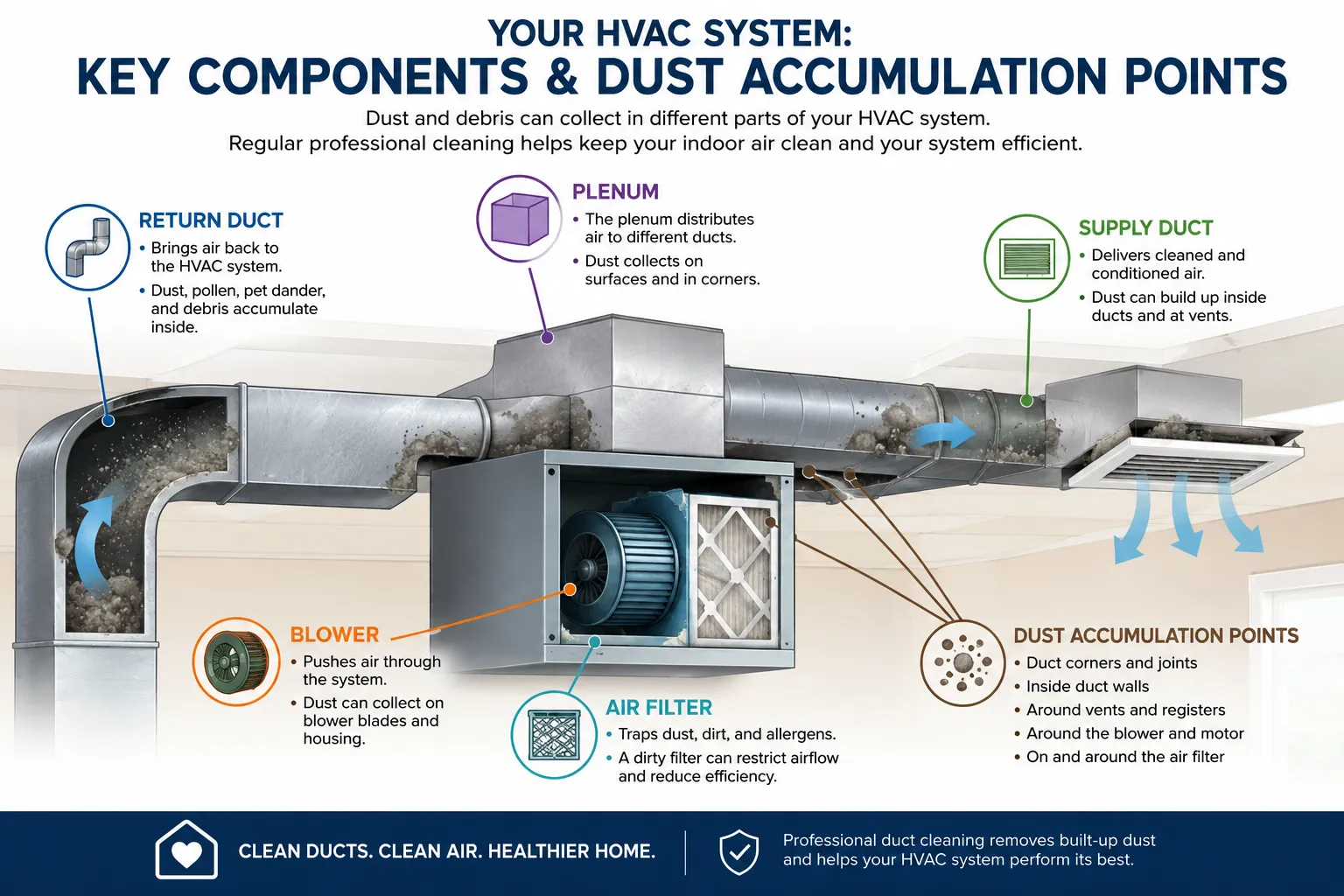
Our technicians pay particularly close attention to buildup near heat-generating components — motors, transformers, and areas where airflow is restricted — since that’s where we see the most concerning accumulation on inspection. It’s not an immediate fire on day one. But it’s the kind of gradual, unaddressed buildup that an insurance adjuster or fire inspector is more likely to flag during a claim review than during routine operation.
If it’s been years since anyone looked at what’s actually inside your building’s ductwork, that’s worth addressing before it becomes an inspection issue rather than after. Get in touch for a straightforward quote and we’ll tell you honestly whether your system needs attention now or can wait.
The Air Quality Complaint That Becomes a Legal Problem
A single tenant mentioning stuffiness or dust sensitivity is easy to dismiss. The situation changes when the same complaint comes from multiple units sharing one HVAC system. At that point, it becomes more than a tenant concern. It can become part of a maintenance record, lease dispute, or health complaint.
This is where commercial ductwork differs from a single-family home: tenants often share air across units or floors, so contaminants circulating from one space affect others. Property managers who treat duct cleaning as optional maintenance are effectively deciding, often without realizing it, how much liability they’re willing to carry if a tenant ever formalizes a health complaint. If air quality complaints are already surfacing in your building, that overlaps with mold, bacteria, and airborne contaminant concerns beyond what standard duct cleaning addresses — our HVAC sanitization service is built for that specific situation.
How Often Commercial Buildings Actually Need HVAC Duct Cleaning Services
There’s no single cleaning schedule that fits every commercial property. Following a fixed timeline can lead to unnecessary cleanings or waiting too long between services. A small single-tenant office with light foot traffic behaves very differently than a multi-unit retail strip or a restaurant space sharing HVAC infrastructure with neighboring units.
- ✅ Standard office or retail space: in our experience, generally every 3–5 years before buildup becomes noticeable, assuming normal occupancy and no specific air quality complaints.
- ✅ Multi-tenant buildings with shared HVAC: often benefit from more frequent attention, since one unit’s dust and debris circulate into others.
- ✅ Restaurants and food-service-adjacent spaces: the shared HVAC returns in these spaces tend to pick up more ambient cooking particulate than a typical office, which can shorten the buildup timeline even if occupancy is otherwise moderate. (This is separate from the kitchen exhaust hood system itself, which follows its own dedicated fire code and cleaning requirements.)
A pattern we see often in older strip-mall units in Yorkton and Weyburn is a system that’s never had its ductwork touched since the building went up, even though the rooftop unit itself has been serviced regularly. Unit servicing and duct cleaning aren’t the same maintenance task, and assuming one covers the other is one of the more common gaps we run into on commercial properties.
The Warning Signs Property Managers Usually Miss Until a Tenant Complains
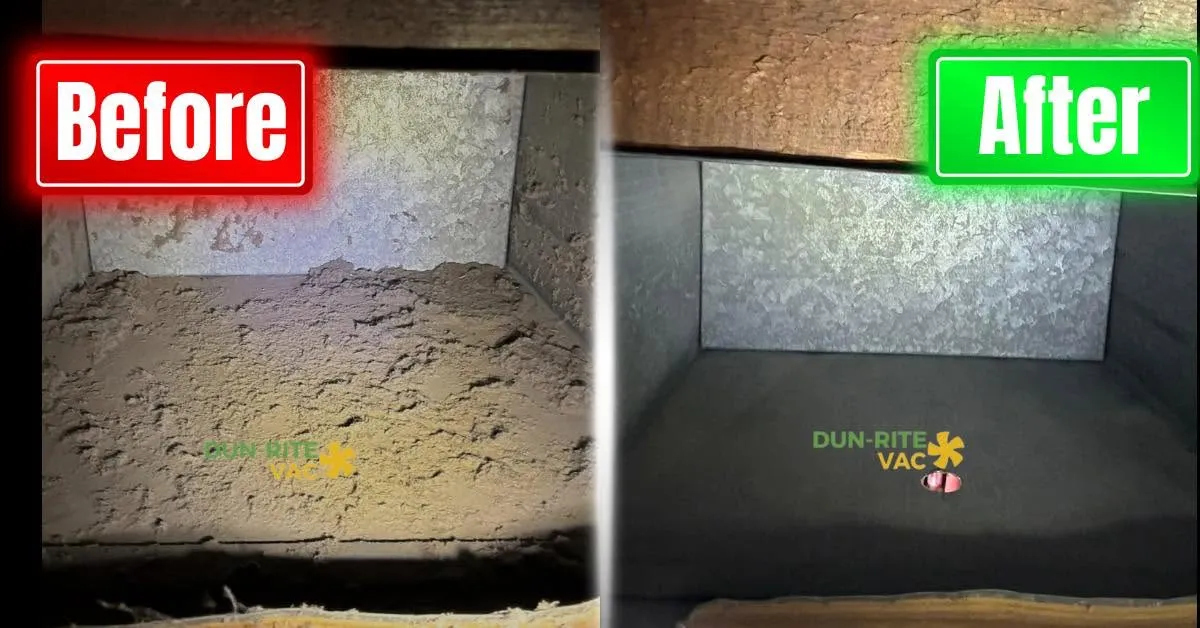
Most property managers don’t notice the ductwork itself. They notice the symptoms first. The HVAC system runs longer, a musty smell comes and goes, or dust quickly settles around supply vents after routine cleaning. None of those point directly at the ductwork, which is exactly why property managers tend to chalk them up to something else.
When we inspect rooftop units on older commercial buildings, we usually see the same pattern. Dust is visible around vent openings, tenant complaints increase during certain seasons, and airflow feels weaker in units farthest from the air handler.Renovation work — even a single tenant’s — is also a common trigger, since the shared system pulls in drywall dust and debris and distributes them well beyond the unit where the work happened.
What Separates a NADCA-Certified Cleaning From a Surface Vacuum Job
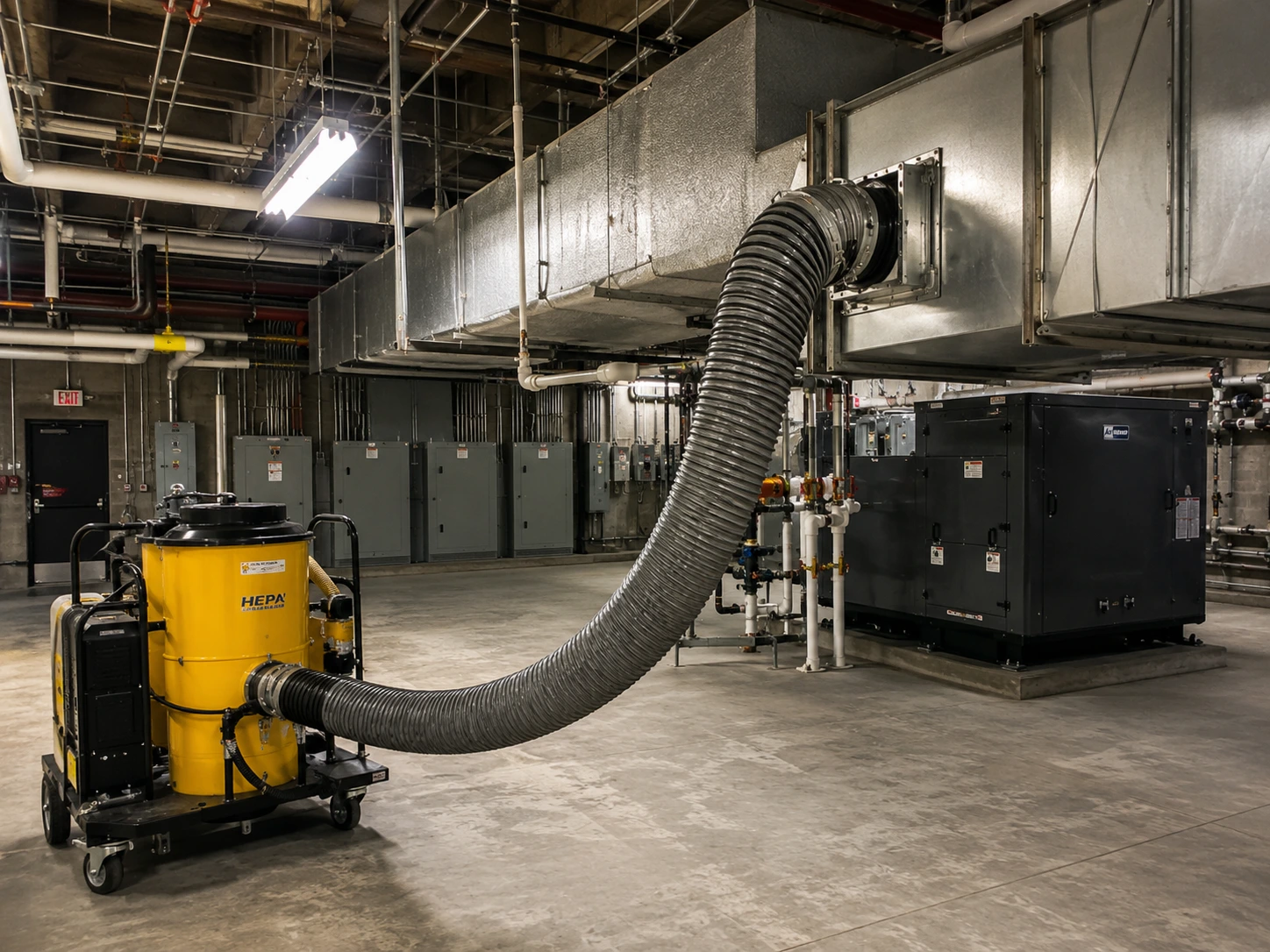
Many property managers assume all HVAC duct cleaning services are the same. In reality, the biggest differences are the cleaning methods, technician qualifications, and attention to detail—not just the price. In practice, an unqualified operator can vacuum accessible sections and leave the job looking done without ever touching the buildup further into the system — which means the fire-risk and air-quality problem is still there, just less visible.
Dun-Rite Vac is NADCA certified, with ASCS-certified technicians following the source-removal standards that ACR, The NADCA Standard establishes — physically dislodging and extracting contaminants under negative pressure, rather than a surface pass. We’ve been doing this as a family-run business since 1998 — 27+ years now — and have completed more than 50,000 jobs across Saskatchewan and Western Manitoba, backed by 250+ five-star Google reviews and an A+ BBB rating. That track record is part of why commercial clients come back to us rather than treating duct cleaning as a one-time box to check.
FAQ
How often should a commercial building have its HVAC ducts cleaned?
There’s no fixed rule — the EPA recommends basing it on system condition rather than a set schedule. In practice, most standard commercial spaces we service do well on a 3–5 year interval, but buildings with shared HVAC across multiple tenants, restaurant space, or a system that nobody has cleaned since installation often need it sooner.
Do insurance policies or fire codes require duct cleaning?
Requirements vary by building, occupancy type, and insurer, so we’d recommend confirming specifics with your insurance provider or local fire authority. What we can speak to from experience is that accumulated dust and debris near HVAC components is the kind of thing that draws attention during an inspection or claim review — it’s worth addressing proactively rather than waiting for someone else to flag it.
Who’s responsible for HVAC duct cleaning in a leased commercial space — landlord or tenant?
The lease agreement typically spells this out, and it varies significantly from building to building. It’s worth confirming in writing rather than assuming, especially in multi-tenant buildings where shared HVAC infrastructure makes the responsibility split less obvious.
Does duct cleaning help with tenant air quality complaints?
Often, yes — removing accumulated dust and debris from ductwork addresses a meaningful source of circulated particulate. If complaints point more toward mold, odor, or contamination rather than general dustiness, that’s usually a sign to look at sanitization alongside standard cleaning.
Not sure whether your building’s ductwork needs attention yet? We’ll give you a straight answer, not an upsell.
Backed by our 100% Satisfaction Guarantee.
Learn more about our full commercial HVAC duct cleaning services, part of our broader furnace and duct cleaning offering across Saskatoon, Yorkton, Regina, and Weyburn.
“`
A few things worth flagging before you publish:
– **Fire-code/insurance FAQ answers are deliberately non-committal** on hard requirements since neither the business context nor brief gave me specifics on actual code/insurer requirements — I didn’t want to fabricate a compliance claim.
– **No Related Posts section** since the cluster’s live-pages input was empty — nothing to draw from yet without violating the “only link from that input” rule. Once you have other Commercial-cluster posts live, this is a good candidate to update with those links.
– Kept the family-name detail (Kris/Tyler/Tanner/Dakota) out entirely — didn’t find a natural fit in a fire-risk/compliance-framed B2B post, and forcing it would’ve felt bolted on.