
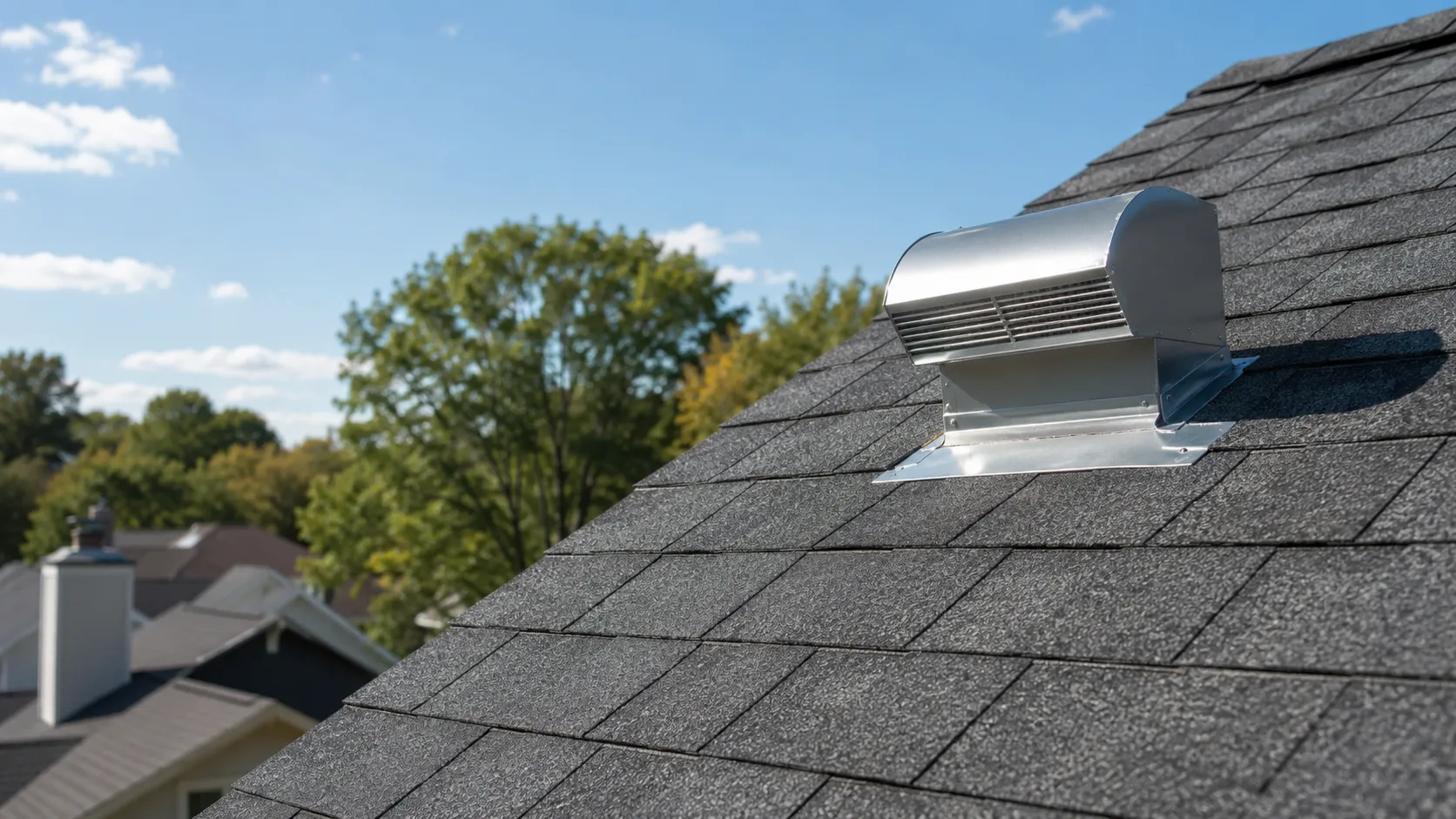
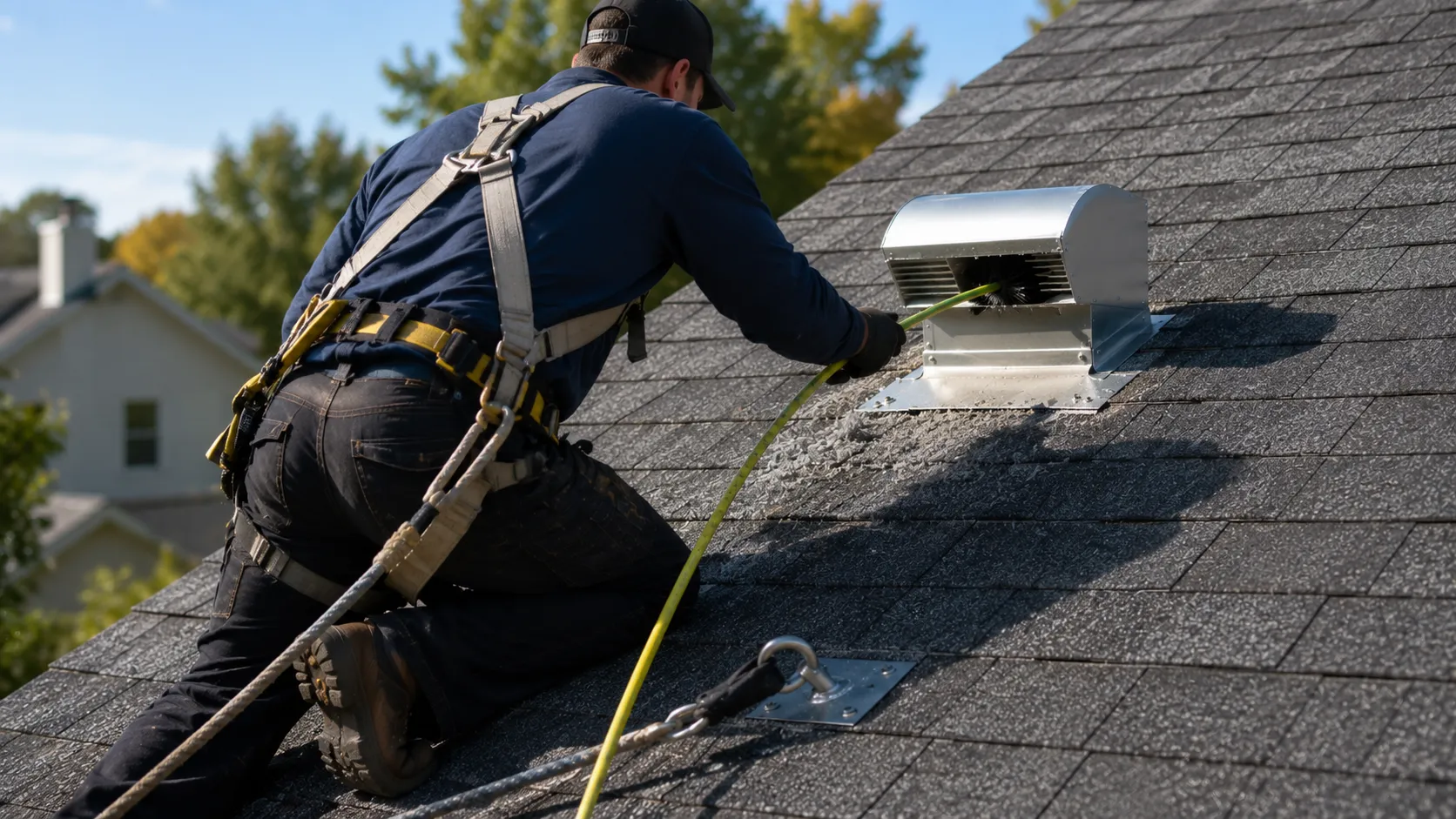
If your dryer vent exits through the roof instead of straight out an exterior wall, you face a tough challenge. You are dealing with one of the hardest spots in the whole system to check on your own. Homeowners skip roof dryer vent cleaning far more often than wall-vent cleaning. Most people simply have no safe way to get eyes on the roofline.
That creates a real problem for Prairie homeowners. Bi-levels, splits, and two-storey builds across Saskatoon, Yorkton, Regina, and Weyburn often run the dryer duct vertically. The pipe travels through a closet, wall cavity, or attic space before exiting the roof. This architectural setup creates a longer run with more bends and transitions where lint can catch.
Quick Answer: Executing a proper roof dryer vent cleaning requires more work than a standard wall vent job. The elevated termination point limits your visual inspection. Technicians must access the roof and use specialized rotary brushes to clear the full vertical run safely.
In This Post:
- Why Roof-Terminating Dryer Vents Get Missed on Prairie Homes
- The Access Problem: Why a Roof Vent Isn’t a Simple Ladder Job
- Reading the Signs Before You Ever Get on the Roof
- What Roof Dryer Vent Cleaning Involves for a Roof Termination
- When a Rooftop Dryer Vent Needs More Than a Standard Cleaning
- FAQ
Why Roof-Terminating Dryer Vents Get Missed on Prairie Homes
We often see a specific pattern on Yorkton and Saskatoon bi-levels built in the 1980s and 90s. The dryer duct runs vertically through a second-floor closet or attic space before terminating on the roof. Homeowners rarely touch these vents after construction. Wall vents catch your attention because they sit at eye level by the driveway or patio. Roof vents simply sit outside your normal sightline.
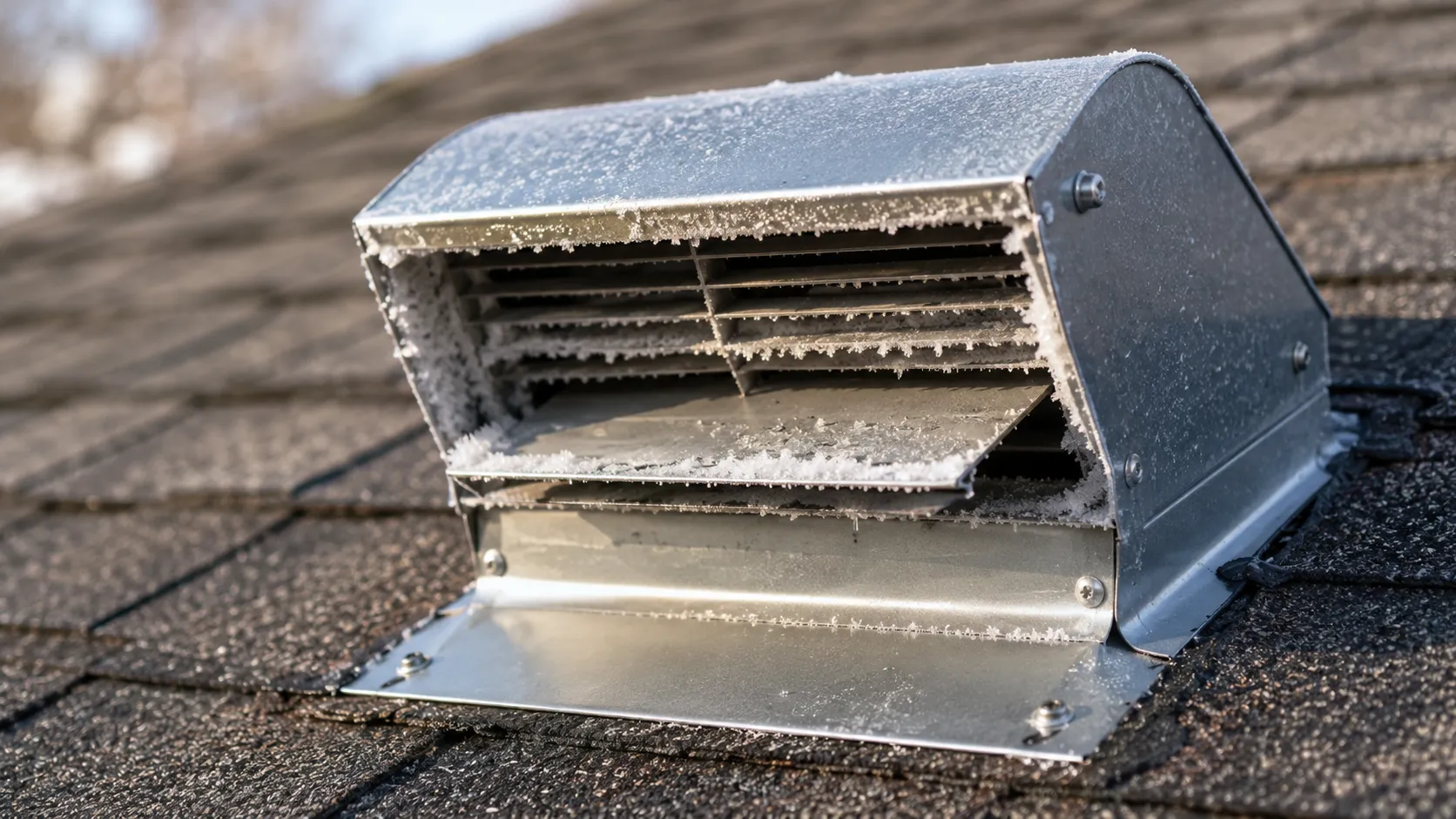
That out-of-sight placement matters immensely in our harsh climate. Saskatchewan’s long heating season forces dryers to run heavily through fall and winter. During these freezing months, frost or snow buildup easily blocks the roof vent hood. Installation standards from GE Appliances Factory Support confirm that every bend and extra foot of vertical run adds airflow resistance. This restriction gives lint more places to catch than a short, straight wall run.
The Access Problem: Why a Roof Vent Isn’t a Simple Ladder Job
Most homeowners can shine a flashlight into a wall vent to check for clogs. A roof vent does not offer that quick option. Getting a real look requires stepping onto the roof itself. On the steep pitches common across older Prairie homes, this poses a genuine safety hazard. Frost, ice, or light snow increases the fall risk considerably. Most homeowners should leave roof access to professionals with proper safety gear.
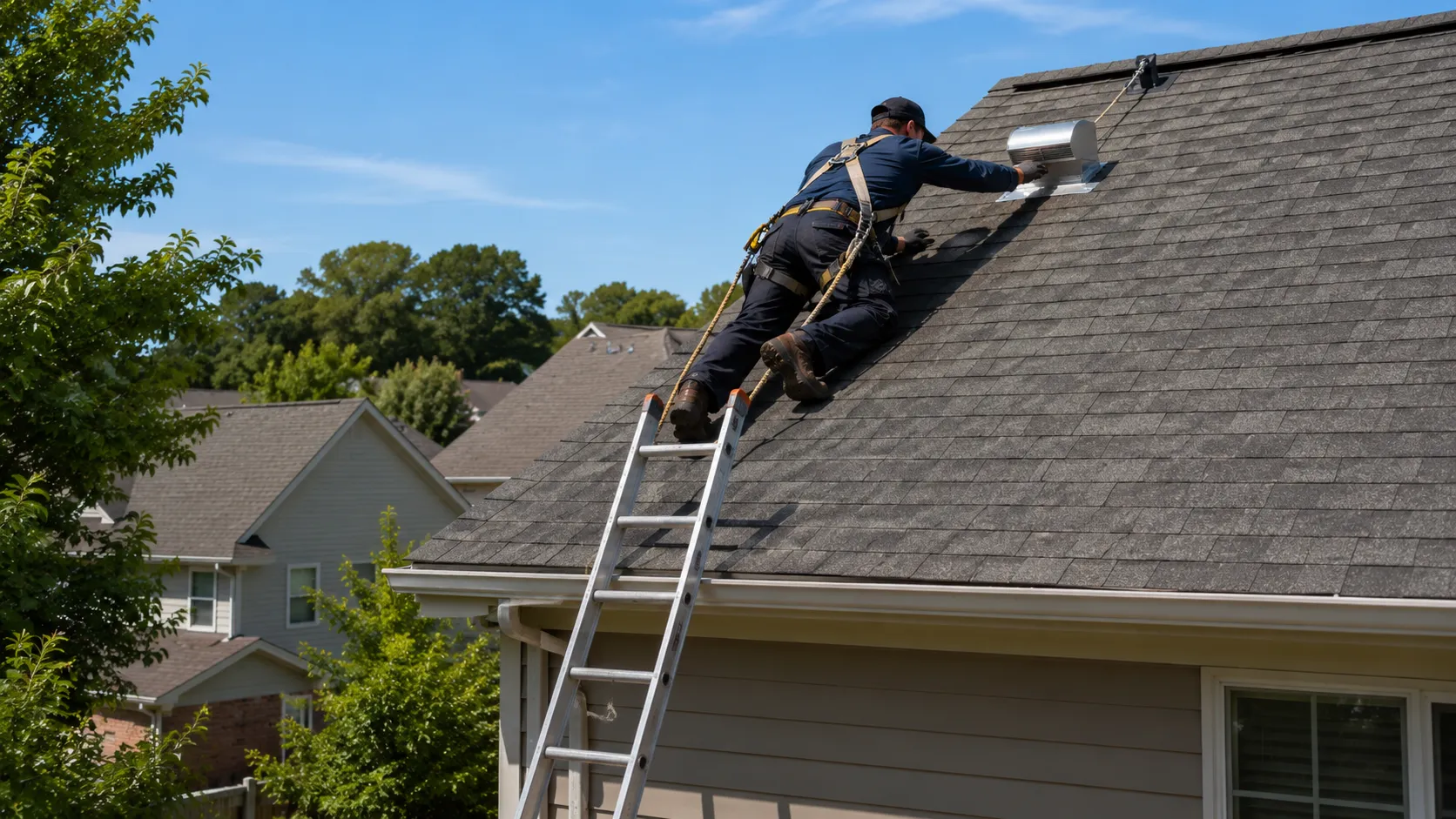
Tooling mismatches also trip people up. Retail DIY dryer vent brushes fit straight or lightly angled wall runs. They cannot handle a multi-storey vertical duct. Many homeowners turn to retail tools anyway. However, the National Air Duct Cleaners Association (NADCA) emphasizes using professional techniques for complex ducts. Pushing a standard brush up a vertical run often packs lint tighter instead of clearing it. This leaves homeowners thinking they finished the job when the clog simply moved. For these reasons, roof dryer vent cleaning demands professional equipment and roof experience rather than a casual weekend DIY approach.
Reading the Signs Before You Ever Get on the Roof
You do not need roof access to catch the early warning signs. Most red flags show up inside the house first. The GE Appliances Troubleshooting Guide highlights several warning signs. Watch for a dryer that requires two cycles to dry a normal load. Notice if the laundry room feels unusually warm or humid mid-cycle, or if you smell burning. These symptoms point to restricted airflow, which frequently hides near a rooftop termination.
Look from the ground or a second-storey window to see if the vent flap opens freely when the dryer runs. If it stays half-open, you likely have a rooftop dryer vent clogged with lint or debris. Check for winter frost buildup on the hood or nesting debris in the flap if you view it from below. Our post on signs of a clogged dryer vent details the full list of symptoms.
Address a restricted vent before symptoms worsen. If these signs sound familiar, reach out for a free quote. We will explain the cleaning process for your specific roof setup.
What Roof Dryer Vent Cleaning Involves for a Roof Termination
Technicians clean roof dryer vent systems from both ends. First, we feed a rotary brush system through the interior connection to break loose lint. Next, we check the roof termination to ensure the cap sits correctly and opens freely. Finally, we test the airflow after reconnecting the appliance. This thorough, two-sided approach explains why the job takes longer than a basic wall vent cleaning.
Our technicians hold Air Systems Cleaning Specialist (ASCS) certifications. They train under NADCA standards and follow verified source-removal methods outlined by NADCA. These techniques pull lint out of the duct instead of pushing it deeper. This approach matters on long vertical runs where people easily miss a partial clearance. An amateur crew using the wrong brush size can easily puncture fragile ductwork or leave massive blockages behind.
We inspect the vent’s condition during the cleaning visit itself, avoiding a separate trip. Our team reviews the full run while working on the roof.
Our third-generation, family-run business has served Saskatchewan and Western Manitoba since 1998. Roof terminations highlight our deep hands-on experience and dedication to quality work.
When a Rooftop Dryer Vent Needs More Than a Standard Cleaning
On acreage properties, our techs frequently find damaged roof vent hoods. Birds or squirrels often chew through caps or cave them in while nesting in the warm airflow. Homeowners rarely notice this damage from the ground. Cleaning alone cannot solve this problem. The hood or cap requires repair or replacement to prevent immediate blockages.
Commercial properties with rooftop laundry equipment face different challenges. They feature longer horizontal runs across flat roofs and handle higher usage volumes from shared facilities. Data from the National Fire Protection Association (NFPA) identifies lint accumulation as the leading cause of dryer fires. For high-volume commercial buildings, fire risks and utility costs scale up quickly when management skips cleanings. Unsure of your timeline? Read our post on how often you should clean your dryer vent to assess your property’s needs.
FAQ
Can I clean a roof dryer vent myself with a standard vent brush kit?
Retail brush kits lack the length and rigidity for a full vertical run. Pushing a consumer brush up an angled duct often packs the lint tighter instead of clearing it. Furthermore, walking on a roof carries a serious fall risk, especially with frost or snow.
How do I know if my dryer vent exits through the roof instead of a wall?
Does your dryer sit on a second floor, in a landlocked basement laundry room, or in a bi-level’s main-floor closet? If so, the duct likely runs vertically to the roof. A quick look at your roofline for a vent cap will confirm the setup.
Does a clogged roof vent affect how well my dryer works?
Yes. Restricted airflow at the roof termination triggers longer dry times, elevated laundry room humidity, and higher energy bills. The underlying blockage remains hidden out of sight.
How often should a roof-terminating dryer vent be cleaned?
Usage frequency, duct length, and pet hair all impact your schedule. Our guide on how often you should clean your dryer vent outlines helpful baselines.
Is the roof vent inspected as part of the cleaning?
Yes. We evaluate the entire vent during the cleaning visit. This thorough assessment covers the full line from the dryer connection to the roof cap in one single appointment.
You Might Also Find This Helpful
Not sure what’s going on up on your roofline?
We evaluate your dryer vent’s full run—roof termination included—during the cleaning visit. We back every job with our 100% Satisfaction Guarantee.