
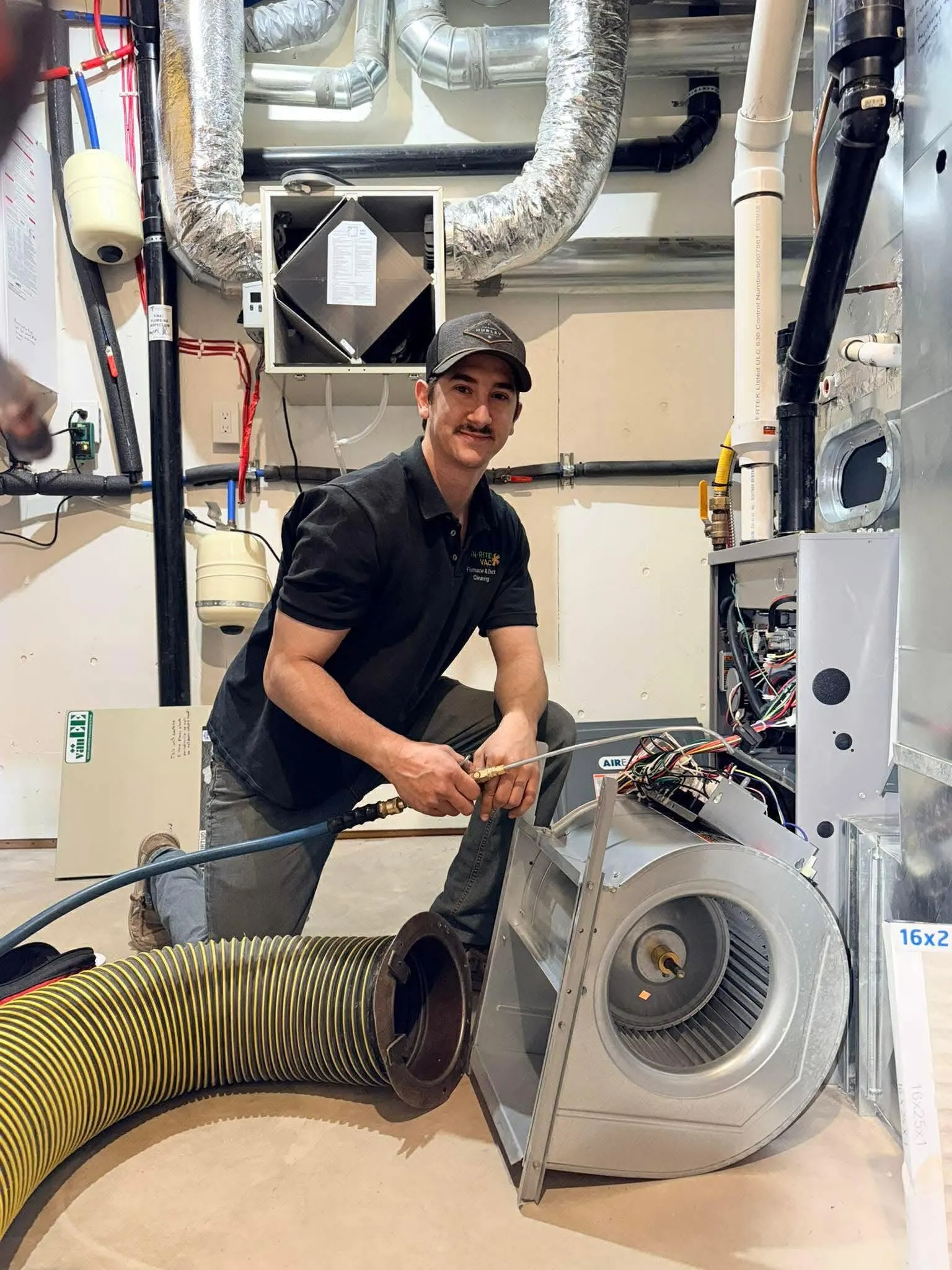
When someone calls to book furnace cleaning and service, they’re often picturing something closer to a duct cleaning. They picture a hose in the vents, done in an hour. What actually happens under the hood is a lot more specific. Knowing what’s included — and what isn’t — before you book saves both of us a confusing conversation on the day of the appointment.
This post walks through exactly what a furnace cleaning and service visit covers. We’ll also look at how often it needs to happen if you’re heating a home through a Saskatchewan winter, and what tends to move the price up or down.
Quick Answer: A furnace cleaning and service visit covers the blower fan assembly, the accessible heat exchanger surfaces, the burner area, the filter, and the interior of the furnace cabinet. It’s a service on the appliance itself, separate from cleaning the ductwork that carries air through your home. Most Saskatchewan homes need it once a year. Ideally, you should book it before the fall heating season starts.
What’s Included When You Book Furnace Cleaning and Service
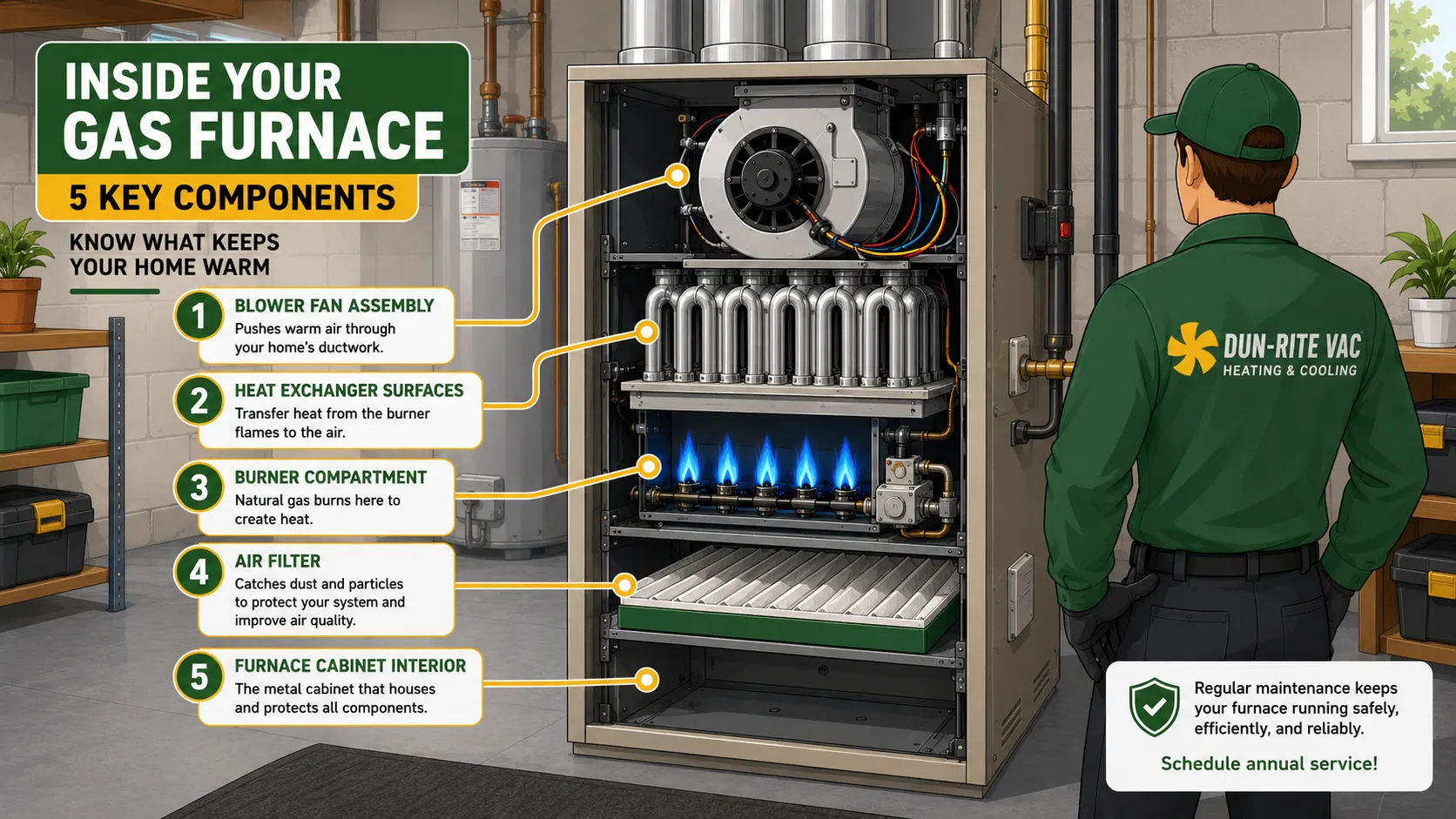
A furnace cleaning and service visit is a service on the furnace itself, not the network of ducts that connect to it. It’s one piece of the maintenance work our broader furnace and duct cleaning services include. Technicians open the cabinet and work through:
- The blower fan assembly
- Accessible surfaces of the heat exchanger
- The burner compartment
- The filter
- The interior of the cabinet, where dust and combustion byproducts settle over a season of use
One thing our technicians run into constantly on 20+ year old Yorkton bungalows is a heat exchanger surface coated in a fine grey film. It’s not visible unless you’re looking directly at it, but it’s enough to reduce how efficiently the unit transfers heat. That’s the kind of buildup a filter change alone never touches. The filter only ever sees air that’s already passed through it, not the combustion side of the system.
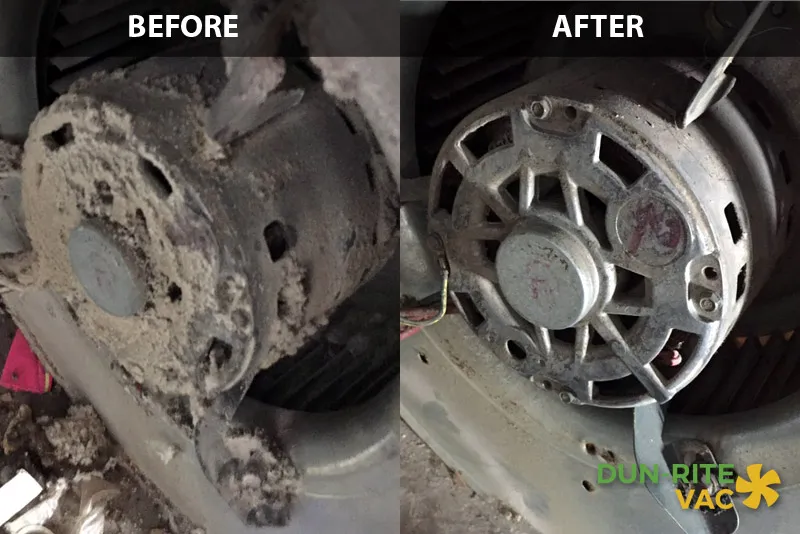
The blower fan gets particular attention. We’ve opened up more than a few cabinets on acreage furnaces where the blower wheel had enough dust buildup to visibly throw it off balance. The homeowner had noticed a faint vibration through the ductwork but assumed it was just an old furnace being an old furnace. It wasn’t. It was an unbalanced blower working harder than it needed to.
If your system has an air conditioning coil sitting on top of the furnace, technicians sometimes handle it as an add-on during the same visit rather than a separate trip. It’s worth asking about when you book if your setup includes A/C.
Furnace Service vs. Duct-Only Cleaning: Why the Scope Is Different
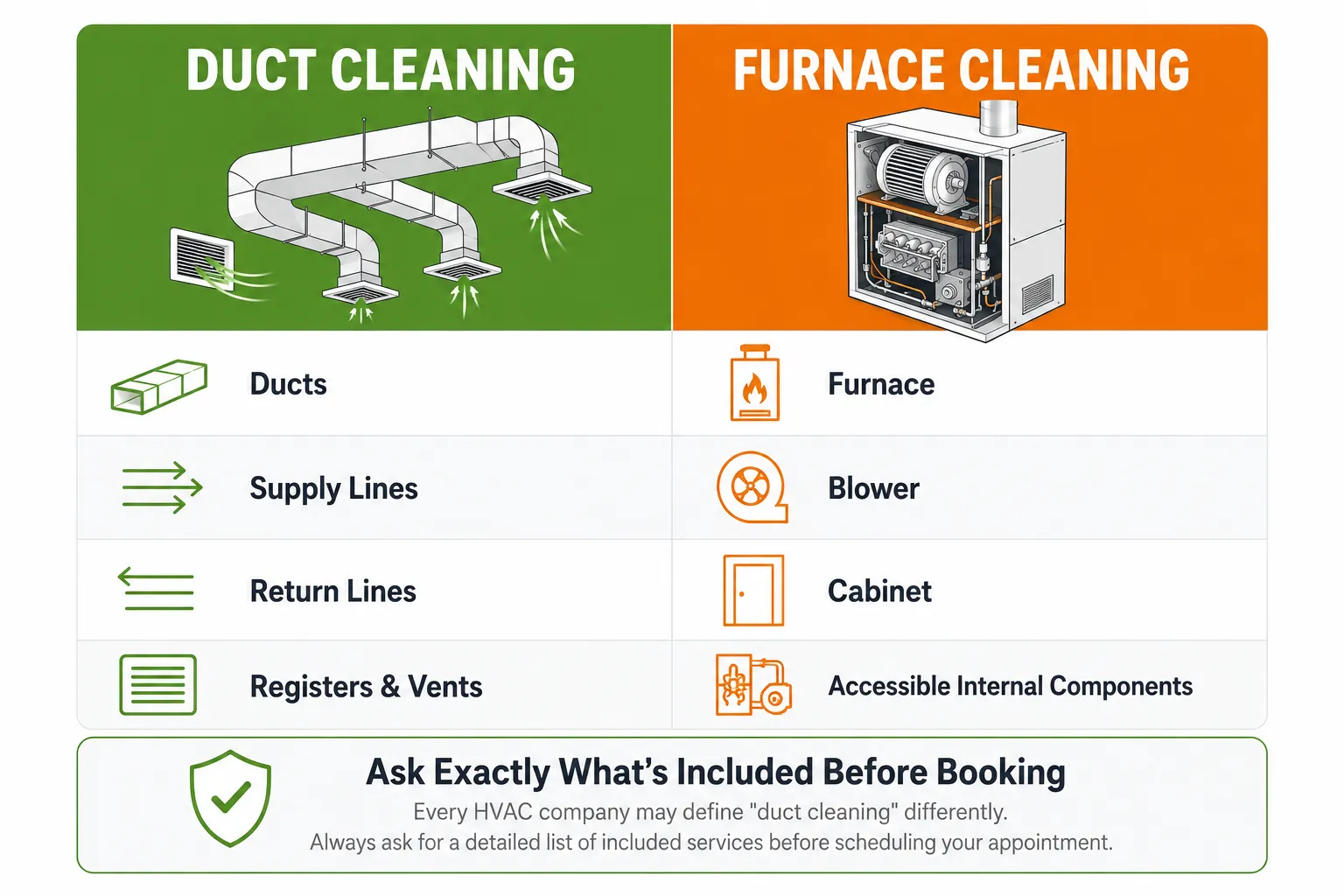
Furnace cleaning and service maintains the appliance itself; duct cleaning clears the pathways air travels through afterward. A dusty duct system doesn’t necessarily mean a dirty furnace, and vice versa. We’ve broken down how to tell which of our furnace cleaning services your home actually needs in our furnace vs. duct cleaning comparison. It’s worth a read if you’re not sure which to book first.
How Saskatchewan’s Heating Season Changes the Cleaning Schedule
A furnace in a milder climate might run intermittently for four or five months of the year. A furnace serving Yorkton, Saskatoon, Regina, or Weyburn often runs daily from October through April, sometimes longer in a cold year. That’s a much longer runtime for dust, dry air, and combustion byproducts to build up on internal components.
For most homes in our service area, once a year is the right cadence. The timing matters almost as much as the frequency. Scheduling before the heating season starts, rather than partway through a cold snap in January, means the furnace runs at full efficiency for the months it’s leaned on hardest. It also avoids the scramble that happens every year once temperatures drop and service calls back up.
Homes with older, less-sealed original ductwork or acreage properties running non-municipal furnace setups sometimes need to be on the more frequent end of that range. There’s simply more for dust and debris to work into the system. That’s a conversation worth having with a technician on-site rather than guessing from a blog post. You can see the full scope of what our residential furnace and duct cleaning page covers.
Between annual visits, the biggest thing you can do is stay on top of filter changes. The U.S. Department of Energy recommends roughly every three months, sooner depending on filter type and how hard your system is running. It also helps to keep the area around the furnace clear so it isn’t pulling in extra dust from stored boxes or nearby laundry lint.
What Actually Drives the Cost of a Furnace Cleaning and Service Visit
How much furnace cleaning costs isn’t a flat number. The honest answer is that it depends on what the technician finds once the cabinet is open. As a general pattern, a newer, easily accessible furnace with a regular annual service history tends to land toward the lower end. A furnace that’s overdue, hard to access, or bundled with add-ons runs higher. A few things consistently move the price:
- ✅ Furnace age and condition — older units with more buildup take longer to service properly than a furnace with a consistent annual maintenance history.
- ✅ Access — a furnace in an easy-to-reach mechanical room is quicker to service than one wedged into a tight crawlspace or an older basement layout.
- ✅ Add-ons — bundling in coil cleaning if you have A/C, or pairing the visit with a duct cleaning, changes the scope of the job.
- ✅ How overdue the furnace is — a unit that’s gone several years without service generally takes more time to bring back to a clean baseline than one on a regular annual schedule.
We’d rather quote you accurately after seeing the actual unit. That’s better than giving you a number that doesn’t hold up once a technician is standing in front of your furnace. A quick call or on-site look gets you a real answer.
Signs Your Furnace Needs Service Now, Not Next Season
A furnace running behind on service rarely fails all at once. It tells you first, usually through small changes that are easy to write off. A burning-dust smell in the first week the furnace kicks on for the season is normal and usually clears up. A burning smell that lingers past that first week, or has a slightly acrid edge to it, is a different signal — one worth having a technician look at.
Rising heating bills without a change in how you’re using the thermostat is another one. A furnace working harder to push air through a dirty blower or transfer heat across a coated heat exchanger uses more energy to do the same job. The U.S. Department of Energy notes the energy-use gap between a well-maintained system and a neglected one can range from 10–25%. The utility bill is often the first place that shows up, well before anything looks visibly wrong.
If it’s been more than a year since your furnace’s last service, or you genuinely can’t remember the last time, that’s reason enough on its own — no dramatic symptom required.
If any of that sounds familiar, it’s worth getting ahead of it before the coldest part of the season. Get in touch for a free quote and we’ll tell you honestly whether your furnace needs service now or can reasonably wait.
Frequently Asked Questions
Does furnace cleaning and service include cleaning my air ducts too?
No — furnace cleaning and service covers the furnace unit itself (blower, heat exchanger surfaces, burner area, filter, cabinet). Duct cleaning is a separate service covering the ductwork that carries air through your home. Many homeowners book both together, but they’re distinct jobs with different scopes.
How long does a furnace cleaning and service visit usually take?
It varies with the furnace’s age, condition, and how accessible it is, but most visits are completed within a couple of hours. A technician can give you a more precise estimate once they’ve seen your specific setup.
Is furnace cleaning necessary every year, or can I stretch it out?
An annual visit serves most homes in our service area well, given how long and demanding our heating season is. Stretching it further isn’t automatically dangerous, but it does mean more buildup for the technician to work through when you eventually book, and potentially higher energy costs in the meantime.
What’s the difference between furnace cleaning and a furnace tune-up?
In practice, the terms overlap — a furnace cleaning and service visit is essentially the maintenance work other companies might call a tune-up. It’s worth confirming with whoever you’re booking exactly which components the visit covers, since “tune-up” isn’t a standardized term across the industry.
You Might Also Find This Helpful
We’ve been servicing furnaces and ductwork across Saskatoon, Yorkton, Regina, and Weyburn for close to three decades. Every technician on our team is ASCS-certified through NADCA. If you’re not sure whether your furnace is due, we’re happy to take a look and give you a straight answer — backed by our 100% Satisfaction Guarantee.