
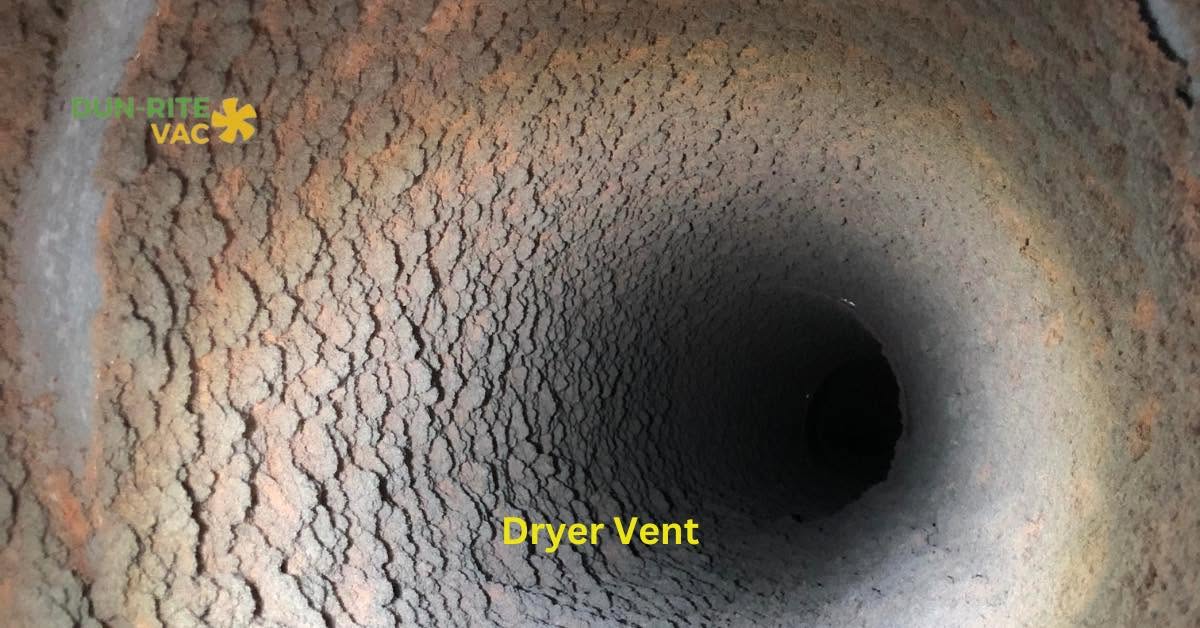
If you have noticed your clothes are taking two or three cycles to dry, heading down to the local hardware store in Yorkton or Regina to pick up a flexible clothes dryer vent cleaner brush seems like a quick, cost-effective weekend fix. These retail kits promise a simple DIY solution to clear out packed lint, but navigating hidden, rigid pipe runs with consumer-grade tools can quickly turn a routine chore into an expensive household headache.
Quick Answer: While a retail clothes dryer vent cleaner brush is fine for clearing out the first few feet of a short, straight pipe, it lacks the length, flexibility, and vacuum power to clear deep blockages. For long vent runs, roof-exiting lines, or heavy damp lint build-up common in Saskatchewan homes, professional cleaning is required to safely pull out hidden blockages and eliminate fire risks without damaging the pipe connections.
Table of Contents
The Realities and Risk of Retail Dryer Vent Cleaning Kits
Walking into a home improvement aisle, you will find plenty of variations of the standard dryer vent cleaning brush. Most of these retail products consist of a round nylon bristled head attached to several flexible plastic rods that screw together end-to-end, often designed to be driven by a cordless household drill. For short, straight exhaust lines that vent immediately through an exterior main-floor wall, gently spinning a retail brush can successfully dislodge loose, dry lint near the surface.
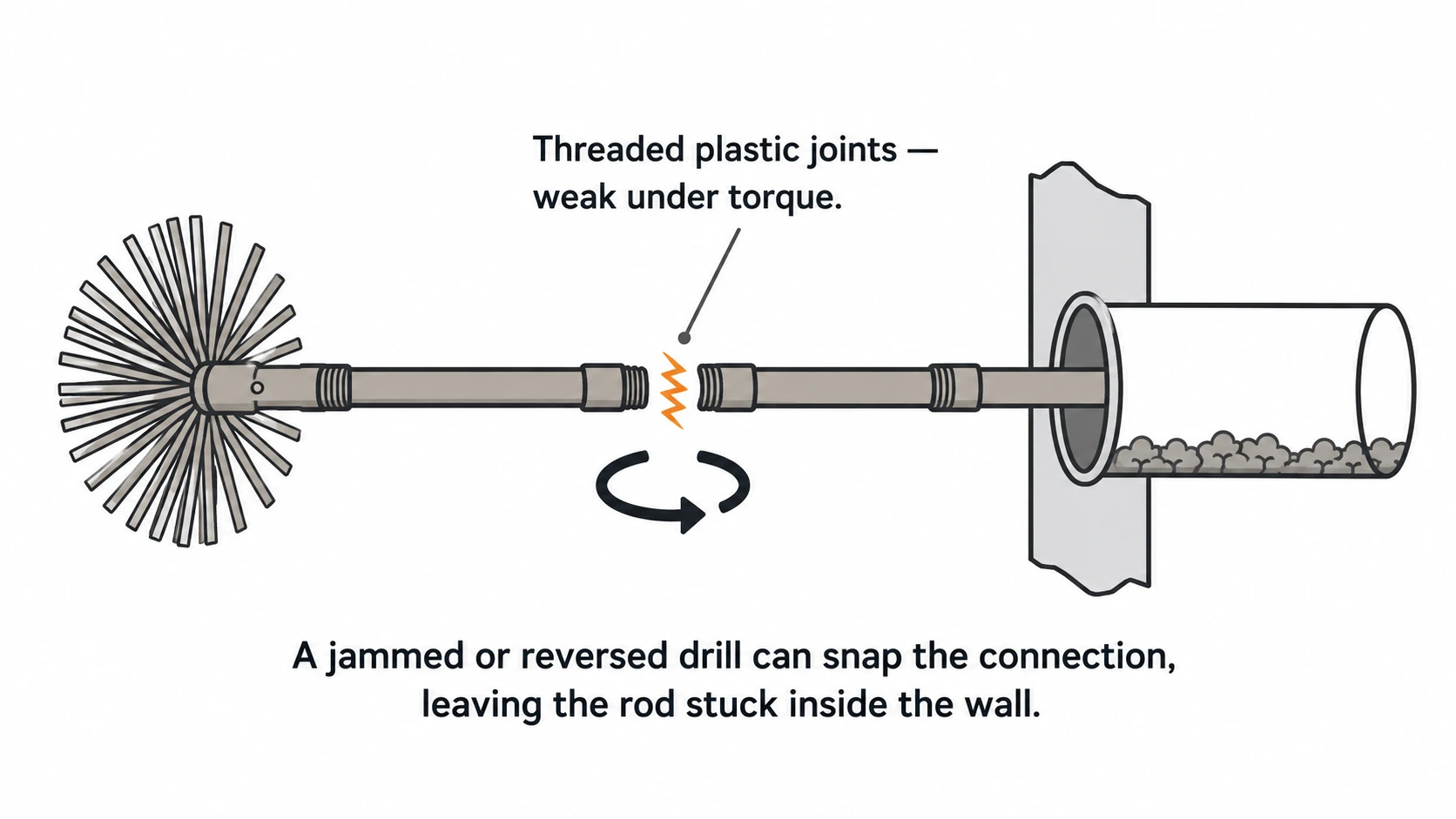
However, the mechanical design of a cheap dryer vent cleaning kit introduces distinct structural vulnerabilities when pushed past its limits. The threaded plastic connections between the extension rods are notoriously weak under torque. If you spin the drill counter-clockwise, even for a split second, or if the brush head jams against a tight 90-degree elbow inside your wall, the rods can unthread or snap entirely. This leaves the heavy brush head and several feet of plastic rod permanently stuck deep inside the wall, blocking all remaining airflow and turning a minor maintenance task into an immediate structural emergency.
Where a Brush for Dryer Vent Cleaning Fails Hidden Pipe Runs
A common situation our technicians run into on acreage properties outside Yorkton or in newer subdivisions across Regina involves exhaust lines that travel incredible distances before reaching the outdoors. Unlike old bungalows where the dryer sits right against an outside wall, modern home layouts frequently place the laundry room on the second floor or deep within a finished basement. This means the exhaust duct must snake through floor joists, make multiple turns, and travel up to 25 or 30 feet to vent out through the roof or a side soffit.
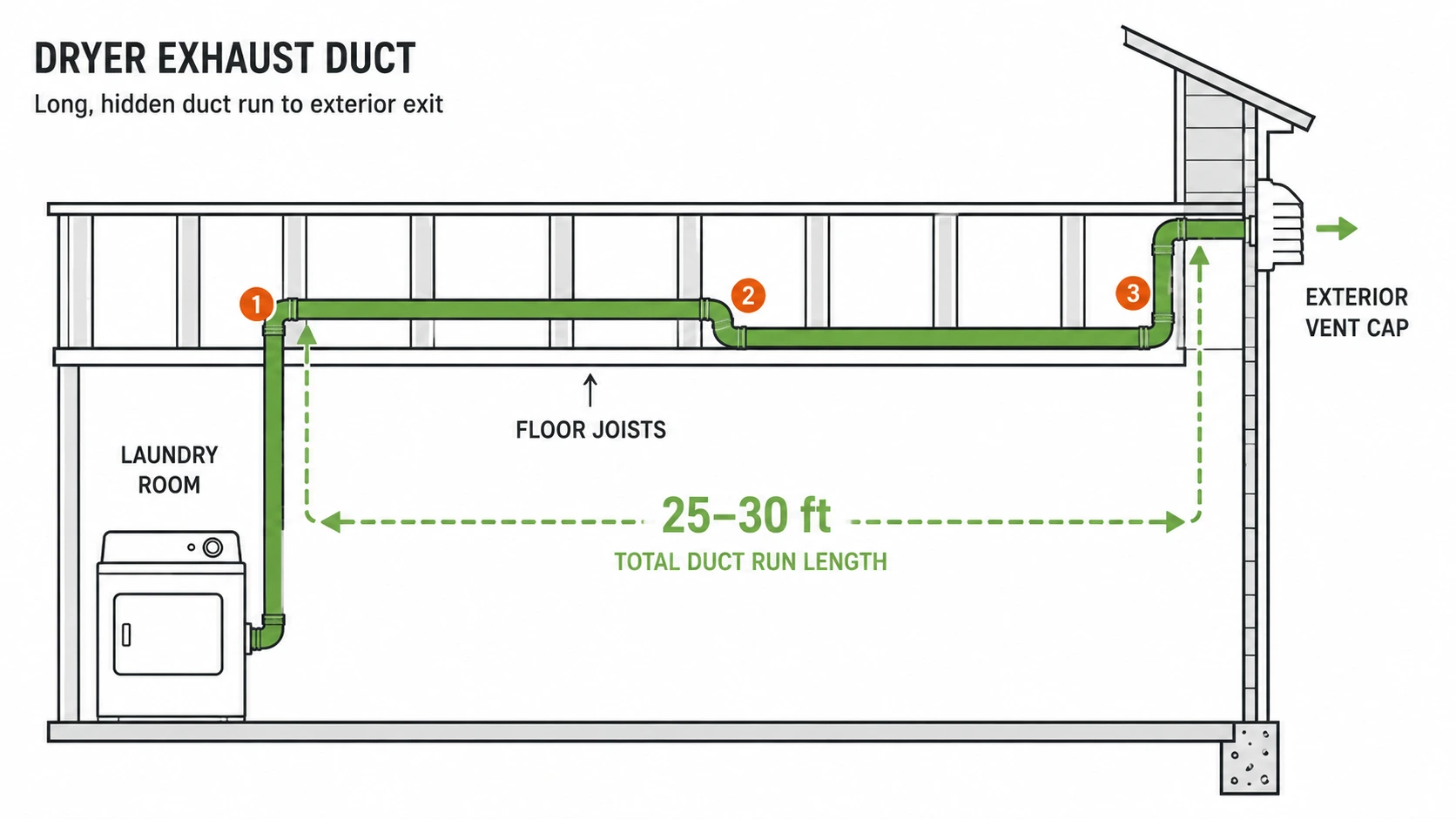
When a homeowner pushes a standard brush for dryer vent cleaning into a long, concealed system, they lack the mechanical means to actually extract the debris. The bristles effectively scrape the lint off the pipe walls, but without industrial high-volume negative air pressure pulling from the outside, that loosened lint simply slides down the pipe and collects at the lowest elbow. Instead of cleaning the line, the DIY process often creates a dense, highly flammable lint plug directly in a hard-to-reach bend of the drywall ceiling.
Is your dryer taking too long or running hot?
Avoid the risk of broken rods or packed walls. Our NADCA-certified technicians clear the entire length of your exhaust line safely using truck-mounted negative air pressure.
Saskatchewan Home Layouts: Why Lint Packs Tighter in Cold Climates
The long, bitter Saskatchewan winters play a hidden role in how lint behaves inside your walls. During our extended sub-zero heating season, our homes are sealed tight, and the air outside is incredibly dry. However, the air being pushed out of your clothes dryer is loaded with heavy moisture stripped from your laundry. As this hot, humid air travels down an uninsulated duct running through a cold crawl space, rim joist, or attic space, it hits a rapid temperature drop.
This thermal shock can cause condensation to form inside the ductwork. What we find when we open up the ductwork or clean out deep transitions on homes like this is that repeated moisture exposure causes fine clothing fiber to clump and adhere to duct walls, building up into a dense, restrictive crust far more stubborn than dry lint alone — a pattern consistent with CPSC research on lint accumulation and restricted airflow. This wet lint sticks to the metal walls like glue and dries into a hard, restrictive crust. A light, flexible consumer nylon brush simply skates over this hardened scale, unable to scrape it loose without the industrial mechanical skipping tools and forward-blowing air whips that professional air systems cleaning specialists use.
When to Put Down the Kit: Recognizing a Fully Blocked Exhaust System
Maintaining your home means knowing the difference between a simple maintenance sweep and a severely restricted airflow system that requires heavy equipment. Attempting to clear a severely impacted line with a retail kit can easily puncture flexible foil or plastic transition ducts hidden behind your laundry room drywall.
If you notice any of the following warning signs, put down the retail kit and contact a professional service operator:
- ⚠️The Dryer Exterior Feels Dangerously Hot: If the top or side casing of your dryer feels uncomfortably hot to the touch during a cycle, the system cannot expel its thermal energy due to a deep block.
- ⚠️No Damper Movement Outside: Go outside while the dryer is running. If the louvers or tiny plastic flap doors on your exterior vent cap are barely fluttering, air is not making it through the line.
- ⚠️A Musty, Damp Odor: When moisture cannot escape, it pools in the low points of the pipe, causing clothes to smell sour or musty immediately after a long drying cycle.
- ⚠️The Vent Exits on the Roof: If your system vents through the roof deck, trying to clean it from the inside out pushes all the lint up to the roof cap screen, plugging it completely. Cleaning it from the roof requires proper safety harnesses and fall-protection gear on icy or steep Prairie rooflines.
At Dun-Rite Vac, we have spent more than 27 years keeping Saskatchewan homes safe from the hazards of hidden lint buildup. Our family-run business relies on NADCA-certified technicians and powerful, specialized air whips to clean the entire line comprehensively, backed by our 100% Satisfaction Guarantee.
Is a dryer vent cleaning brush enough to prevent a dryer fire?
For a short, straight vent run with light, dry lint buildup, a retail brush can reduce some surface-level risk. However, the National Fire Protection Association identifies failure to clean dryer vents as the leading cause of dryer fires — and most dangerous blockages form deep in the pipe where consumer brushes cannot reach. A brush that pushes loose lint further into a hidden elbow can actually increase fire risk. For any vent run longer than a few feet, or one that exits through the roof, professional cleaning with industrial negative air pressure is the only way to fully eliminate the hazard.
Frequently Asked Questions
What should I do if my DIY dryer vent cleaning brush gets stuck inside the wall?
Immediately stop running your dryer to prevent overheating or a fire. Do not try to fish it out with a wire coat hanger, as this typically pushes the rod further down or punctures the flexible joint connections. Call a professional technician right away; we carry specialized industrial retrieval hooks and micro-cameras to locate and extract separated tools without unnecessarily tearing open your finished drywall.
Can I use a retail dryer vent cleaning kit on flexible foil or plastic transition ducts?
We strongly advise against it. The rapidly spinning nylon bristles driven by a power drill will easily tear, puncture, or shred thin aluminum foil or plastic transition hoses behind the machine. These thin, flexible ducts should generally be pulled down and cleaned by hand or replaced completely if they are heavily crushed or clogged with old lint.
How often does a home laundry exhaust line need a professional deep cleaning?
For an average Saskatchewan household, a professional cleaning every one to two years is ideal to maintain energy efficiency and fire safety. However, if you live on a rural acreage property with large pets, or run a busy home with multiple heavy laundry loads daily, lint accumulates significantly faster. In those cases, we recommend scheduling a cleaning every year — ideally in the fall before the heavy winter heating season begins.
Keep Your Home Safe from Hidden Lint Fires
Don’t leave your household safety in the hands of fragile plastic rods and cheap nylon bristles. Let the family team at Dun-Rite Vac provide transparent, professional care for your home’s exhaust systems. Contact Kris, Tyler, or our local regional team today for an honest, upfront quote on your property’s laundry lines.