
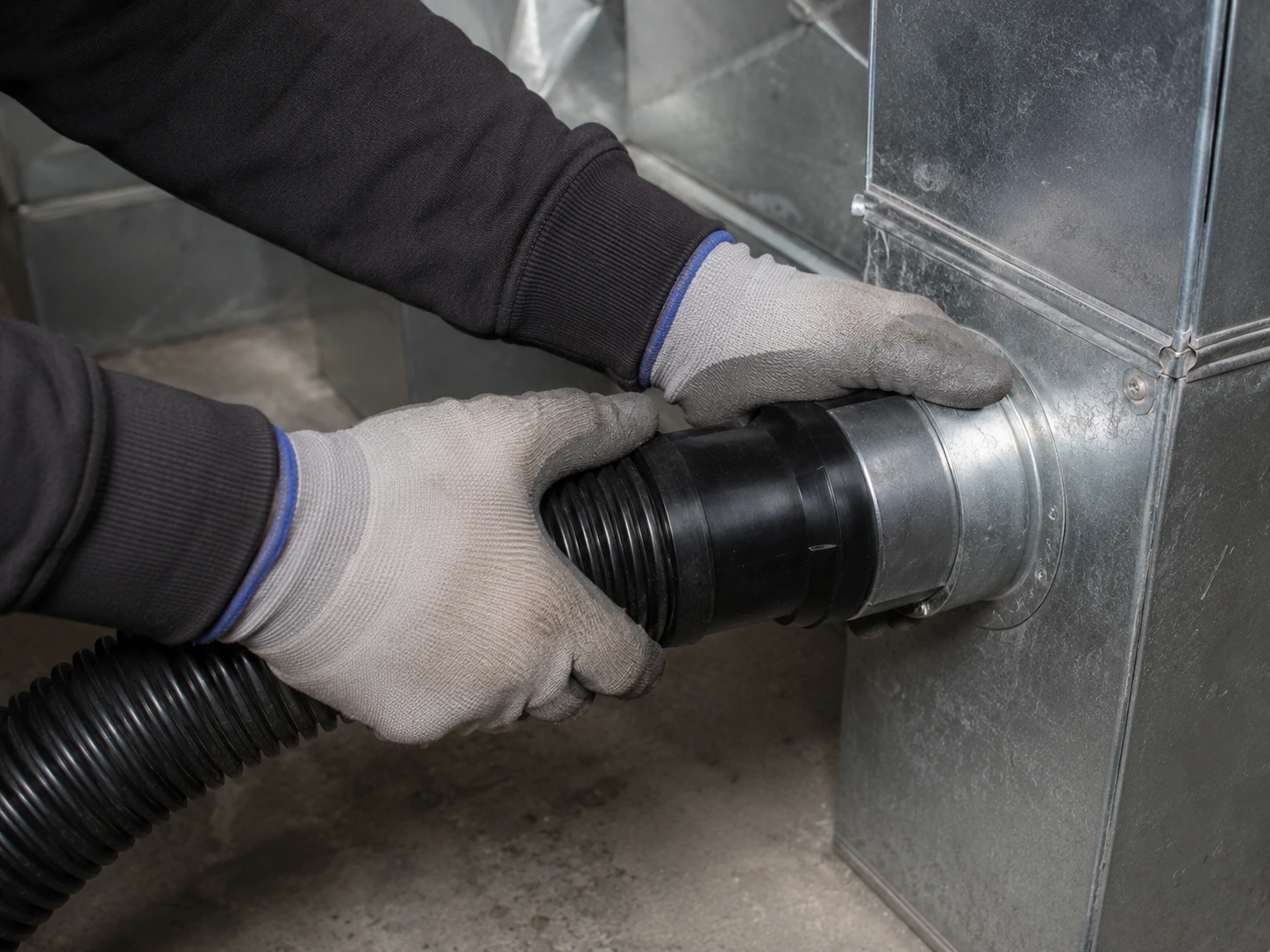
If you’re weighing a central vacuum system against an upright or stick vacuum, you’ve probably read plenty of forum threads asking the same question. Are central vacuums worth it, or are they just expensive pipes collecting dust inside your walls? The honest answer depends less on the installation and more on what happens afterward. It comes down to whether the system receives regular maintenance.
We’ve serviced central vac systems across Saskatchewan and Western Manitoba for years. We’ve worked on everything from 1970s bungalows with original ductwork to newer acreage homes. The pattern is consistent. Poor maintenance, not design flaws, causes most owner complaints.
We’ve serviced central vac systems across Saskatchewan and Western Manitoba for years. We’ve worked on everything from 1970s bungalows with original ductwork to newer acreage homes. The pattern is consistent. Poor maintenance, not design flaws, causes most owner complaints.
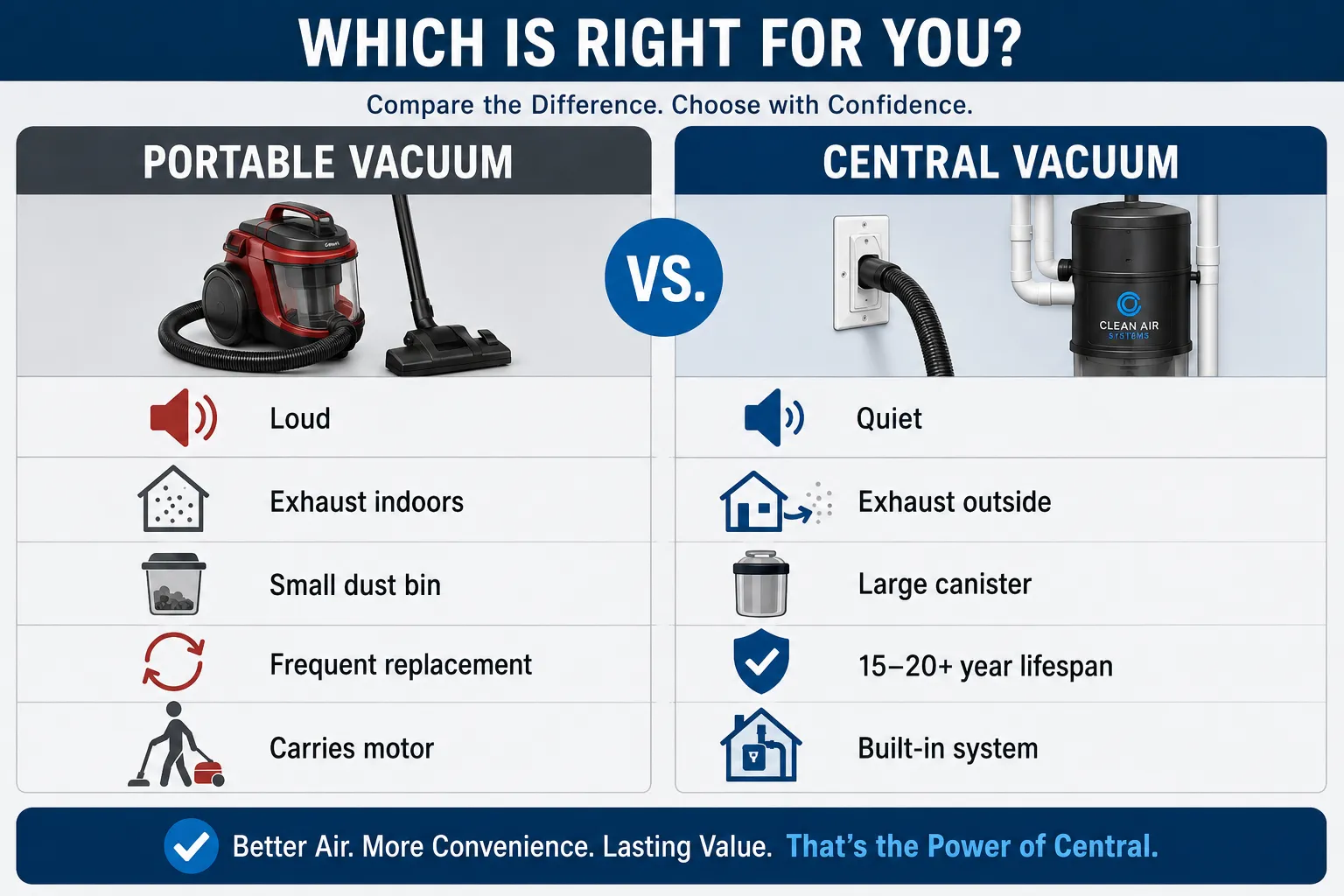
Quick Answer: Central vacuums are generally worth it for households that want quieter cleaning and better allergen control — the motor’s remote location and exhaust-outside filtration are real, measurable advantages over portable vacuums. Whether they stay worth it long-term comes down almost entirely to maintenance: a properly cleaned system can run 15-20+ years, while a neglected one can lose suction and burn out its motor in a fraction of that time.
The Quiet Difference Most Reviews Don’t Explain
Our technicians often meet homeowners in older Yorkton and Saskatoon homes who still expect the motor noise they remember from showroom demonstrations twenty years ago. That assumption isn’t accurate. Most of the confusion comes from misunderstanding where the noise actually comes from.
With a portable vacuum, the motor stays inches from your ears while you clean. A central vac keeps the power unit in the garage, basement, or utility room, often on the opposite side of the house. At the hose, you mostly hear airflow instead of the motor. That’s why so many people describe central vacuums as quieter. In everyday use, the difference is noticeable.
With a portable vacuum, the motor stays inches from your ears while you clean. A central vac keeps the power unit in the garage, basement, or utility room, often on the opposite side of the house. At the hose, you mostly hear airflow instead of the motor. That’s why so many people describe central vacuums as quieter. In everyday use, the difference is noticeable.
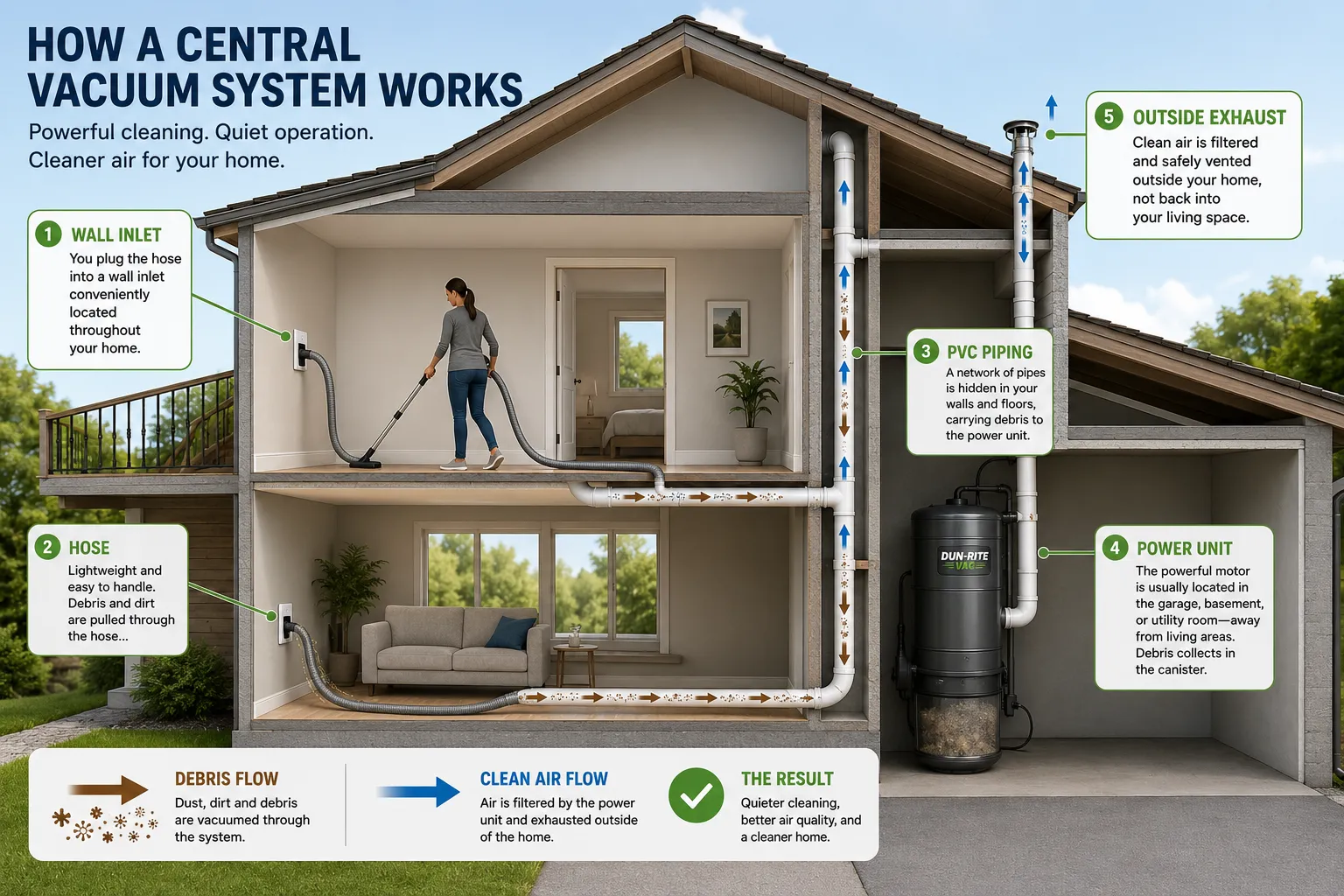
This matters most in homes with a nursery, a home office, or someone who’s sensitive to noise. Poor installation can reduce that advantage. For example, installers sometimes mount the power unit too close to a shared wall. If you’re comparing systems, ask about installation as well as the vacuum itself.
Why Exhaust-Outside Filtration Matters During Prairie Pollen Season
Many “is central vacuum better” comparisons overlook how the systems handle exhaust. Even a well-filtered portable vacuum blows air back into the room. The EPA notes that no filter or air cleaner removes every indoor particle. That makes the exhaust location just as important as filtration. Central vacuum systems vent exhaust outside the home through the same line that carries debris to the canister.
Many “is central vacuum better” comparisons overlook how the systems handle exhaust. Even a well-filtered portable vacuum blows air back into the room. The EPA notes that no filter or air cleaner removes every indoor particle. That makes the exhaust location just as important as filtration. Central vacuum systems vent exhaust outside the home through the same line that carries debris to the canister.
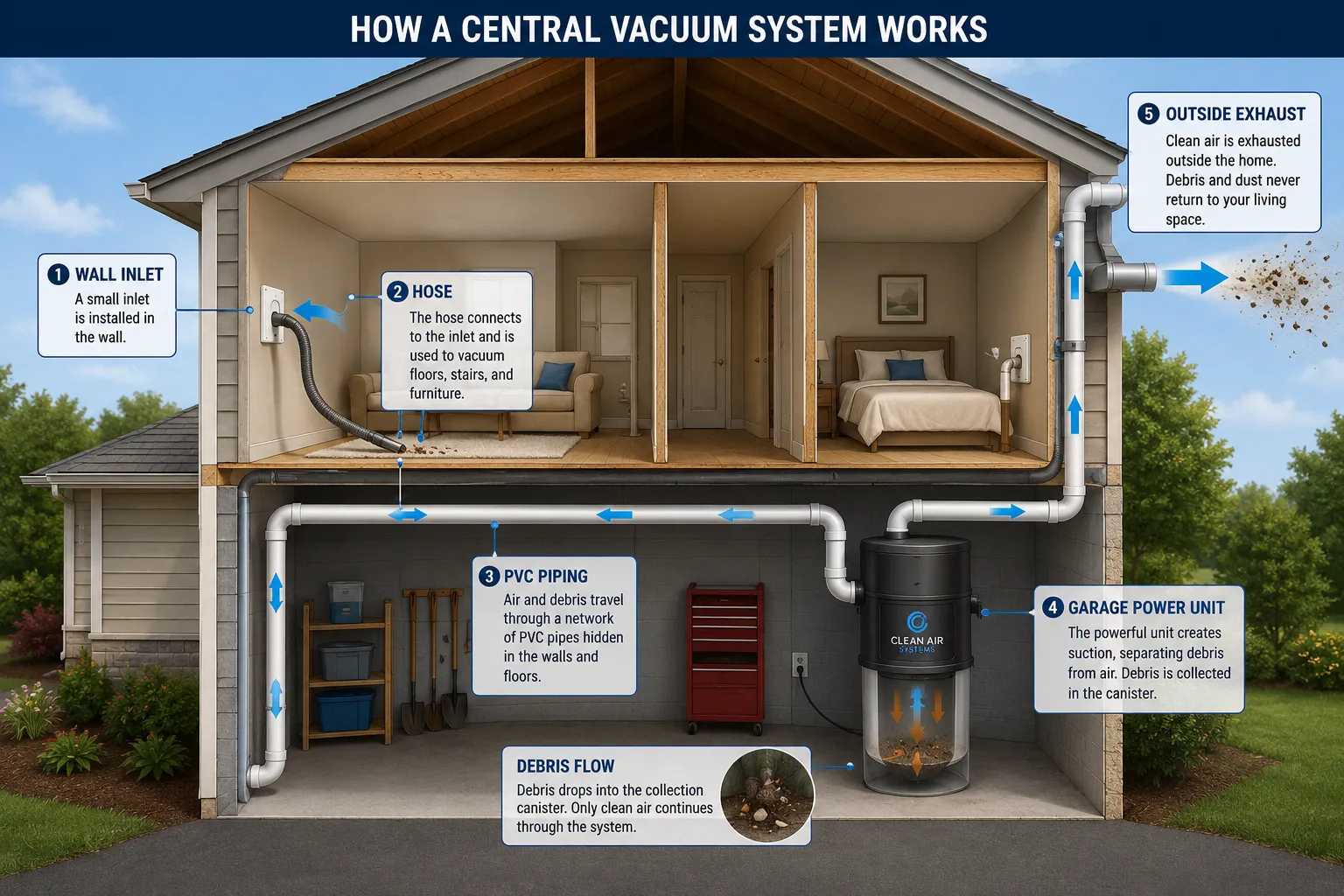
During spring service calls, especially on acreage properties near open fields, we often find canisters packed with fine pollen and dust. A portable vacuum would have recirculated much of that debris into the living space with every pass. Allergy sufferers often notice the biggest difference during Prairie pollen season and again in late winter, when dry indoor air stirs up fine dust and skin particles.
This isn’t a claim that a central vac replaces a proper duct cleaning for whole-home air quality — it’s a narrower, complementary benefit specific to what gets kicked up during active vacuuming.
So Are Central Vacuums Worth It Long-Term? It Comes Down to This
Most people fall into one of two camps before buying: either they assume a central vac is a lifetime, install-it-and-forget-it fixture, or they’ve read enough skeptical Reddit threads that they assume it’s destined to underperform and die early no matter what. Neither assumption holds up in practice.
Two factors largely determine how long a central vacuum lasts. The first is motor duty cycle, or how hard the motor works compared with its rated capacity. The second is keeping the airflow path clean. A well-installed, properly sized unit can reasonably last 15-20 years or more when owners keep debris from building up. A clogged canister or restricted hose forces the motor to work harder while producing less suction. Over time, that extra strain shortens the motor’s lifespan. That’s not a marketing claim. It’s simply how motor-driven appliances behave under sustained load.
So if you’re asking whether central vacuums are good long-term investments, the honest framing is: the hardware is generally reliable. The variable is upkeep.
Weigh that against replacing a premium portable vacuum every few years as it wears out. A periodic professional cleaning that protects a 15-20 year system is a modest cost by comparison — we won’t put a number on it here, since it varies by system, but the math tends to favour maintenance over replacement.
If you’re not sure whether your current system’s suction has quietly dropped off over the years, that’s a quick thing to check rather than guess about. Reach out for a free quote and we’ll let you know honestly whether it’s a maintenance fix or something more.
The Maintenance Mistake That Shortens System Life
Because the whole point of a central vac is that the mess disappears into the wall, most owners never think about what’s happening at the canister end. That’s the mistake. The pipes, canister, and hose accumulate fine debris over years of use, and unlike a portable vacuum’s bag or bin, there’s no daily visual reminder that it needs emptying or clearing.
Across older neighbourhoods, we often service systems that homeowners installed more than a decade ago and have never professionally cleaned. Suction drops gradually, so many people assume it’s normal wear. The motor keeps working harder until it eventually fails. Periodic professional cleaning removes line blockages and canister buildup before that extra strain causes permanent damage. More than build quality alone, regular maintenance is what extends a system’s lifespan.
To be clear, this isn’t a system that needs attention every few months — most households are fine with cleaning on a multi-year interval, and we’ll tell you honestly if yours doesn’t need service yet. If you’re noticing weaker suction or unusual sounds already, that’s worth a look sooner — our common central vacuum problems post covers the specific symptoms to watch for.
FAQ
Is a central vacuum actually better than a portable one, or just different?
For noise and allergen exhaust, it’s a genuine functional improvement, not just a preference difference — the motor location and outside-venting exhaust are structural advantages a portable design can’t replicate. For flexibility (quick spot cleaning, taking it between rooms without dragging a hose) a portable still has an edge.
How long do central vacuums actually last with normal use?
A well-maintained system commonly reaches 15-20 years or more. Systems that see their canister and lines neglected tend to show reduced suction and premature motor wear well before that point, which is the gap between “central vacs last forever” claims and the disappointed reviews you’ll find online.
Why do some people say central vacuums weren’t worth it for them?
Almost always, it traces back to a system that was never cleaned or serviced after install, or one that was undersized for the home’s square footage from the start. Both are avoidable with the right install and a bit of periodic upkeep — not evidence the technology itself underdelivers.
Does a central vacuum help with allergies during pollen season?
It helps with what gets stirred up specifically during vacuuming, since that debris exhausts outside rather than recirculating. It’s a targeted benefit alongside broader indoor air quality steps, not a replacement for them.
You Might Also Find This Helpful
- What Is Central Vacuuming? A Breakdown of How These Systems Work
- Common Central Vacuum Problems (And What They’re Telling You)
If your central vac has lost some of its pull, or you’re just not sure when it was last serviced, we’re happy to take a look and tell you straight whether cleaning will fix it. Every job comes with our 100% Satisfaction Guarantee.