
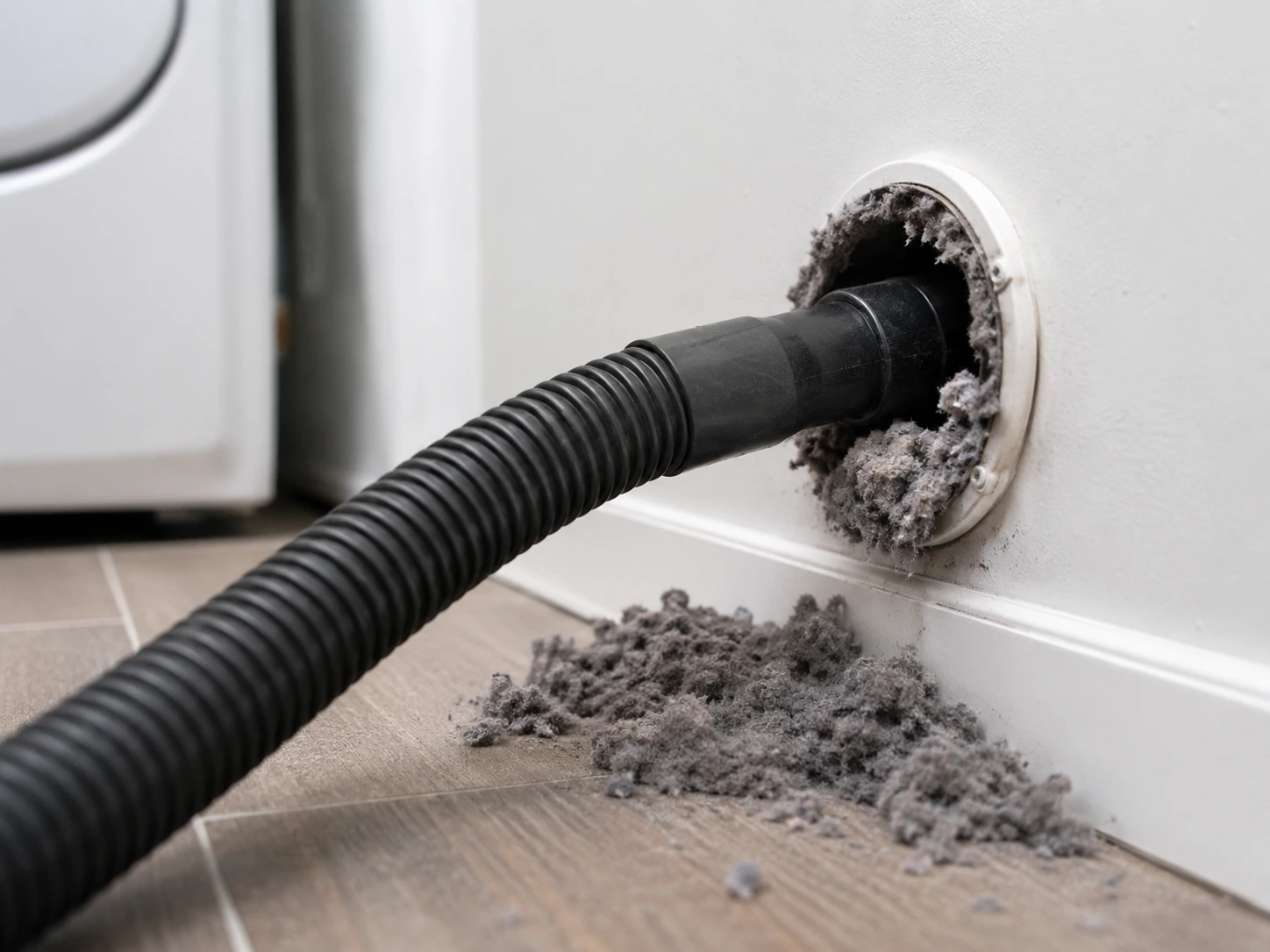
Most homeowners with a built-in central vacuum system have never actually cleaned any part of it beyond running the hose over the carpet. That’s usually fine for a while, until suction starts to drop and there’s no obvious reason why. Knowing how to clean central vacuum components yourself helps you stay on top of routine maintenance. It also helps you recognize when a repair is no longer a DIY job and requires specialized equipment.
This guide explains exactly what you can safely handle at home. It also shows which parts of the system are better left to a technician. That’s especially important if you live in an older Saskatoon or Regina home where the pipe network was installed decades ago.
Quick Answer: You can safely empty the canister and rinse a washable central vac filter yourself every few months. Cleaning the pipe network, servicing the motor unit, and clearing sealed inlets require professional equipment — attempting those yourself risks pushing debris deeper into the line or damaging inlet valves that aren’t designed to be opened.
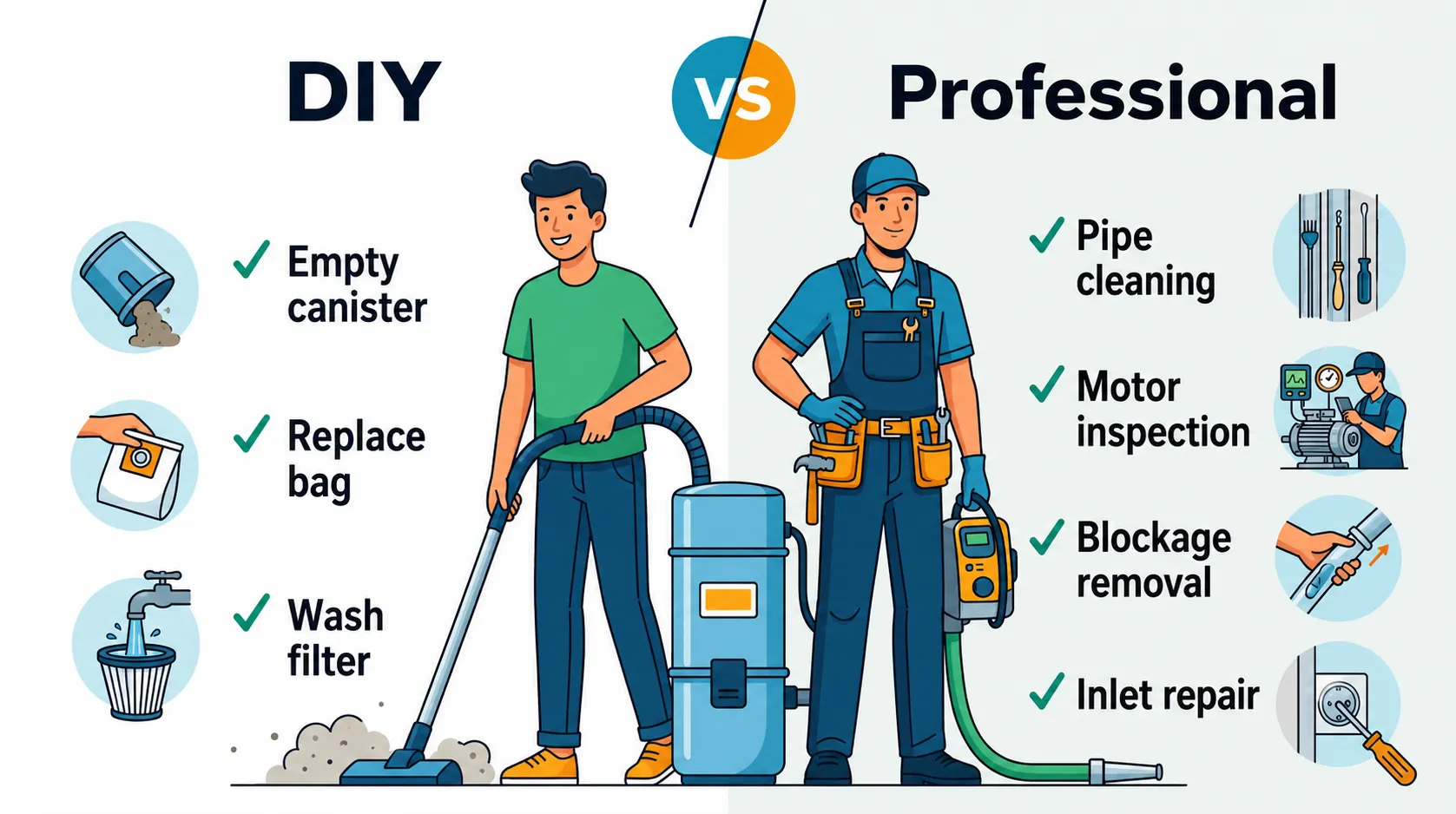
The Two Central Vac Cleaning Tasks Every Homeowner Can Handle
There are really only two parts of a central vacuum system that homeowners should access regularly: the canister and the filter. Everything else sits behind walls or inside a power unit that shouldn’t be opened without the proper training and equipment.
What you’ll need:
- A garbage bag (for canister debris)
- Warm water and a sink or hose (for rinsing the filter)
- A dry towel or open-air space to let the filter fully dry
Emptying the canister is the simplest task. Once dust and debris fill more than about two-thirds of the canister, airflow begins to decrease before you’ll notice weaker suction at the hose. If your unit uses a disposable bag, replace it when it’s full. Don’t let the bag become tightly compacted, because that restricts airflow long before it looks “full.”
If your system has a washable filter, rinse it under running water every two to three months. Let it dry completely before reinstalling it. This is the step most homeowners skip. A wet filter clogs faster and can encourage mildew growth inside the canister.
One thing we see on service calls is a canister that’s clearly never been emptied in the current owner’s memory. The system still runs, technically, but the motor has been working harder than it should for months, sometimes years, and the homeowner just assumed that lower performance was normal for a central vac.
Why Older Saskatoon and Regina Homes Complicate DIY Central Vacuum Pipe Cleaning
Built-in central vacuum systems are common in Saskatoon and Regina homes from the 1980s and ’90s. These systems often have longer pipe runs than newer homes, with multiple floors and several elbow joints. That layout was common at the time, but it also gives fine debris, pet hair, and drywall dust more places to collect over the years.
In older Saskatoon and Regina subdivisions built in the ’80s and ’90s, we often see the same pattern. Homeowners usually maintain the canister and filter because they’re visible and easy to reach. The pipe network behind the walls often hasn’t been cleaned since installation. When someone tries to snake or flush the line, they usually can’t reach far enough around the bends. In some cases, the blockage gets pushed even deeper into the system.
This isn’t a reason to panic about an older system — plenty of these setups run fine for years without pipe cleaning. It’s more that when suction problems do show up in a house this age, the pipe network is a more likely culprit than it would be in a newer build with shorter, more direct runs.
What a Sudden Drop in Central Vacuum Suction Is Actually Telling You
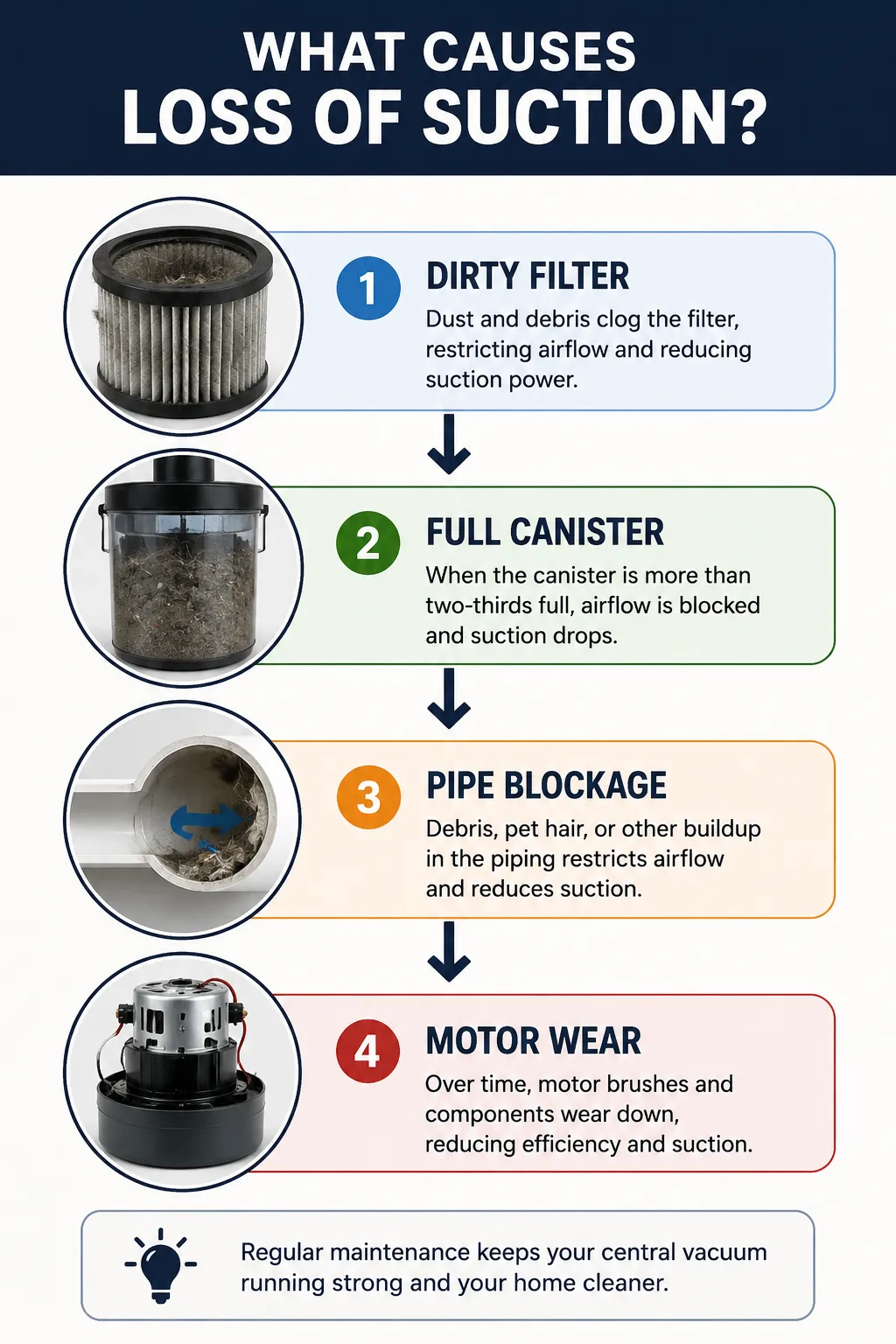
Let’s say you recently emptied the canister and rinsed the filter, but suction still feels noticeably weaker than usual. Many homeowners assume the entire system needs replacing. In reality, a sudden loss of suction usually points to either a blockage in the pipe network or early motor wear.
A blockage usually causes weak suction at every inlet in the house. Motor wear also affects every inlet, but it often comes with a higher-pitched whine or a labored hum instead of the usual steady sound. Cleaning the canister or rinsing the filter won’t solve either issue. Avoid guessing, because opening the wrong access point on a sealed system can create a much bigger repair.
If your suction has dropped and the canister and filter are already clean, it’s worth having it looked at before the motor works any harder than it needs to. Get in touch for a free quote and we’ll tell you plainly whether it’s a pipe issue, a motor issue, or something that can wait.
The Central Vacuum Motor Unit and Sealed Inlets: Why These Stay Off-Limits
The motor unit usually sits in a garage, basement, or utility room. It’s sealed for a reason. Opening it isn’t like changing a furnace filter. It requires disconnecting wiring and pressure components, and mistakes can damage the unit or create a safety hazard. Most manufacturers also void the warranty if anyone other than a certified technician opens the housing.
Wall inlets are another part of the system you should leave alone. They’re designed to accept the hose, not to provide access to the pipe network. We occasionally see homeowners remove an inlet cover to clear a blockage. That often cracks the valve mechanism and turns a simple cleaning job into an inlet replacement.
Professional pipe cleaning uses specialized equipment that pulls debris out of the system instead of pushing it farther into the line. That’s the opposite of what a shop vac or a rod usually does from a wall inlet. Our technicians are ASCS-certified and apply the same certification-backed principles NADCA established for sealed air systems. After more than 27 years and over 50,000 completed jobs, we’ve found that pipe cleaning is the task homeowners most often need help with. It’s not because the work is difficult—it’s because most households simply don’t have the specialized equipment.
Central Vac Cleaning Schedule at a Glance
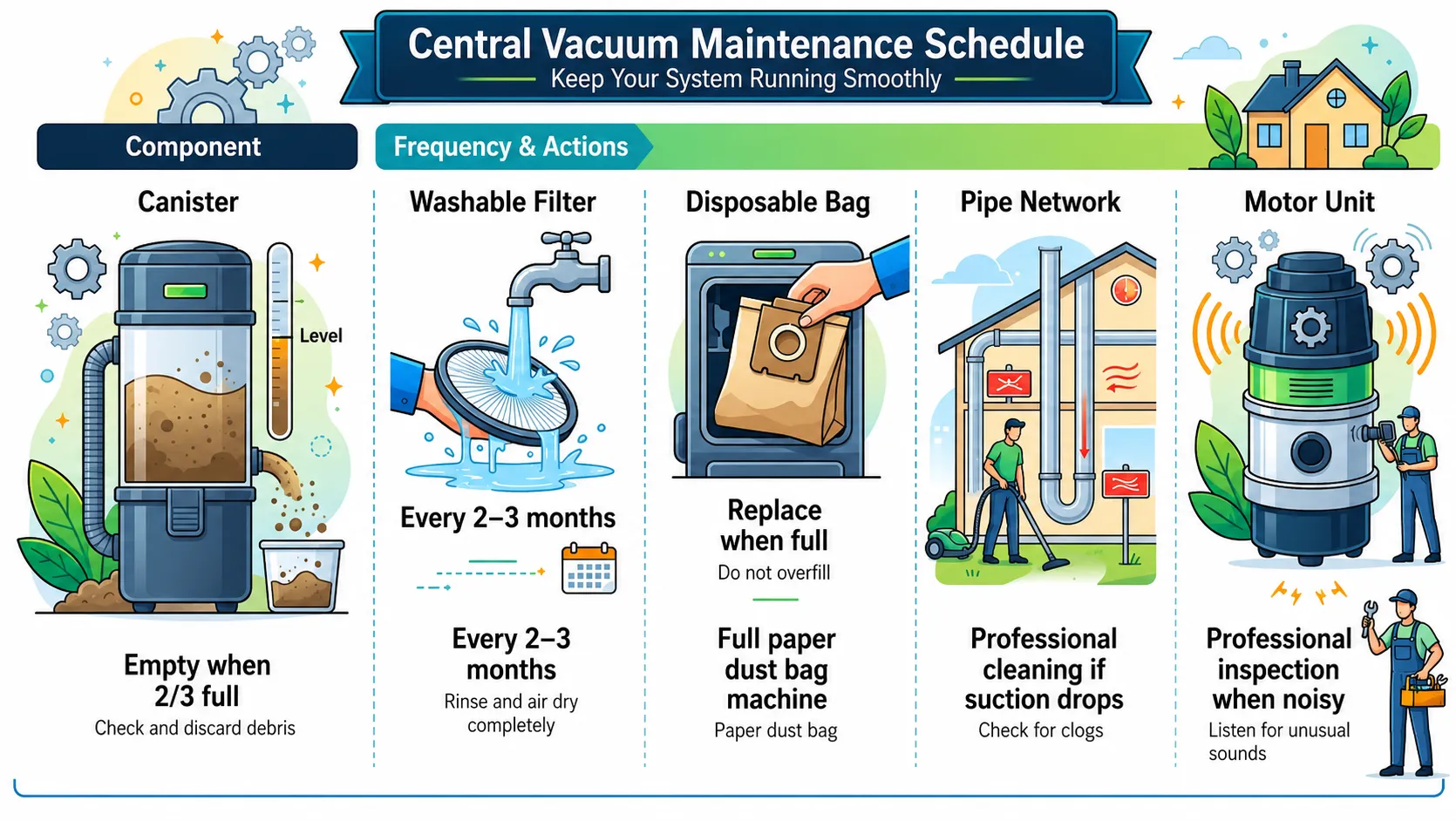
| Component | How Often |
|---|---|
| Canister | When about two-thirds full |
| Washable filter | Every 2–3 months |
| Disposable bag | Replace when full, don’t let it compress |
| Pipe network | Professional cleaning if suction drops despite regular maintenance |
| Motor unit | Professional inspection if you notice unusual sound or reduced power |
FAQ
Can I use a shop vac to clean central vacuum pipes myself?
Not effectively, and it can make things worse. A shop vac doesn’t generate the sustained suction needed to pull debris through long pipe runs and multiple elbows, and pushing a hose or rod in from an inlet often just relocates the blockage further into a section that’s harder to reach.
How often should I rinse a washable central vac filter?
Every two to three months for most households, or more often if you have pets or do a lot of renovation-related cleanup. Let it air dry fully before reinstalling — a damp filter clogs faster and can lead to mildew inside the canister.
Will DIY cleaning attempts void my central vac warranty?
Emptying the canister and rinsing the filter won’t affect your warranty — those are expected homeowner tasks. Opening the motor housing or forcing open a wall inlet, however, is exactly the kind of unauthorized access most manufacturers exclude from coverage.
Is it normal for an older central vac system to need pipe cleaning eventually?
It’s common, particularly in homes from the ’80s and ’90s with longer pipe runs, but it’s not automatic. Plenty of older systems go a long time without needing it. It becomes worth checking once suction drops noticeably despite the canister and filter already being maintained.
Can I clean central vacuum pipes myself if I don’t have a blockage yet?
There’s no routine, preventive pipe cleaning a homeowner can safely do — the pipe network isn’t accessible without opening walls or inlets. If your system is in an older home with long runs, the more useful preventive step is staying on top of the canister and filter, which reduces how much fine debris makes it into the lines in the first place.
You Might Also Find This Helpful
- Common Central Vacuum Problems — for a deeper look at troubleshooting suction and performance issues
- What Is Central Vacuuming? — a good starting point if you’re newer to how these systems work
Not sure whether your central vac needs a pipe cleaning or just routine maintenance?
We’ll take a look and tell you honestly what it needs — backed by our 100% Satisfaction Guarantee, no pressure either way.