
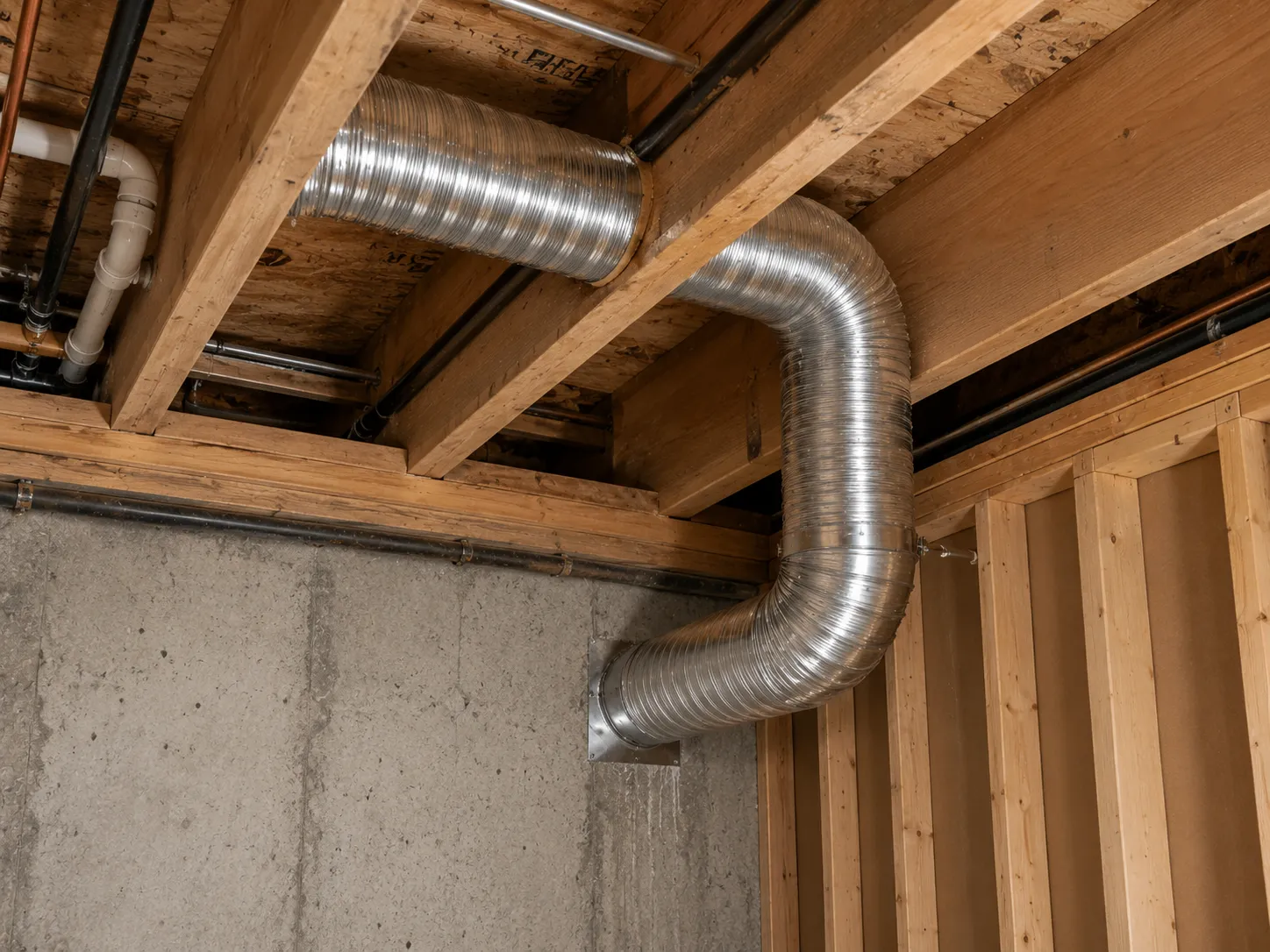
Quick Answer: A solid hvac maintenance checklist for Saskatchewan homes has two anchor points — spring (filter swap, duct/vent inspection for winter dust buildup) and fall (filter swap, furnace startup check, duct and dryer vent cleaning before the heating season begins). Filter changes and visual checks are DIY-safe; duct, dryer vent, and air exchanger cleaning need certified equipment and are best left to a professional.
Spring: The First Half of Your HVAC Maintenance Checklist
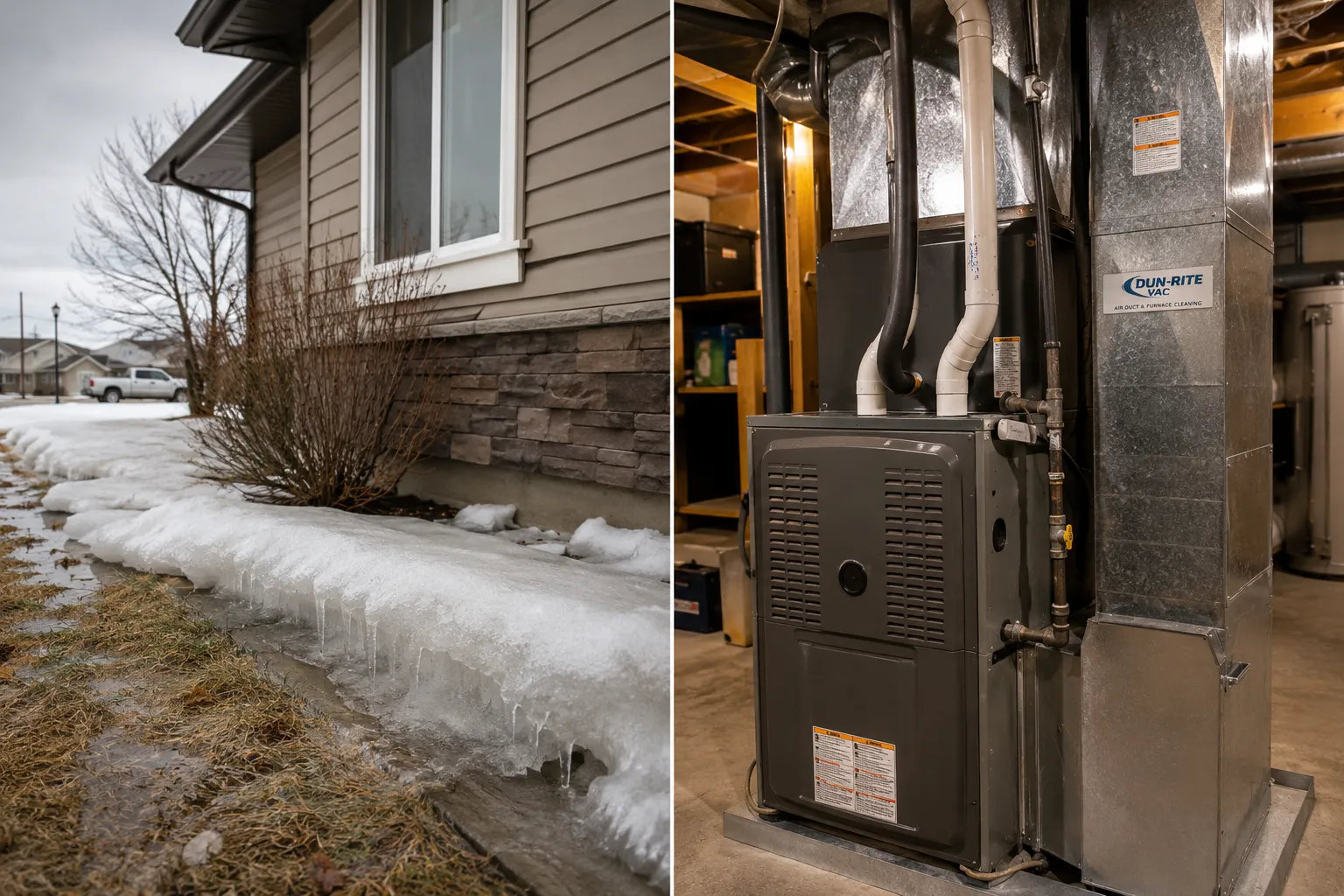
By March or April, your ductwork has spent five or six months moving dry, heated air through a sealed house. Heat and a tightly sealed home pull moisture out of everything indoors. That includes the dust that settles inside your ductwork throughout the winter. When the thaw hits and humidity rises, that dust doesn’t stay put the way it did in January.
One thing we see regularly on homes across Saskatoon and Regina every April is a spike in service calls tied to allergy symptoms that residents assume are seasonal pollen. In many homes, dust and dander that sat inside the duct system all winter begin circulating more actively as the furnace and air exchanger respond to changing humidity. The EPA notes that household dust carrying biological contaminants like dander gets stirred into the air during normal indoor activity, and can spread through a home via a poorly maintained ventilation system.
Spring checklist:
-
- ✅ Swap the furnace filter — even if it doesn’t look full. Winter is your dirtiest filter season.
- ✅ Visually check supply and return vents for visible dust buildup or debris — this tells you whether a full cleaning is due, not just the filter.
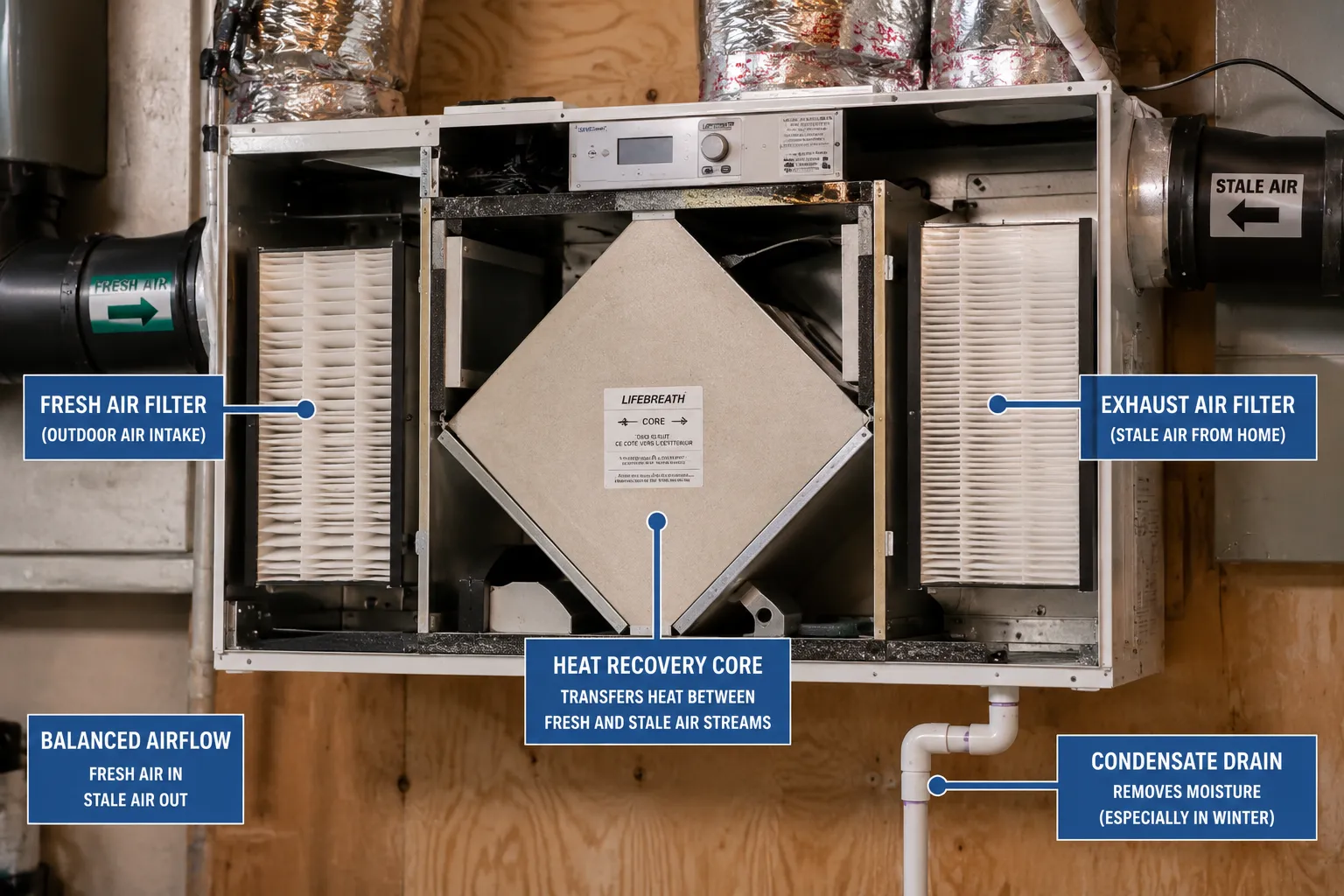
- ✅ Check your air exchanger’s core and filters — sealed Prairie homes rely on this unit more than most, and a neglected core loses efficiency over time after a heavy heating season. CMHC recommends cleaning the HRV’s heat exchange core and filters regularly, since buildup there lowers ventilation efficiency.
- ✅ Note any musty smell near vents as the weather warms — that’s a signal worth acting on, not ignoring.
Fall: The Half of the HVAC Maintenance Checklist Most People Skip
Here’s what a skipped fall visit often looks like six weeks later. The furnace cycles more often. The house feels dusty again within a day of vacuuming. Nobody can point to one cause because several small issues add up. It’s cumulative, not dramatic, which is exactly why it’s easy to miss.
That’s the trap with fall maintenance. Saskatchewan’s heating season lasts long enough that your system’s condition in October often determines how it performs for the next five or six months. A furnace that starts the season with a dirty duct system and a summer’s worth of dust behind the register covers doesn’t fail outright — it just quietly costs you efficiency and air quality for the whole winter, and by January the September step that got skipped is hard to trace back to.
Fall checklist:
- ✅ Filter swap — do this before, not after, the first sustained cold stretch.
- ✅ Furnace startup check — the first time you run heat for the season, listen for unusual noise or smell as it kicks on.
- ✅ Duct and dryer vent cleaning — this is the highest-value fall item on the whole list, since both accumulate through summer and both directly affect furnace efficiency and dryer fire risk once you’re running the system daily.
- ✅ Air exchanger balance check — confirm it’s still pulling and exhausting evenly before you’re depending on it through a sealed winter house.
The Filter Habit That’s Quietly Costing You Efficiency
Most homeowners change their filter based on how it looks. That’s the wrong trigger. A filter can look mostly clean and still be restricting airflow enough to make your system work harder — ENERGY STAR notes that airflow problems alone can cut a heating and cooling system’s efficiency by up to 15% — and in a long Saskatchewan heating season, that inefficiency compounds over months, not days.
In jobs across older Yorkton neighbourhoods, the filter habit is almost always the same: homeowners check it once, maybe twice, over an entire winter, because it “still looked fine” in November. By February, the system has been quietly overworking for months. If your ductwork also serves central air conditioning, the same filter works year-round. That means an air conditioner maintenance checklist isn’t really separate from your heating checklist. Filters, ducts, and airflow work the same way whether the system is heating or cooling, so the swap that protects your furnace in January is the same one protecting your A/C’s efficiency in July.
The fix isn’t complicated: change it on a schedule tied to your heating season length, not on how dirty it looks. Spring and fall are the two non-negotiable swaps; a mid-winter check in January is worth adding if you’re running the furnace hard during a cold snap. Treat those same two seasons as your informal HVAC inspection checklist. While you’re changing the filter, glance at the vents, listen for unusual furnace noises, and inspect the air exchanger core.
Where DIY Maintenance Ends and a Certified Technician Should Start

Filter swaps and visual checks are the two items on this checklist any homeowner can safely do themselves. Everything beyond those tasks requires specialized equipment. That includes cleaning the duct system, dryer vent, and air exchanger core. Once you reach that point, DIY maintenance offers little benefit and can create a false sense of security.
A vacuum hose pushed into a supply vent moves dust around near the opening; it doesn’t reach the buildup further down the line, and in a dryer vent specifically, incomplete cleaning is a fire-risk issue, not just an efficiency one — the National Fire Protection Association tracks structure fires tied to dryer venting and lint buildup every year. That’s the gap NADCA-certified, ASCS-trained technicians are trained to close — Dun-Rite has been doing this work since 1998, with more than 50,000 completed jobs across Saskatchewan and Western Manitoba.
If you’ve gone through this section and you’re not sure where your own system stands, that’s a normal spot to be in. Send us a few details about your home and we’ll point you toward what actually needs doing this year.
Why an Acreage Property or Older Bungalow Needs a Different Version of This List
This checklist changes depending on what kind of property you’re maintaining. A newer, tightly-sealed home built in the last decade behaves differently than an older bungalow with its original ductwork, and a rural acreage on a non-municipal furnace setup has its own considerations entirely.
Acreage properties often face extra challenges. Well water and non-municipal systems can introduce mineral dust and sediment into the air exchanger and ductwork. That makes the spring air exchanger check even more important. In older housing stock in towns like Yorkton, original ductwork often has more seams, more accumulated buildup from decades of use, and less airflow margin to begin with, so a skipped fall cleaning shows up as a bigger efficiency hit than it would in a newer build.
The seasonal timing on this checklist stays the same regardless of property type. Different homes simply place more importance on certain tasks and leave less room for delaying them.
FAQ
How often should I actually change my furnace filter during a Saskatchewan winter?
At minimum, spring and fall. If you’re running the furnace hard through a sustained cold snap, add a mid-winter check — a filter that “still looks fine” can already be restricting airflow enough to affect efficiency.
Can I clean my own ductwork, or does this always need a professional?
Filter swaps and visual checks are safe DIY steps. Cleaning the duct system, dryer vent, or air exchanger core properly requires equipment that reaches far beyond what a household vacuum can access. That’s the point where a certified technician makes a real difference. We’ve broken down that comparison in more detail here.
What’s the one item on this checklist people skip that causes the most problems?
Fall duct and dryer vent cleaning, by a wide margin. It’s the item most likely to get pushed off, and the one you end up living with the consequences of for the entire heating season.
Do I need to run this whole checklist twice a year, or is once enough?
Twice — spring and fall serve different purposes. Spring clears away what accumulated over winter, while fall prepares your system for the season that places the greatest demand on it.
You Might Also Find This Helpful
- How Often to Clean Air Ducts
- Air Duct Cleaning: Home Depot vs. a Local Specialist
- Dryer Vent Cleaning vs. Air Duct Cleaning
If this checklist has you thinking your system is overdue on one or two items, we’re happy to take a look and tell you honestly where you stand — no pressure, and backed by our 100% Satisfaction Guarantee. Reach out for a free quote whenever you’re ready.