
One of the most common questions homeowners ask is how often air duct cleaning should be done. While many companies promote fixed schedules, the right interval depends on your home’s age, pets, allergies, renovation history, and Saskatchewan’s long heating season. Understanding these factors helps you avoid cleaning too early. It also prevents waiting until dust and debris begin affecting your indoor air quality.
Quick Answer: For most Saskatchewan homes, every 3–5 years is the right interval for furnace duct cleaning — but that window shortens if you have pets, allergies, a renovation, or an older home with original ductwork. Because our heating season runs roughly six months, ducts accumulate buildup faster than in milder provinces, making spring — right after the furnace shuts down — the ideal time to assess and schedule.
The 3–5 Year Baseline — and What Moves It
If you’re wondering how often to clean furnace ducts, most Saskatchewan homes fall within the three-to-five-year range. NADCA—the National Air Duct Cleaners Association—recommends inspecting ductwork every two years and cleaning as needed. Its standards guide certified duct cleaning across North America. In practice, most well-maintained homes fall within that multi-year window before a full cleaning is warranted. That baseline assumes average occupancy, regular air filter changes, and no major structural changes.
However, several factors pull that interval shorter:
- Pets that shed: Animal dander and hair bypass furnace filters constantly. Homes with multiple pets usually need cleaning every 2–3 years.
- Household members with asthma or allergies: The threshold for “how dirty is too dirty” is lower here, so more frequent cleaning makes a measurable quality-of-life difference.
- Recent renovation work: Drywall dust, insulation fibres, and construction debris settle into supply and return ducts during any significant interior work — even with registers taped off.
- Older homes with original ductwork: Sheet metal that hasn’t been cleaned in decades develops surface accumulation that restricts airflow, forcing the system to work harder to heat or cool.
| Household Situation | Suggested Cleaning Interval |
|---|---|
| No pets, no allergies, no recent renos | Every 4–5 years |
| One or two pets | Every 3–4 years |
| Multiple pets or allergy/asthma household | Every 2–3 years |
| Acreage with supplemental wood heat (SK) | Every 2–3 years |
| Post-renovation or new home move-in | Promptly, regardless of last cleaning |
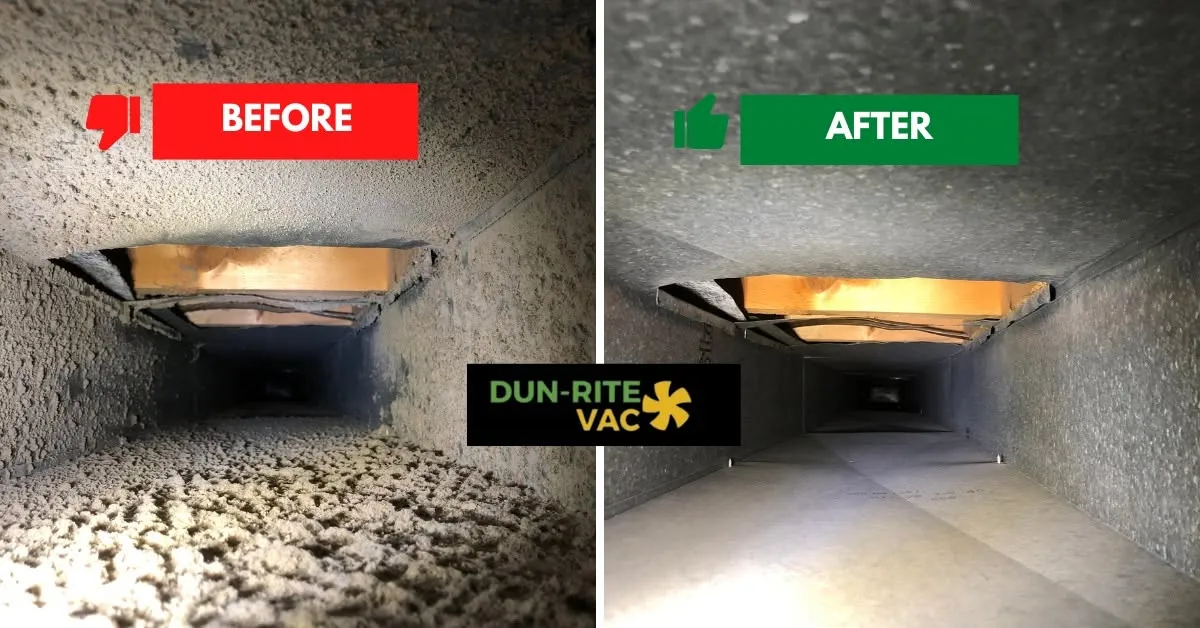
One thing we run into regularly on homes that have gone six or seven years between cleanings is a duct system so loaded with debris that the furnace filter has essentially stopped doing its job — the bypass points are too caked to matter. A new filter on an overdue system doesn’t fix the underlying problem; it just catches what the ducts are shedding back into the airstream. If you’re trying to understand what a proper furnace duct cleaning actually involves, our service page walks through the full process.
Saskatchewan’s Heating Season Is Longer — and That Changes the Math
National cleaning guidelines are written for a broad audience. They don’t account for furnaces in Yorkton or Weyburn typically running from late September through late April, and sometimes into May. That’s more than six months of continuous forced-air circulation. By comparison, many homes in coastal British Columbia only heat for about three months each year. Saskatchewan systems therefore see roughly twice the annual runtime.

More runtime means more airflow, and more airflow moves more dust and debris through the system. Dust, skin cells, pet hair, and particles entering through doors and windows all circulate during the heating season. Prairie homes are also sealed tightly against the cold, allowing indoor pollutants to build up. That’s why air exchanger maintenance matters so much. HRV and ERV systems require their own cleaning schedule, separate from the duct system.
On acreage properties outside Yorkton and Weyburn, where wood stoves or outdoor furnaces sometimes supplement the main forced-air system, we consistently find higher particulate levels than in town homes on municipal setups — the rule-of-thumb interval often needs to move down to three years, not four or five. Fine ash and combustion byproducts find their way into the system in ways a gas-only furnace doesn’t produce.
Not sure where your home falls on that timeline?
Our ASCS-certified technicians can give you a straight answer — no upsell, no manufactured urgency. Reach out for a free quote and we’ll help you figure out whether now is actually the right time.
Spring vs. Fall: When to Actually Book the Cleaning
Knowing when to do duct cleaning is just as important as knowing how often it should be done. In Saskatchewan, homeowners typically choose either spring or early fall depending on their heating schedule and indoor air quality concerns.
Spring cleaning (April–June) removes the dust and allergens that build up over the heating season. By spring, the furnace has been running for months and the ducts contain everything that settled over winter. Cleaning now removes that buildup before spring allergens arrive. It also avoids interrupting your heating because the furnace has already shut down for the season.
Pre-season fall cleaning (August–September) is another popular option. It’s especially worthwhile after nearby construction, a renovation, or if you missed the spring cleaning window. Cleaning before the first sustained cold snap means starting the heating season with clean ducts. Your furnace and blower circulate clean air from day one instead of redistributing summer dust.
If you aren’t sure how often to clean furnace ducts, a professional assessment can determine whether dust buildup justifies cleaning or if your system can safely wait another season. The honest answer is that the best time to clean furnace ducts is when they’re actually due — and picking the timing that works with your schedule is more important than holding out for a theoretically “perfect” season.
Four Situations That Reset the Clock Regardless of Timing
Interval-based thinking breaks down when something changes radically in the home. These situations warrant immediate cleaning even if the ducts were serviced recently:
1. A new pet or change in pet count: Dander load increases immediately and stays elevated. If you’ve added a dog or cat since the last cleaning, factor that in — don’t wait for the original interval to expire.
2. Visible mold, musty odours, or evidence of moisture intrusion: Mold in ductwork is a different problem than standard dust buildup — it requires cleaning plus addressing the moisture source. If you’re noticing musty smells from registers or visible growth around vents, that’s a prompt-service situation, not a “schedule it for next spring” one.
3. Moving into a previously owned home: You have no documented cleaning history. The previous owners may have had multiple pets, smoked in the household, or simply never had the ducts cleaned. Starting fresh with a baseline cleaning when you take possession is a standard practice.
4. A furnace replacement or major HVAC work: Installing a new furnace disturbs settled debris in the ductwork and often introduces installation dust. Cleaning after the new system is in ensures you’re not running a brand-new furnace through years of accumulated material from the old one.
What a Cleaning Interval Alone Doesn’t Tell You
Focusing only on how often to clean furnace ducts can lead homeowners to overlook adjacent systems that accumulate their own buildup on different schedules. The dryer vent is the most time-sensitive: lint accumulation is a fire risk. Most households need that cleaned every one to two years regardless of when the duct system was last serviced. A clogged dryer vent also forces the appliance to run longer, which accelerates wear and raises energy costs.
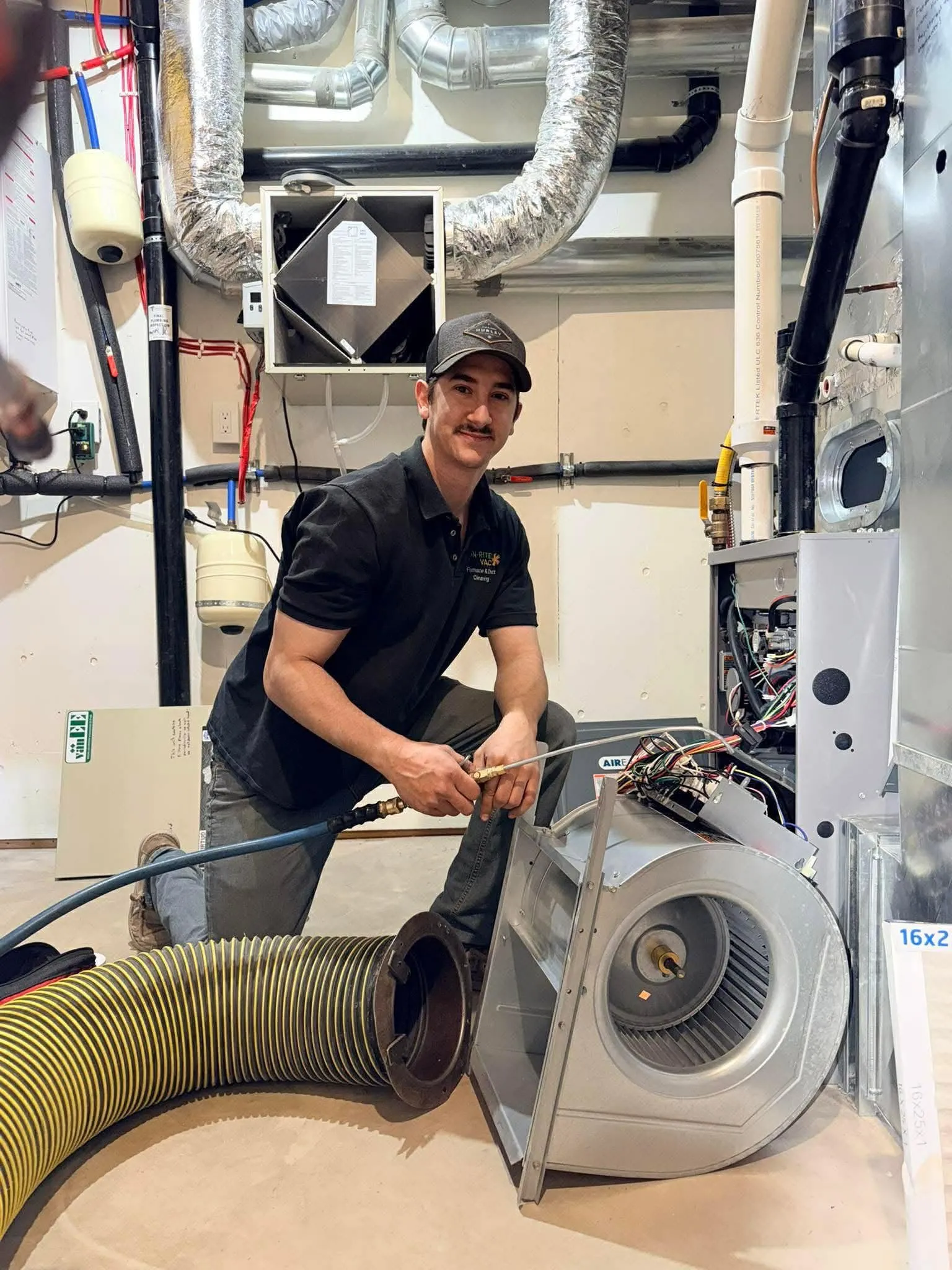
The air exchanger is a separate system. In tightly sealed Prairie homes, it’s often one of the most important components for indoor air quality. HRV and ERV units run year-round, and their filters and cores need regular cleaning on a schedule that differs from furnace ducts. If you haven’t had your air exchanger cleaned, it may be a higher priority than another duct cleaning, especially in homes built within the last 15–20 years.
Frequently Asked Questions
Does a brand-new home need duct cleaning before we move in?
Possibly, yes. New construction generates significant debris — drywall dust, insulation fragments, sawdust — that ends up inside ductwork during the build. Builders don’t typically deep-clean duct systems as part of handover. Whether cleaning is necessary before move-in depends on how thoroughly the builder protected and sealed registers during construction, but it’s always worth having the system assessed. Many new homeowners are surprised by what we find on first-time cleanings in homes less than two years old.
How often should I clean furnace ducts if I don’t have pets?
In genuinely low-load conditions, yes, some homes can go six or even seven years without a cleaning that’s truly necessary. The honest version of the guidance is that the 3–5 year range covers most households — it’s not a hard rule that expires on a fixed date. What matters more is whether there’s an observable reason to clean: reduced airflow, increased dust on surfaces, worsening air quality, or a household change. If none of those apply, you’re not doing damage by waiting a bit longer.
Is spring or fall a noticeably cheaper time to book?
Demand does vary seasonally — fall tends to be busier as homeowners think about the furnace before cold weather arrives, and early spring can fill up quickly as well. That said, cleaning pricing at Dun-Rite isn’t driven by seasonal surge pricing; the difference is mostly about booking lead time. If flexibility matters, late spring and summer often have shorter wait times for scheduling.
How do I know a company is actually cleaning the ducts thoroughly versus just vacuuming the registers?
This is the right question to ask, and the industry’s lack of regulation is why it matters. A proper HVAC system cleaning requires source removal under negative pressure and contact cleaning of duct surfaces. Technicians certified as Air Systems Cleaning Specialists (ASCS) are trained to that standard. Asking a company upfront whether they’re NADCA-certified and what their process involves will tell you quickly whether you’re dealing with a qualified operator or a low-bid company doing surface-level work.
Ready to Find Out How Often Air Duct Cleaning Is Right for Your Home?
With 27 years and over 50,000 completed jobs across Saskatchewan, our NADCA-certified team gives you a straight answer — and backs every cleaning with a 100% Satisfaction Guarantee. No pressure, no manufactured urgency.