
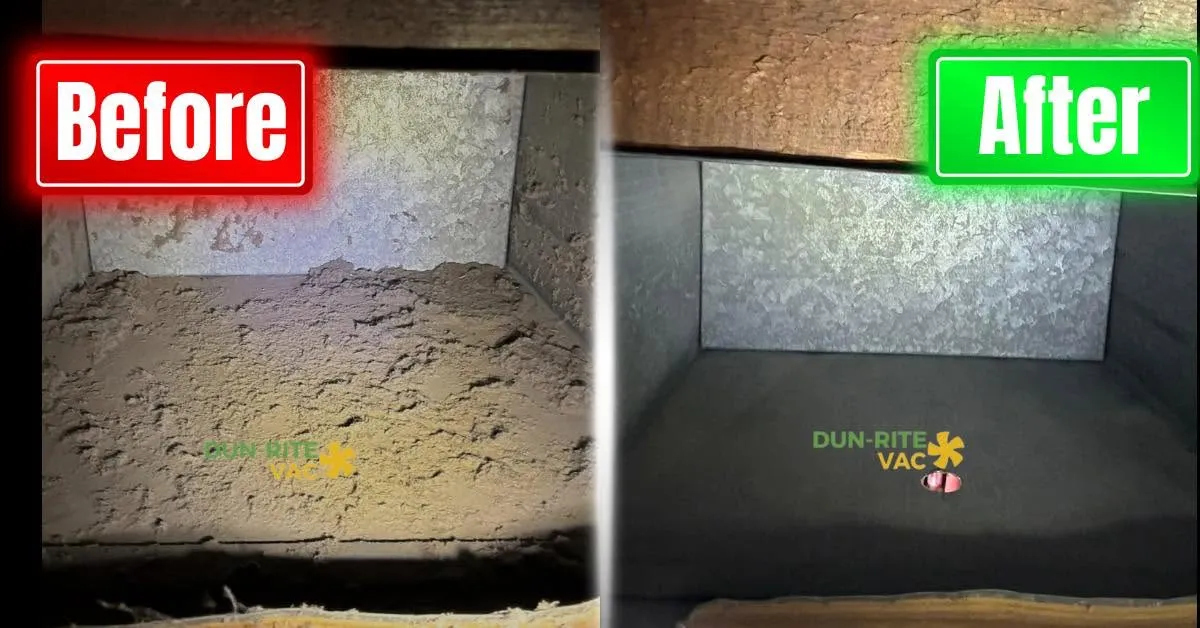
Across Saskatchewan, many homeowners discover dust inside their ductwork the same way. They remove a floor register, shine a flashlight inside, and notice how much debris has collected. A quick online search reveals dozens of inexpensive DIY duct cleaning kits and drill-powered brushes. They look simple to use. In reality, an air duct cleaning DIY project rarely goes as planned on a real Prairie HVAC system.
Quick Answer: DIY kits can remove light debris near vent openings. They cannot generate enough negative air pressure to clean the main trunk lines. Professional truck-mounted equipment removes fine dust, allergens, and heavy debris while keeping contaminants contained inside the collection system.
Table of Contents
Why Air Duct Cleaning DIY Kits Fall Short
Most retail kits include a flexible nylon brush and extension rods that attach to a cordless drill. The idea is simple. Spin the brush through the vent while a shop vacuum collects the loosened dust. Unfortunately, this approach works only for the first few feet of straight ductwork.
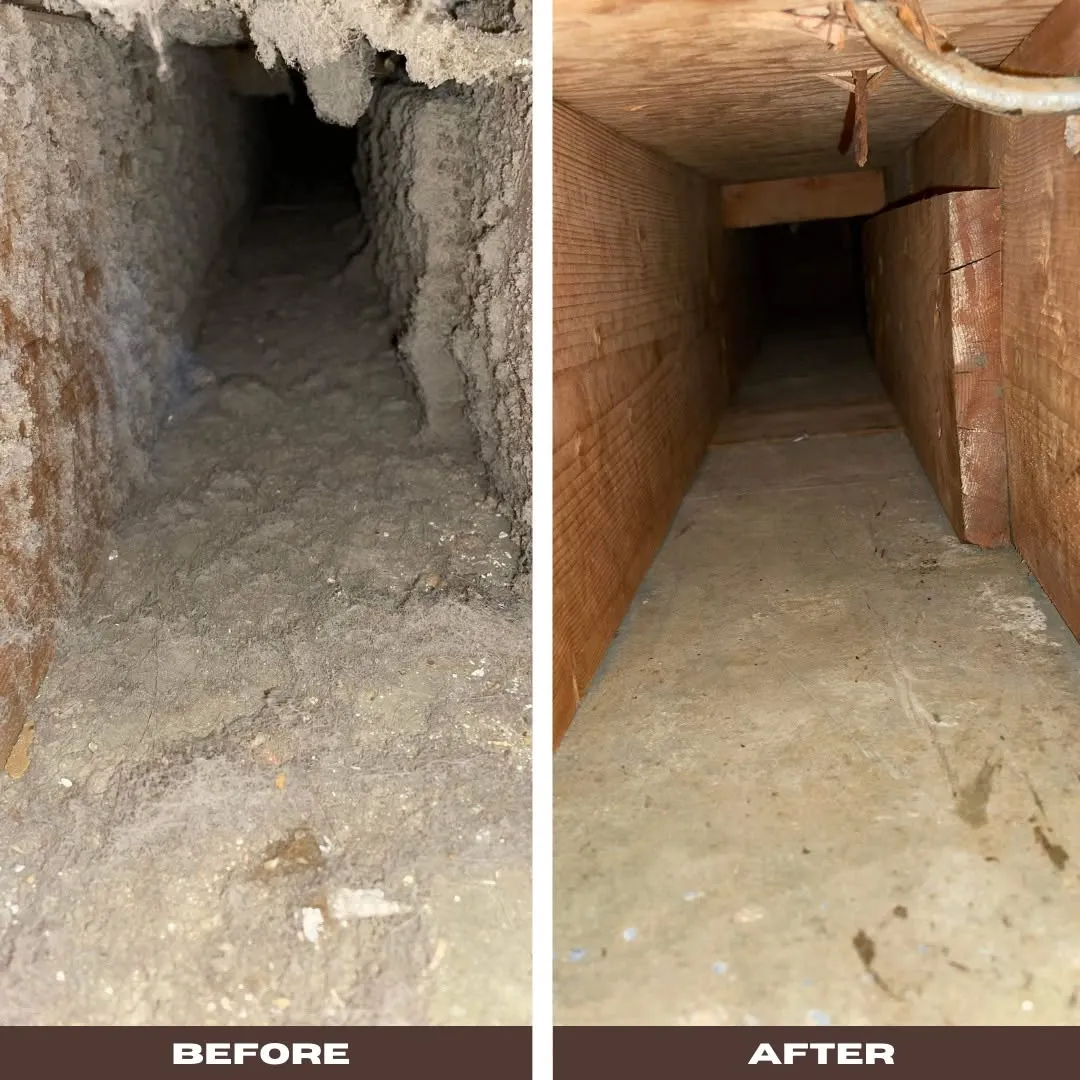
Household vacuums are built for small openings, not an entire HVAC system. Without strong, continuous airflow, loosened dust often becomes airborne instead of entering the vacuum. Those particles can travel through the ductwork and settle throughout your home. Professional cleaning keeps the entire system under negative pressure while technicians clean each branch individually. This follows NADCA’s recommended source removal process.
The Physics of a Professional Air Duct Cleaning Vacuum
Professional duct cleaning depends on continuous negative pressure throughout the HVAC system. Our technicians connect truck-mounted equipment directly to the main supply and return trunks. We also seal the remaining branch lines to isolate the system. This process follows the NADCA ACR Standard for source-removal cleaning.
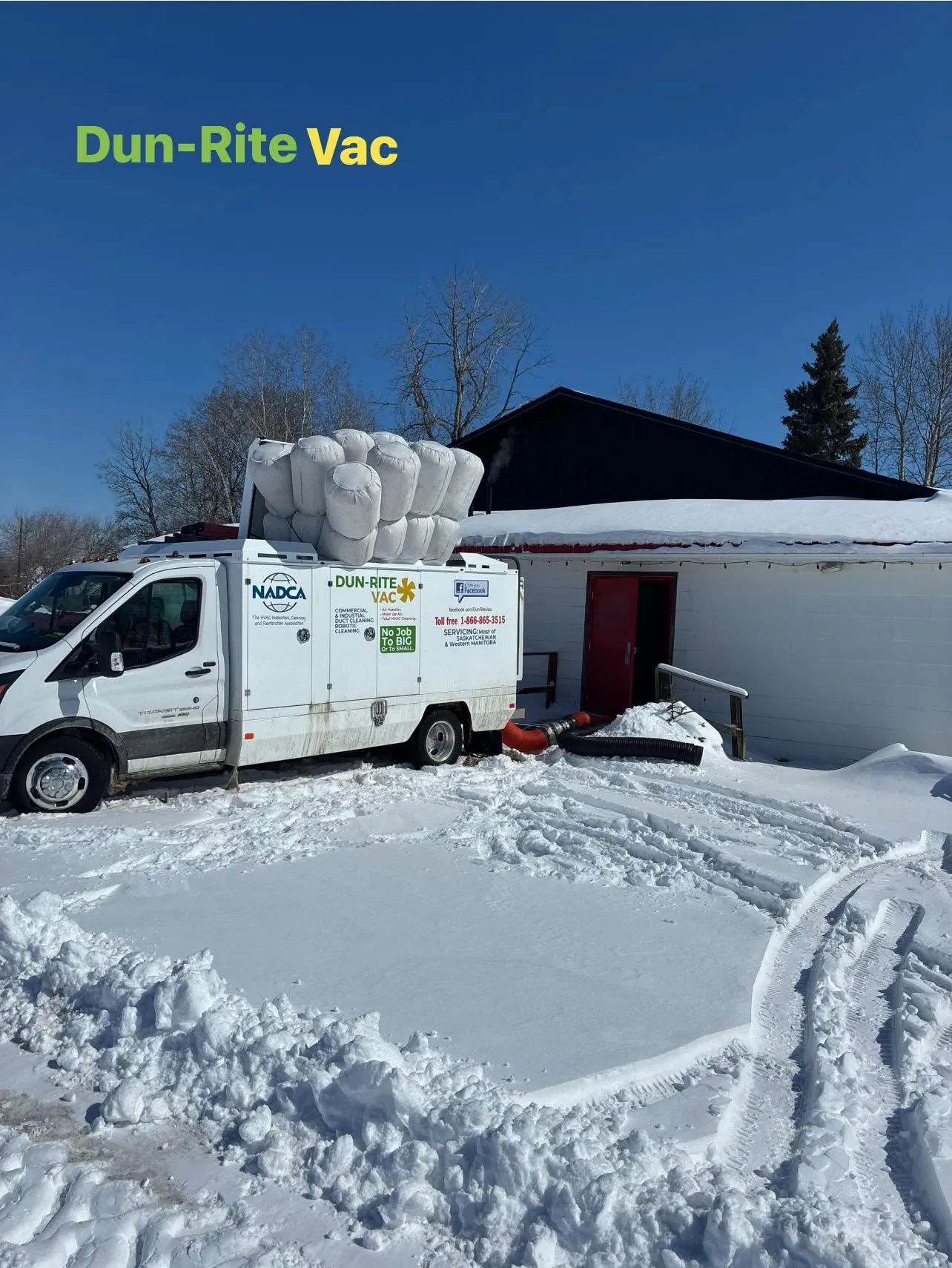
Consumer shop vacuums cannot create the sustained negative pressure needed for whole-home duct cleaning. Commercial truck-mounted systems move far more air. With the system under constant negative pressure, technicians clean one branch at a time while debris travels directly into the collection unit instead of your living space.
| Capability Factor | DIY Hardware Store Kit | Dun-Rite Industrial Setup |
|---|---|---|
| Airflow Volume | 100 – 150 CFM | Several thousand CFM |
| Main Trunk Extraction | Inaccessible by hand | Complete negative-draw removal |
| Contamination Risk | High (blown into rooms) | Greatly reduced through contained truck-mounted collection |
Leave the Heavy Lifting to Certified Local Experts
Avoid the mess and potential system damage of a DIY attempt. Get your entire system thoroughly cleaned by our NADCA-certified team with our 100% Satisfaction Guarantee.
Why Local Prairie Systems Present Unique DIY Pitfalls
Prairie furnaces often run for up to eight months each year. Long heating seasons create compacted dust that settles deep inside older sheet-metal ductwork. We commonly find this buildup in homes throughout Regina, Yorkton, and Saskatoon.
When we inspect these systems, we often find heavy sediment inside the main trunk lines. Retail brushes usually skim across the surface instead of removing it. Rural homes also collect agricultural dust, grit, and mineral deposits. Consumer hoses often kink at sharp duct bends, leaving the dirtiest sections untouched.
The Hidden Risks of Hitting It Alone
Beyond the frustration of an incomplete job, DIY duct cleaning carries genuine structural risks for your home’s mechanical systems. Flexible branch lines, often used to feed additions or renovated spaces, are incredibly easy to puncture with stiff plastic or metal rods. A single tear in a hidden flexible duct drops your airflow velocity, driving up utility bills as your system struggles to push heated air to its destination.
Pushing a consumer brush through older ductwork can snag metal seams or damage internal dampers. A detached brush head can become stuck inside a wall or ceiling cavity. Retrieving it often requires opening finished surfaces, turning a simple DIY project into an expensive repair.
Common Questions About DIY Duct Maintenance
Can I safely use my household vacuum to clean the registers?
Yes, you can absolutely unfasten your floor and wall register grates to vacuum out the immediate vertical drop using a standard brush tool extension. This is great routine maintenance to remove pet hair or fallen toys, but it will not reach or clean the central horizontal trunk lines where the majority of allergens settle.
Will a DIY brush kit clean my furnace filters or blower assembly?
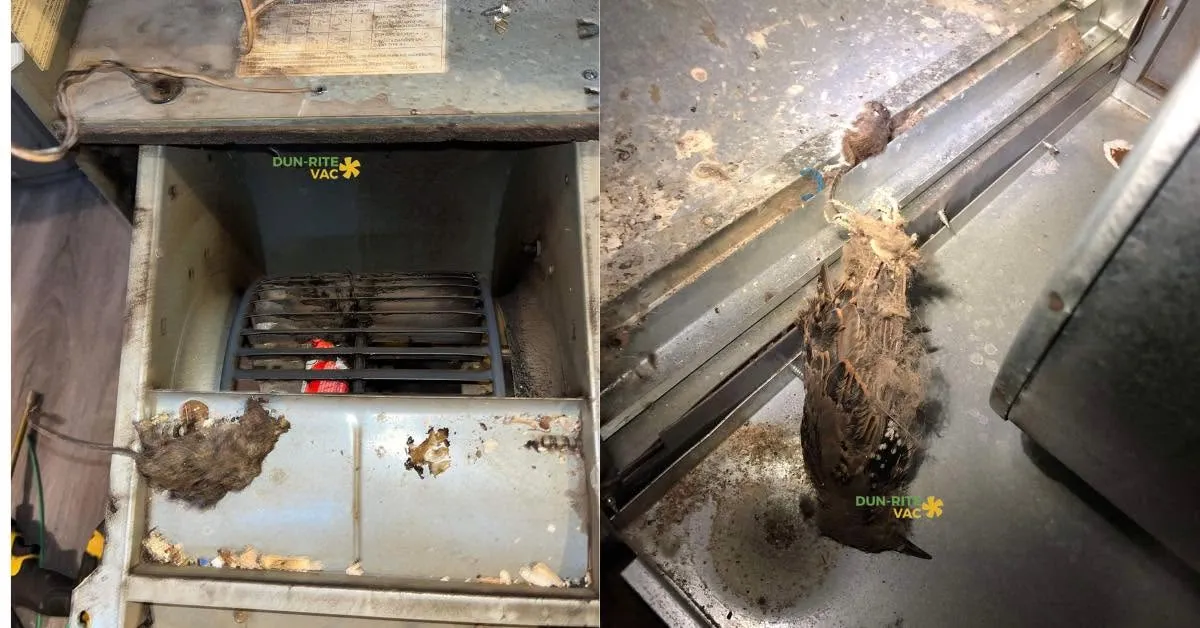
No. Consumer brush kits are designed only for straight duct runs. They cannot safely clean blower wheels, heating elements, or A/C coils. Those components require careful professional cleaning to avoid mechanical or electrical damage.
How can I tell if my main horizontal trunk lines are dirty?
If you see a dark ring of fine dust forming on the drywall or carpet immediately surrounding your supply registers, or if your filter becomes completely clogged with gray lint within just a few weeks of a fresh replacement, it usually means the deeper distribution network is overdue for a full professional extraction.
Get a Professional, Worry-Free Clean
We’re a third-generation family business with more than 27 years of experience in Saskatchewan. Our NADCA-certified technicians deliver professional source-removal cleaning, and we back every job with our 100% Satisfaction Guarantee.