
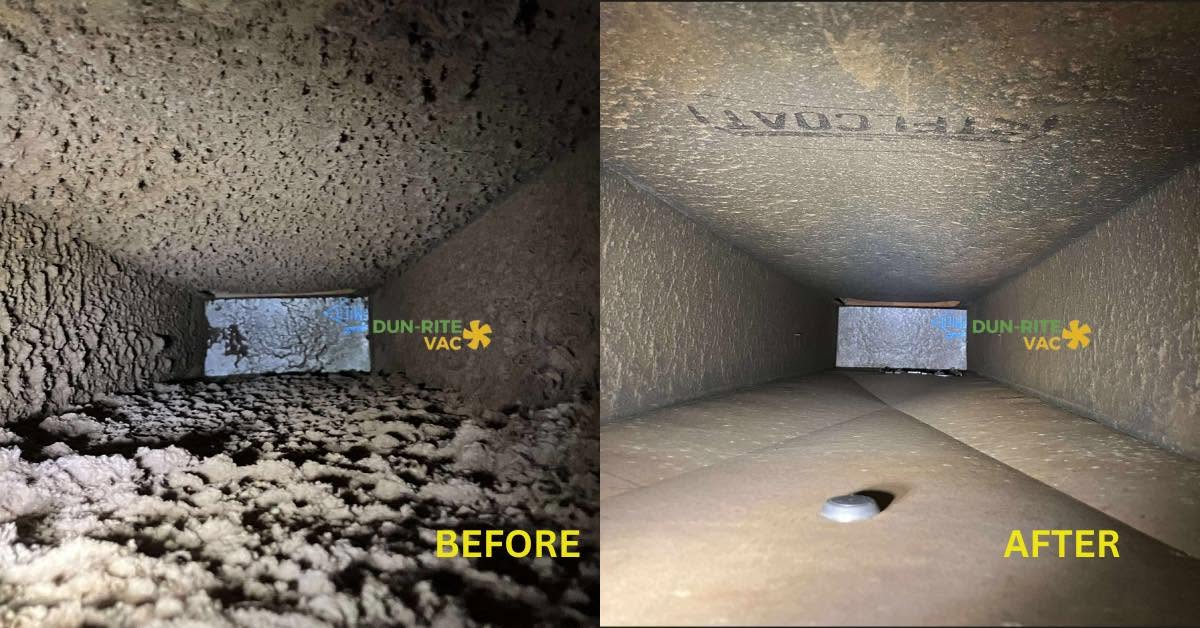
Saskatchewan homes run their furnaces hard — sometimes from September straight through to May. That long heating season means air moves through your ductwork thousands of hours a year, picking up and recirculating whatever accumulates inside: dust, pet dander, skin cells, construction debris, and in older homes, decades of buildup that no filter ever reached. Getting your ducts professionally cleaned removes what’s actually living in your system, not just what ends up on your vents.
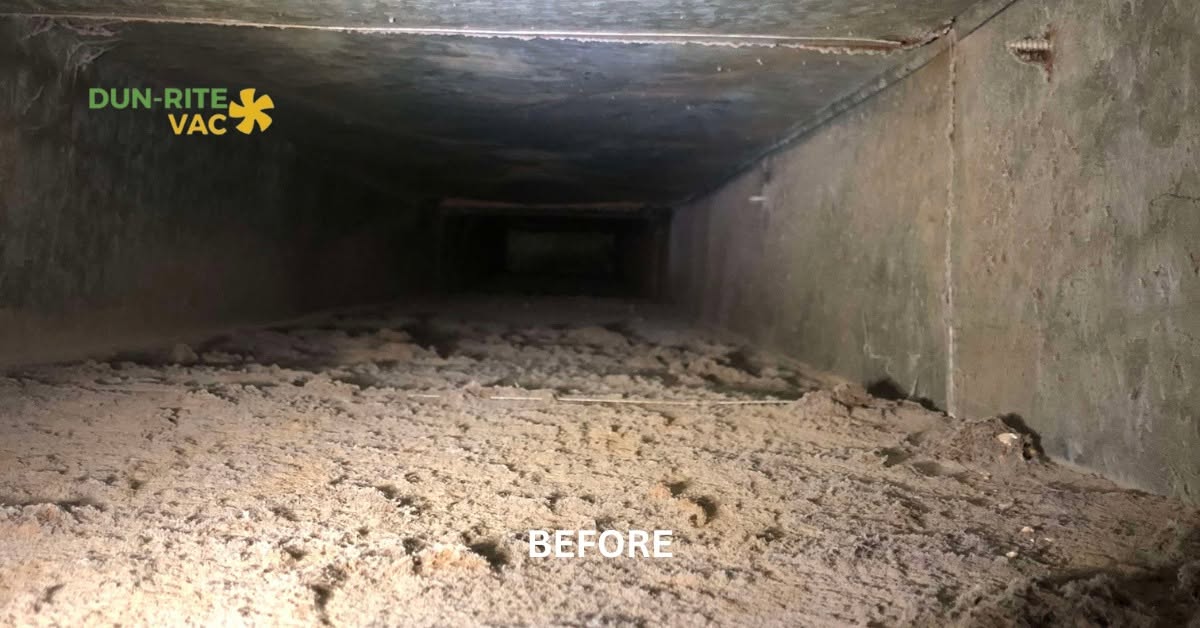
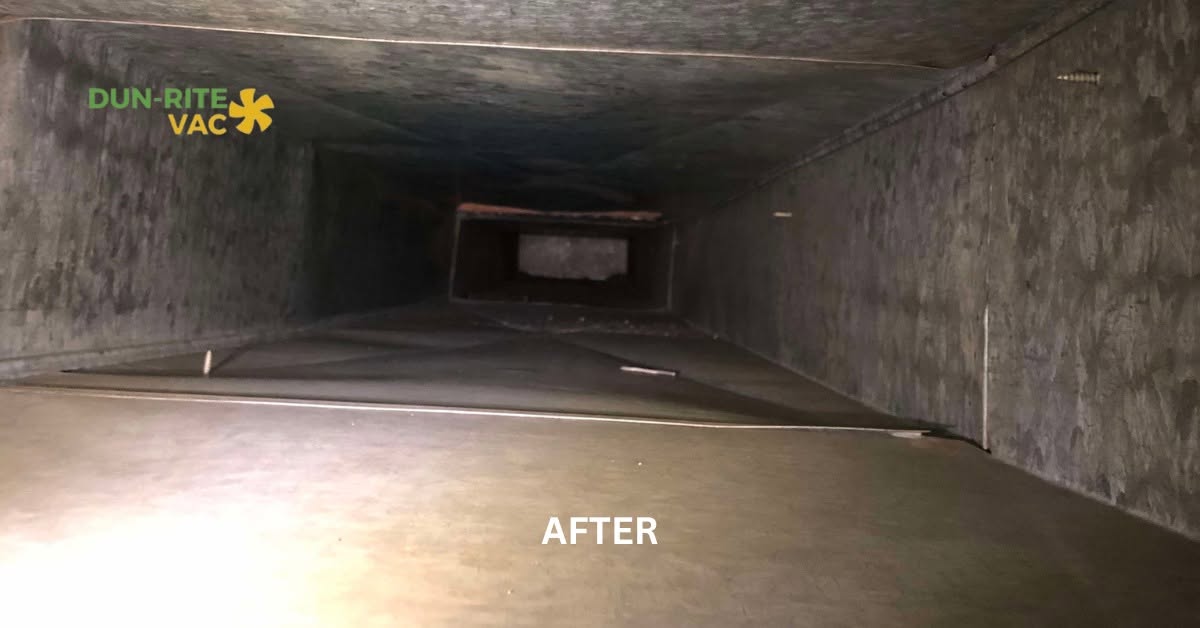
Quick Answer: Professional air duct cleaning uses high-powered negative-pressure equipment and hand-brushing to physically dislodge and extract accumulated dust, debris, and contaminants from your entire duct system — supply lines, returns, and the furnace cabinet itself. In Saskatchewan’s climate, most homes and light commercial buildings benefit from cleaning every 3–5 years, with shorter intervals for pets, renovations, or older ductwork — a guideline consistent with NADCA’s residential cleaning guidance.
What Professional Duct Cleaning Actually Involves
The term gets used loosely, but there’s a meaningful difference between a legitimate hvac duct cleaning and the “$99 whole-home special” outfits that show up with a household vacuum and a camera. Proper cleaning — the kind governed by NADCA standards — requires truck-mounted or commercial-grade negative-pressure equipment powerful enough to put the entire duct system under suction while technicians manually agitate and dislodge buildup from inside.
At Dun-Rite Vac, the process works like this: we seal off the system, connect high-capacity vacuum equipment to create negative pressure, then work register by register through every supply and return run with contact-cleaning tools — rotary brushes, air whips, and hand tools — before clearing the furnace cabinet, blower, and heat exchanger area. The debris goes into the vacuum system, not back into the room. That physical extraction is what separates real air duct cleaning services from a camera inspection or a light dusting of vents.
Why Saskatchewan’s Climate Makes This Especially Relevant
Most duct cleaning guides are written for a generic North American audience, but the Prairie climate creates specific conditions worth understanding. Saskatchewan homes seal tight against winters that push well below –30°C on the coldest nights. That’s good for energy efficiency. It also means indoor air recirculates through the same duct system for months — with little dilution from outside. (Environment Canada climate normals put Saskatoon’s sub-freezing stretch from September through April.) What builds up in there stays in there.
The heating season here also starts earlier and runs longer than in most of Canada. Running your furnace from September through April means seven to eight months of continuous air cycling. Whatever’s in your ducts stays in circulation the entire time. By spring, that post-winter dust and allergen load is real. Many homeowners book a cleaning in late spring once the furnace is resting. Others wait until late summer, just before the next heating season starts.
For homes and businesses using an HRV or air exchanger, sealed-building dynamics matter even more — those units pull fresh air in from outside but can become a source of contamination themselves when the internal media gets clogged. Our air exchanger cleaning service addresses that separately from the main duct system, since they’re distinct components with different cleaning requirements.
Older Ductwork: What We Find in Saskatoon and Regina Homes
A notable share of Saskatchewan’s housing stock dates back to the 1950s through 1980s. This includes established Saskatoon and Regina neighbourhoods, and smaller service-area towns like Yorkton and Weyburn. Those homes often have original sheet metal ductwork that has never been professionally cleaned. When our technicians open those systems up, what they find can be striking. Compacted dust and debris cycling through the home for decades. Sometimes old construction material mixed in from renovations.
Older systems have more joints and seams where material settles. Some also have flex duct added during renovations — it collects debris differently than rigid metal. None of this makes cleaning impossible — it just reinforces why proper contact-cleaning tools and adequate vacuum capacity actually matter, rather than equipment that generates suction but can’t reach the buildup.
Rural and acreage properties present their own variation: well water and agricultural environments mean higher ambient dust loads, and homes without municipal HVAC infrastructure sometimes have unique furnace setups that require a technician who’s actually worked with that equipment before. Our crews have completed 50,000+ jobs across the region since 1998. Most configurations aren’t a surprise.
What’s Actually Included in a Full System Cleaning
A thorough furnace and duct cleaning covers more than just the duct runs. Here’s the scope of a complete cleaning:
- All supply registers and return air grilles — we remove, clean, and reinstall them
- Supply and return duct runs — we contact-clean each run from register to trunk under negative pressure
- Trunk lines and main plenum — the large central channels where most volume accumulates
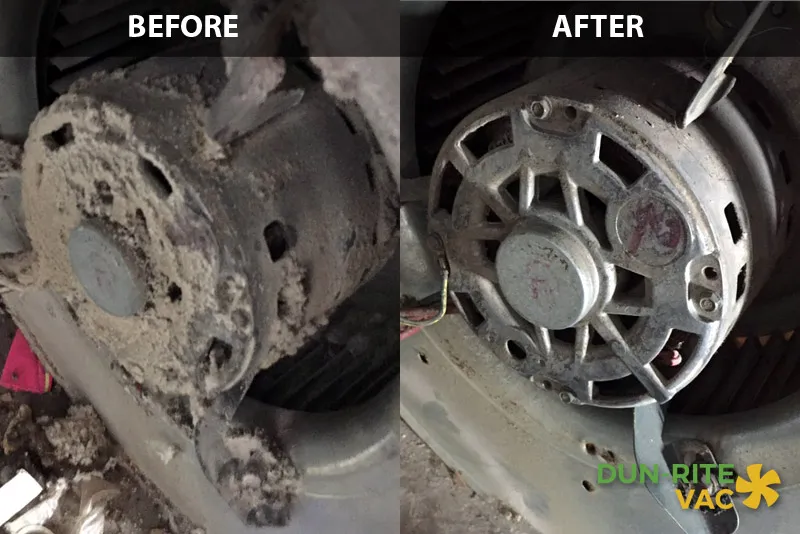
- Furnace blower and blower compartment — the blower wheel collects significant buildup and is a common source of recirculated debris
- Furnace cabinet interior — including heat exchanger area (visual check as part of the cleaning process)
- Evaporator coil area (where present and accessible) — we address this within the furnace cleaning visit
If mold, musty odour, or a contamination event is a concern, HVAC sanitization can follow the cleaning as a second step. It treats duct surfaces after debris is removed. It doesn’t replace cleaning — the physical extraction has to happen first.
Dryer vents are a separate system with a different service process — if yours is overdue, that’s worth handling on the same visit. Our dryer vent cleaning page covers what’s involved and how to tell when yours needs attention.
Residential vs. Commercial — How the Scope Differs
For homeowners, duct cleaning is largely about indoor air quality, allergen reduction, and making sure the furnace isn’t working harder than it needs to. For commercial properties — office buildings, retail spaces, multi-unit residential buildings, medical facilities — the stakes look a bit different.
Commercial duct systems are typically larger, run longer hours, and often cycle air for occupants who didn’t choose to be there (tenants, employees, customers). Contaminated ductwork affects productivity and health. In commercial settings, that has real operational consequences. Utility cost and equipment longevity matter too — a system running with heavy debris load runs less efficiently than a clean one, and that shows up in energy bills over a Saskatchewan winter.
We’ve detailed the specific concerns and process for each on their own pages: residential duct cleaning and commercial duct cleaning.
What to Look for When Hiring an Air Duct Cleaning Service
The duct cleaning industry has an unfortunately well-earned reputation for bait-and-switch operators — low teaser prices that climb steeply once they’re in your home, or “cleaning” that amounts to little more than a vacuum hose at the register. A CBC Marketplace hidden-camera investigation documented Canadian companies completing jobs in under an hour for $99–$115, with a NADCA expert confirming the ductwork had barely been touched. A few signals of a legitimate operation:
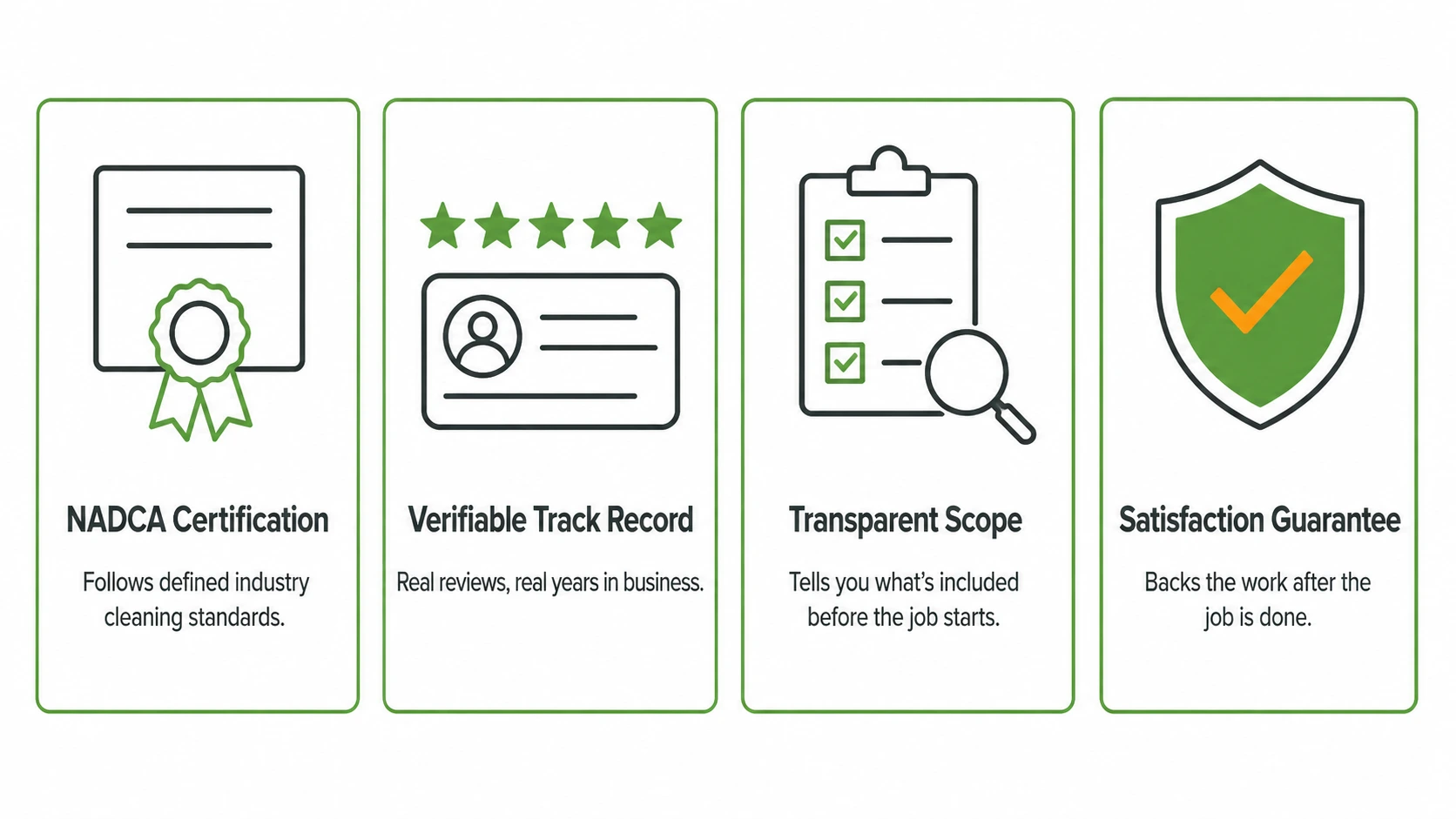
NADCA certification. The National Air Duct Cleaners Association sets the industry standard for cleaning processes and equipment. NADCA-certified companies follow defined protocols. It’s not just a logo — it carries real accountability. Dun-Rite Vac has held NADCA certification for years and our technicians carry ASCS (Air Systems Cleaning Specialist) credentials.
Verifiable track record. Years in business, a real BBB rating, and a volume of genuine reviews matter more than a slick website. We’ve been cleaning ducts in Saskatchewan since 1998. Over 250 five-star Google reviews and an A+ BBB rating reflect 27 years of actual work — not a marketing campaign.
Transparent scope. A reputable company tells you what’s included before the job starts and doesn’t pressure you into add-ons mid-visit.
A satisfaction guarantee. We back every job with a 100% Satisfaction Guarantee — if something isn’t right, we make it right. That’s a commitment that disreputable operators aren’t willing to make.
If you’re evaluating options and want a more detailed breakdown of what separates quality companies from problematic ones, our post on hiring an air duct cleaning company goes deeper on that.
Frequently Asked Questions
How do I know if my ducts actually need cleaning, or if it’s just a sales pitch?
There are some clear signals: visible dust or debris blowing from registers when the furnace kicks on, a musty or stale smell that persists even after changing the filter, a dramatic increase in surface dust accumulation despite regular cleaning, or documented events like a recent renovation, pest intrusion, or flood. Frequency alone isn’t a trigger. If your home is clean, pets are minimal, and nothing major has happened to the system, you’re likely at the far end of the 3–5 year range. We’d rather tell you that honestly than book an unnecessary job.
Does the type of furnace filter I use affect how often I need duct cleaning?
Yes, meaningfully. High-efficiency filters (MERV 11–13 range) catch more particulates before they enter the duct system, which can slow buildup over time — the EPA recommends at least MERV 13 where your system can handle it. However, they need to be changed on schedule. Higher-rated filters create more airflow resistance — a clogged one strains the furnace and can pull more debris past it than a clean standard filter would. The DOE’s Building America Solution Center flags this as exactly why timely replacement matters. Good filtration and periodic duct cleaning work together; one doesn’t fully replace the other, especially in a Prairie home that’s sealed tight all winter.
Can duct cleaning be done in occupied homes or buildings?
Yes — we work in occupied homes regularly. The negative-pressure setup draws debris into the vacuum equipment — not back into the room. The job doesn’t require anyone to leave. For commercial settings with sensitive occupants (medical offices, schools, care homes), we can schedule around off-hours if that works better but it’s not a requirement for a standard cleaning.
What’s the difference between furnace duct cleaning and HVAC sanitization?
Duct cleaning is the physical process of removing accumulated debris from the duct system. Sanitization is a chemical treatment applied to duct surfaces after cleaning to address microbial growth — mold, bacteria, or other biological contaminants. Sanitization only makes sense after a thorough cleaning; NADCA’s own guidelines state these products “should only be considered after mechanical surface cleaning has been performed” — applying them to an uncleaned system puts the job outside the standard entirely. Most homes don’t need sanitization — use it when mold, water intrusion, or a specific air quality event has affected the system
Ready to get a quote?
We’ve been doing this across Saskatchewan since 1998 — there’s no pressure, no surprise charges on-site, and every job is backed by our 100% Satisfaction Guarantee. Tell us about your home or building and we’ll give you a straight answer on scope and cost.