
If your family’s sneezing ramps up the second the furnace kicks on for the season, you’re not imagining it. Saskatchewan homes spend a long stretch of the year sealed up tight against the cold. Whatever’s circulating through your ducts circulates through your living room too. For families dealing with allergies or asthma, air duct cleaning for allergies is one of the few maintenance jobs that really moves the needle. It can make a noticeable difference in how everyone breathes indoors.
Quick Answer: For most allergy-sensitive households, yes — duct cleaning can reduce the dust, pet dander, and pollen recirculating through your system. This is especially true in older homes or after a dry Prairie winter. It’s not a cure-all. You still need a clean furnace filter and a well-maintained system too, but it’s a legitimate step that many symptomatic households find worthwhile.
Why Prairie Homes Are Especially Prone to Duct-Driven Allergens
Two things work against allergy sufferers here. First, the heating season runs long and dry. By February, your furnace has been pushing air through the same ductwork for months without a break. Dry air holds onto fine dust particles instead of letting them settle. Second, newer cold-climate homes are built tight for energy efficiency. That’s great for your heating bill, but it means less natural air exchange to flush out what’s accumulating indoors.
Add in spring pollen working its way indoors through open windows and doors. You’ve got a system collecting allergens for most of the year before anyone notices a problem.
What Actually Builds Up Inside Your Ducts
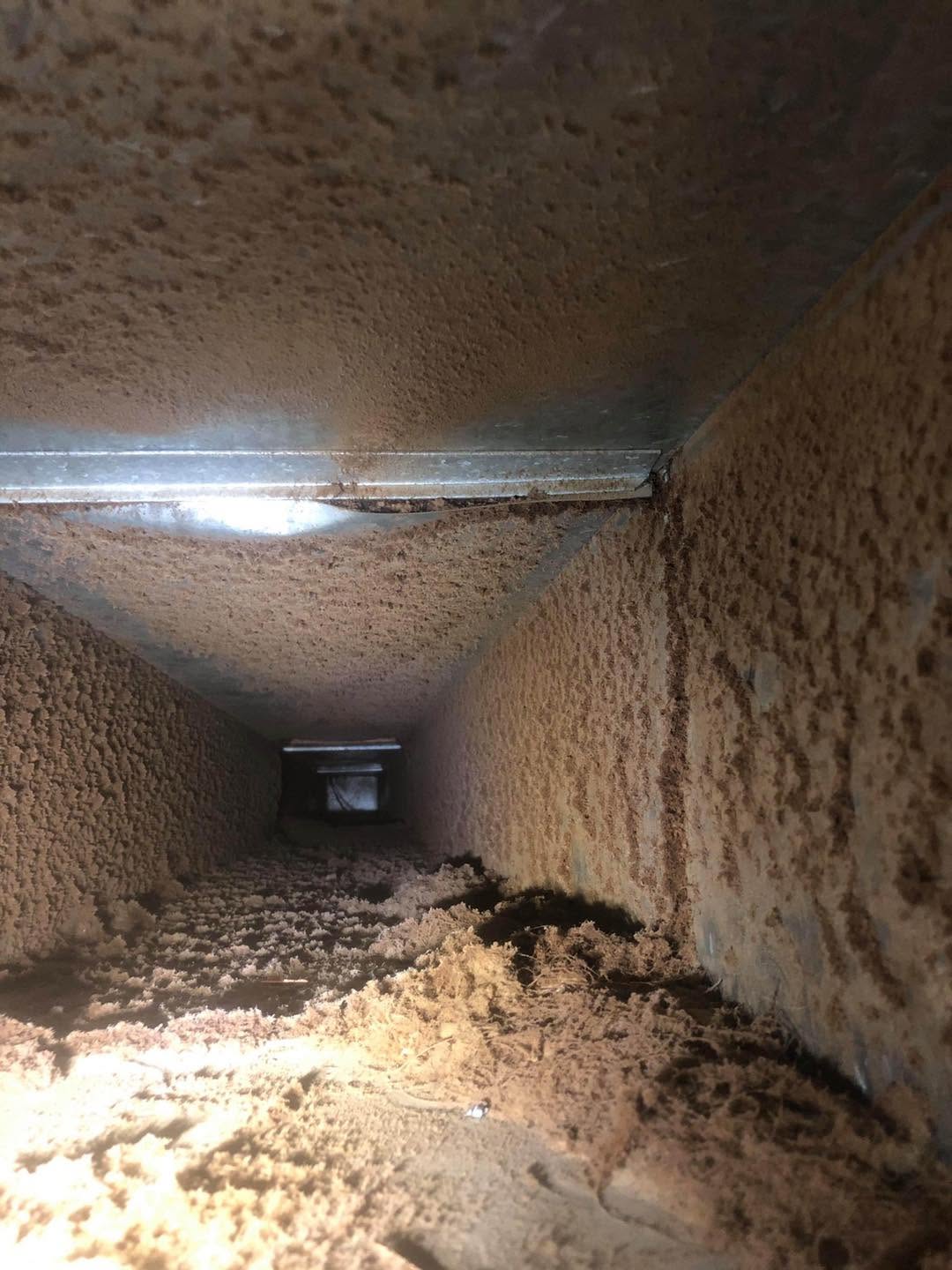
When our technicians open up a residential system that hasn’t been cleaned in a few years, it’s rarely just “dust.” It’s usually a mix of:
✅ Pet Dander and Hair — even in homes without indoor pets full-time, dander travels through shared HVAC returns.
✅ Pollen Residue — settles in duct runs during spring and summer, then gets stirred back into circulation once the furnace restarts in fall.
✅ Dust and Skin Cells — the baseline buildup in any home, worse in older housing stock with dated duct sealing and filtration.
✅ Mold or Microbial Growth — not present in every system, but more likely where there’s a moisture issue elsewhere in the home. Older basement furnace setups and rural properties on well water are common culprits.
Signs Your Ducts May Be Contributing to Allergy Symptoms
Not every sniffle means it’s time to call us. A few patterns are worth paying attention to, though:
- Symptoms that flare specifically when the furnace or A/C is running, then ease up when it’s off
- A noticeable layer of dust returning to surfaces within a day or two of cleaning
- Visible dust blowing out of supply vents when the system starts
- Household members with asthma or allergies who feel worse indoors than outdoors during the heating season
If that sounds familiar, the ductwork is a reasonable place to look. It’s worth ruling out an overdue furnace filter change first, though. That’s the cheapest fix, and it sometimes solves the problem on its own.
Does Duct Cleaning Help Airflow Too?
Air duct cleaning can improve airflow, depending on how much buildup is actually in there. Heavily restricted ducts make your furnace work harder to push the same volume of air through a narrower space. As a result, you may notice uneven heating from room to room and a system that runs longer than it should. Clearing that buildup out doesn’t just reduce the allergens circulating through the air. The added airflow can also help your system breathe easier, improving both comfort and the furnace’s long-term workload.
Airflow problems can also come from other sources, though — closed dampers, undersized returns, an aging furnace. Duct cleaning is one piece of the picture, not a guaranteed airflow fix on its own.
What a Professional Cleaning Actually Involves
We follow NADCA’s (National Air Duct Cleaners Association) standards on every job. That means a thorough, source-removal clean of the full supply and return system — not a quick vacuum near the vents. Our ASCS-certified technicians inspect the system as they go — you can’t properly clean what you haven’t looked at. That inspection happens as a built-in part of the cleaning visit rather than a separate trip.
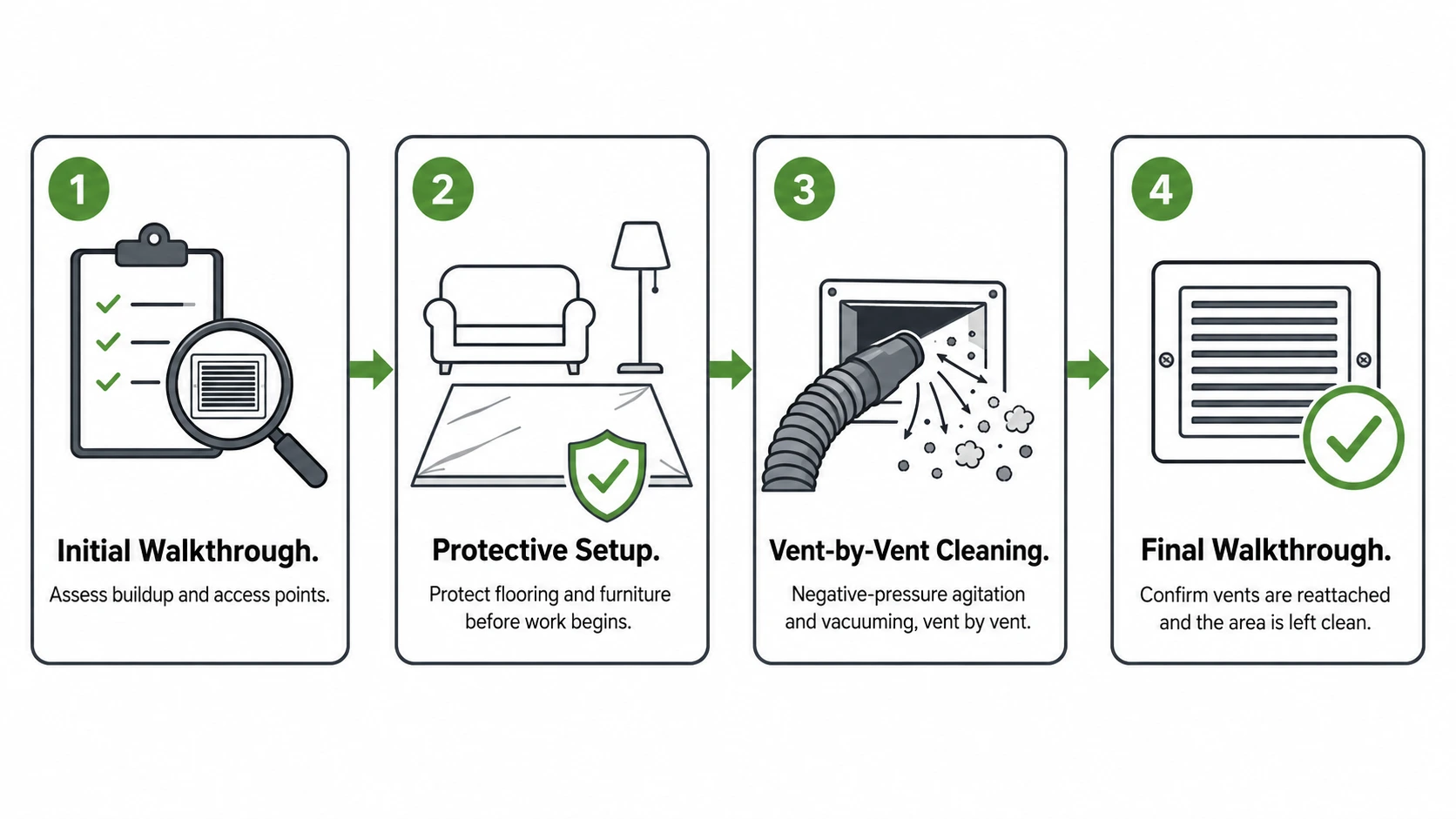
A typical visit follows the same basic sequence regardless of home size. That means an initial walkthrough, protective setup, vent-by-vent cleaning, and a final check before we leave.
This is also a good time to mention your home’s air exchanger or HRV, if you have one. In tightly sealed Prairie homes, these units do a lot of the work bringing fresh air in. A dirty exchanger can undercut the benefit of clean ducts. We cover that separately under air exchanger cleaning if it’s been a while since yours was serviced.
Setting Realistic Expectations
We’d rather be straight with you than oversell every situation as urgent. Our approach here lines up with the EPA’s own guidance on when duct cleaning is worth it. That guidance points to visible mold, debris, or household symptoms as the deciding factors—not a fixed schedule. Newer homes with regularly changed furnace filters are often in good shape already. The same is especially true if nobody in the house is showing symptoms. For households with diagnosed allergies or asthma, older duct systems, pets, or a system that hasn’t been cleaned in three-plus years, the story changes. In those situations, professional cleaning is a reasonable step that’s often noticeably effective. Families have told us as much after more than 50,000 completed jobs across Saskatchewan and Western Manitoba.
If you want the cost-and-value side of this conversation, we’ve also written about how air duct cleaning can save you money. It pairs well with the health angle here.
FAQ
How soon after a cleaning will allergy symptoms improve?
Many families notice a difference within the first few days to a couple of weeks. That’s especially true once the furnace has cycled fresh air through the cleaned system a few times. Results vary based on how much buildup was there to begin with. It also depends on whether other allergy sources — carpets, bedding, pets — are being managed.
Is duct cleaning enough on its own, or do I still need a good air filter?
You still need a good filter. Duct cleaning removes what’s already accumulated in the system; the filter is what keeps new particles from building back up. Think of them as two parts of the same job, not substitutes for each other.
How often should an allergy-prone household get ducts cleaned?
There’s no one-size-fits-all number. Households with pets, allergies, or older housing stock often benefit from more frequent attention than the general 3-5 year guideline. It’s worth reassessing every couple of years, depending on symptoms.
Can duct cleaning help with asthma, not just seasonal allergies?
Professional duct cleaning can help reduce common asthma triggers like dust and pet dander circulating through the system. The EPA names dust mites and pet dander among the most common indoor asthma triggers. Even so, duct cleaning isn’t a medical treatment and shouldn’t replace guidance from a doctor for managing asthma symptoms.
Ready to Breathe Easier This Season?
We’ve been doing this as a family business since 1998 — third generation now. Every job comes backed by our 100% Satisfaction Guarantee. If your household’s allergy symptoms seem tied to what’s circulating through your ducts, our residential duct cleaning service is a solid place to start. It’s part of our broader furnace duct cleaning work.