
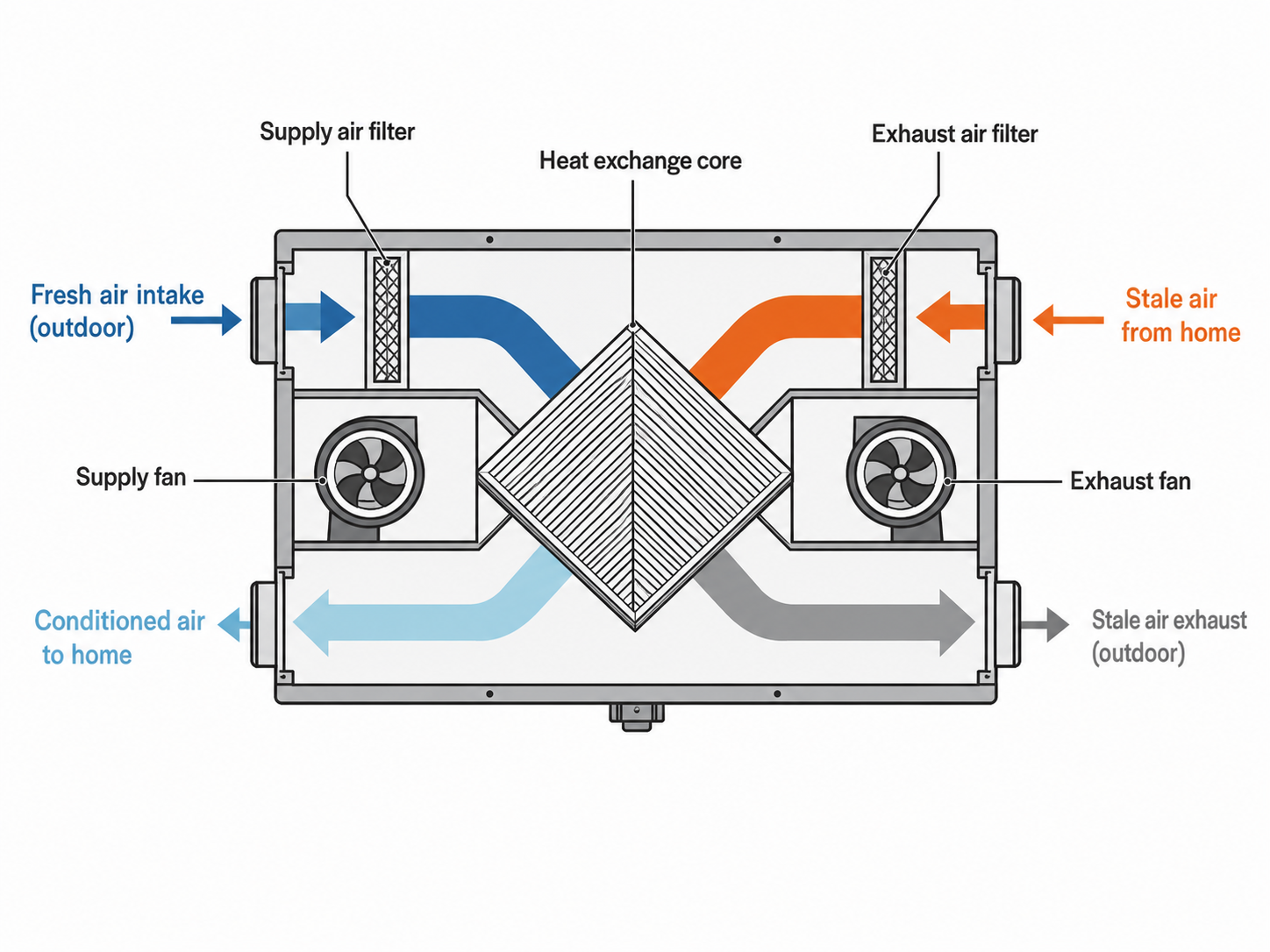
The challenge is that maintenance is more than a quick filter change. Filters are only one piece of a system that includes a heat recovery core, drainage components, fans, and connected ductwork that all need attention over time.
Quick Answer: HRV system maintenance includes regular filter checks, cleaning the heat recovery core, verifying drainage components, inspecting airflow pathways, and assessing the condition of connected ducts. While homeowners can handle basic filter care, a professional HRV cleaning service provides a deeper system-level cleaning and evaluation that DIY maintenance typically misses.
Table of Contents
HRV Maintenance and HRV Cleaning Aren’t the Same Thing
A common misunderstanding is treating maintenance and cleaning as interchangeable. They’re related, but they solve different problems.
Routine air exchanger maintenance focuses on keeping the system operating properly throughout the year. That includes checking filters, monitoring airflow, ensuring condensate drains remain clear, and verifying components are functioning as intended.
Cleaning, on the other hand, addresses accumulated dust, debris, and contamination inside system components. If buildup has already developed inside the core or connected ductwork, replacing a filter alone won’t restore performance.
Think of it like vehicle ownership. Checking tire pressure is maintenance. Removing years of accumulated grime from engine components is cleaning. Both matter, but they serve different purposes.
Why Saskatchewan’s Climate Makes HRV Care More Important
Many homes across Saskatchewan and Western Manitoba are built tighter than older homes in order to improve energy efficiency — a shift driven by updated airtightness requirements under the National Building Code of Canada. That’s good for heating costs during long winters, but it also means fresh-air exchange becomes increasingly important.
One thing we see regularly on Prairie homes is an HRV running nearly continuously through much of the heating season. Months of dry winter operation naturally pull dust, lint, and airborne particles into filters and ventilation pathways.
In newer homes, reduced airflow may not be immediately obvious because the system continues running. Instead, homeowners often notice lingering cooking odours, stuffy rooms, excess window condensation, or uneven freshness throughout the house.
These symptoms don’t always indicate a broken HRV. More often, they signal a system that’s overdue for proper maintenance.
What Gets Missed When Filter Swaps Become the Entire Maintenance Plan
Changing filters is absolutely worthwhile. In fact, it’s one of the most important homeowner tasks. The problem arises when filter replacement becomes the only maintenance performed year after year.
A common situation our technicians run into involves homeowners who have been diligent about replacing filters but have never cleaned the heat recovery core itself. The filters look great, yet airflow remains restricted because debris has accumulated elsewhere in the system.
Other areas commonly overlooked include:
- Condensate drains that can develop blockages
- Fan assemblies collecting dust buildup
- Outdoor intake and exhaust hoods becoming partially obstructed
- Duct connections accumulating debris over time
- Heat recovery cores requiring periodic cleaning
A dust-loaded core doesn’t look dramatic from the outside — the unit keeps running, and the housing looks the same as always. The difference shows up in performance: airflow drops, the heat exchange process becomes less efficient, and the system works harder to move the same amount of air. That’s part of why core buildup is one of the most commonly missed maintenance items — there’s rarely a visible warning sign until efficiency has already declined.
On older homes that have undergone renovations, we sometimes find construction dust lingering in ventilation pathways long after the project is complete. Even when filters are changed regularly, those deposits can continue affecting system performance.
What Professional HRV System Maintenance Actually Includes
While exact requirements vary by installation, a comprehensive visit often includes:
- ✅ Filter assessment and cleaning where applicable
- ✅ Heat recovery core cleaning according to manufacturer recommendations
- ✅ Drainage inspection to identify blockages or moisture issues
- ✅ Airflow pathway review throughout the system
- ✅ Connected duct evaluation during the cleaning visit
- ✅ Fan and component cleaning where buildup is present
This system-wide approach helps identify developing problems before they affect comfort or efficiency. It also gives homeowners a clearer picture of whether their ventilation system is operating the way it was designed to.
For households concerned about overall indoor air quality, HRV maintenance often complements services such as furnace duct cleaning, though each service addresses different parts of the home’s air distribution system.
At Dun-Rite Vac, our NADCA-certified team and ASCS-certified technicians bring experience from more than 50,000 completed jobs across Saskatchewan and Western Manitoba. That experience helps us recognize patterns that aren’t always obvious from a quick visual check alone.
The Best Time of Year to Service an Air Exchanger
Many homeowners wait until a problem appears. A better approach is scheduling maintenance before the system enters its busiest operating period.
For Saskatchewan homes, late summer and early fall are often ideal. This timing prepares the system before months of winter operation when windows remain closed and ventilation becomes especially important.
Spring can also be a practical option. After a long heating season, maintenance helps remove accumulated dust and debris while ensuring the system is ready for warmer weather.
Not every HRV requires immediate professional attention every year. The right frequency depends on occupancy levels, pets, renovation history, and overall household conditions. An honest assessment should focus on the system’s actual condition rather than pushing unnecessary service.
How Often Should HRV System Maintenance Be Performed?
There’s no single answer that fits every home, but these general guidelines give a useful starting point for most Saskatchewan households:
- Filters: Check every 1–3 months during the heating season; clean or replace as needed. ASHRAE Standard 62.2 identifies regular filter maintenance as essential to sustained HRV airflow performance. Homes with pets or recent renovations may need more frequent attention.
- Heat recovery core: Clean annually, or per manufacturer guidelines — as recommended by the Home Ventilating Institute, the primary North American certification body for residential ventilation equipment. This is the step most often skipped by homeowners doing their own upkeep.
- Professional inspection: Every 1–2 years for most homes, or sooner if airflow symptoms appear — lingering odours, excess window condensation, or noticeably reduced freshness. Based on our experience servicing HRV systems across Saskatchewan, this schedule keeps most households ahead of performance issues before they become noticeable.
Part of what a professional inspection adds is objective measurement rather than a guess. Verifying airflow and pressure against the system’s rated specifications shows whether it’s actually performing as designed, not just whether it sounds like it’s running normally.
Frequently Asked Questions
Can I perform HRV maintenance myself?
Homeowners can usually handle routine filter cleaning or replacement according to manufacturer guidelines. More involved tasks such as core cleaning, airflow evaluation, and system-wide cleaning are often better suited to trained professionals.
How do I know if my air exchanger needs attention?
Reduced airflow, lingering indoor odours, excess condensation on windows, or noticeably dirtier filters than usual can all indicate that maintenance is overdue.
Does an HRV run differently in winter than summer?
Yes. Saskatchewan’s long heating season often places greater demand on HRV systems because homes remain sealed for extended periods. That’s one reason regular maintenance is especially important in colder climates.
Will maintenance improve indoor air quality?
When airflow restrictions and buildup are removed, the system can operate more effectively. That helps support proper ventilation and fresher indoor air throughout the home.
What happens if HRV maintenance is neglected?
Over time, restricted airflow reduces the system’s ability to exchange stale indoor air with fresh outdoor air. Homeowners may notice stuffiness, persistent odours, or excess window condensation. According to the ASHRAE Handbook: HVAC Systems and Equipment, heat exchanger performance degrades when cores are contaminated or obstructed — reducing thermal transfer efficiency and increasing the energy demand required to maintain designed ventilation rates.
How long does a professional HRV cleaning service take?
Most visits take between one and two hours depending on system size, accessibility, and the extent of buildup found. A technician who also evaluates connected ductwork may need additional time. You’ll typically know the condition of your system before the visit is complete.
Keep Your HRV Working the Way It Was Designed To
Whether your system needs a deeper cleaning or you’re simply unsure when it was last serviced, Dun-Rite Vac can help assess its condition as part of a professional air exchanger cleaning visit. With more than 27 years of experience, NADCA-certified expertise, and a 100% Satisfaction Guarantee, you’ll get straightforward recommendations based on your system’s actual needs.
Find out whether your HRV system maintenance is keeping pace with Saskatchewan’s demanding climate.