
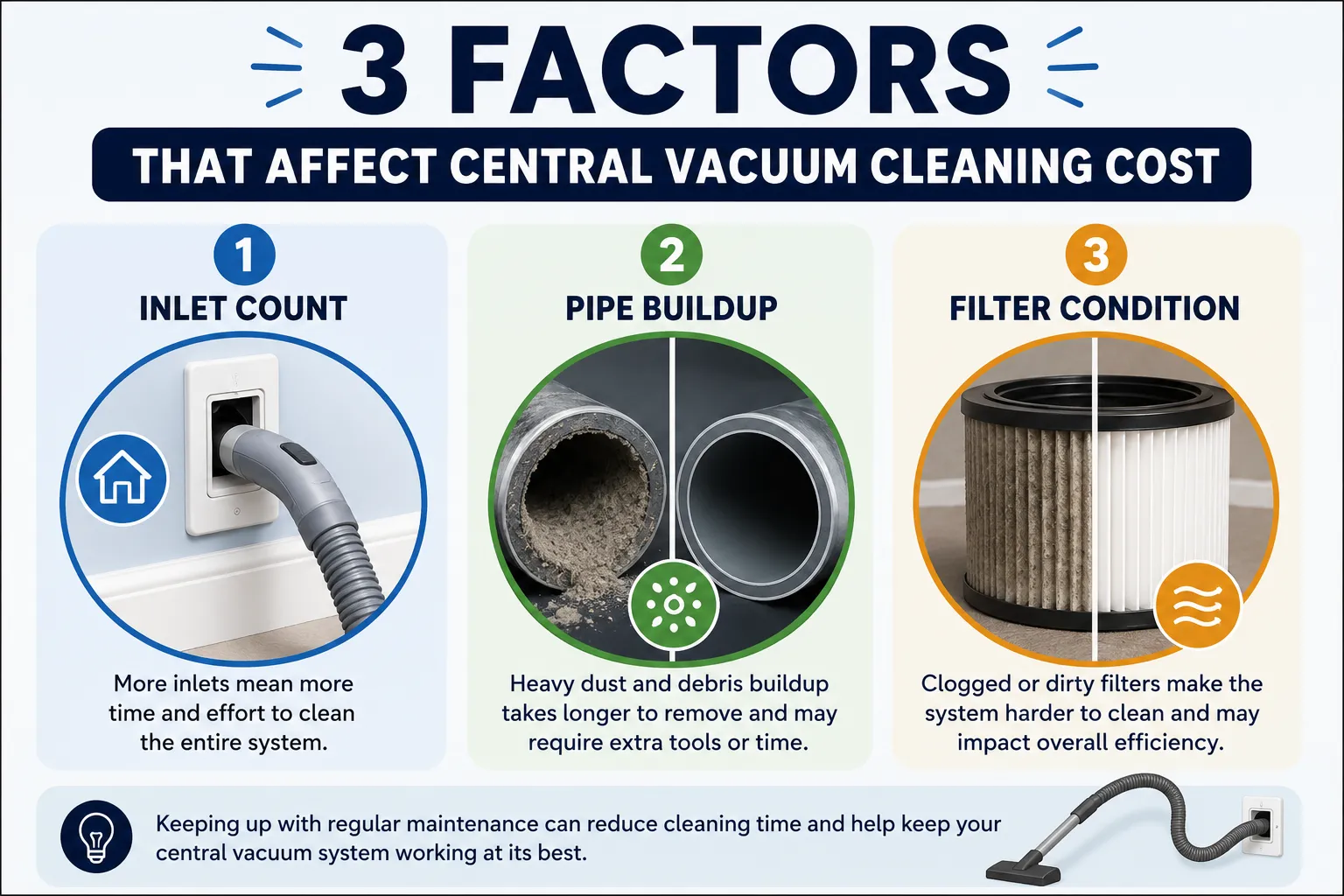
Quick Answer: Your central vacuum cleaner cost depends on your system’s inlet count, pipe buildup, and filter condition. One flat number rarely fits every home. Therefore, Dun-Rite provides a flat, itemized price after a technician physically inspects your system. We never bill by the hour or guess your quote over the phone.
In this post:
What Actually Moves the Price on a Central Vac Cleaning
Three main factors determine your final central vacuum cleaner cost. These factors do not carry the same weight.
- Inlet count. Every inlet connects to a branch of piping that we must clear. Systems range from a few inlets in a bungalow to over a dozen in a large home.
- Buildup severity. A regularly maintained system clears much faster than a neglected one. This factor usually causes the biggest price swing.
- Filter condition. A simply dirty filter makes for a quick fix. However, a compacted or damaged filter completely changes the scope of the job.
We quote central vac systems across Yorkton and surrounding towns every week. Homeowners often assume inlet count alone dictates the final price. In reality, buildup severity drives the cost the most. Two houses with identical inlet counts can yield very different quotes. It all depends on the time passed since their last cleaning.
Why “Rinsing the Filter” Isn’t the Job We’re Pricing
Many homeowners pull the canister filter, rinse it, and call it maintenance. This habit helps, but it differs completely from professional servicing. Your central vacuum cleaner cost quote covers much more than a basic wash.
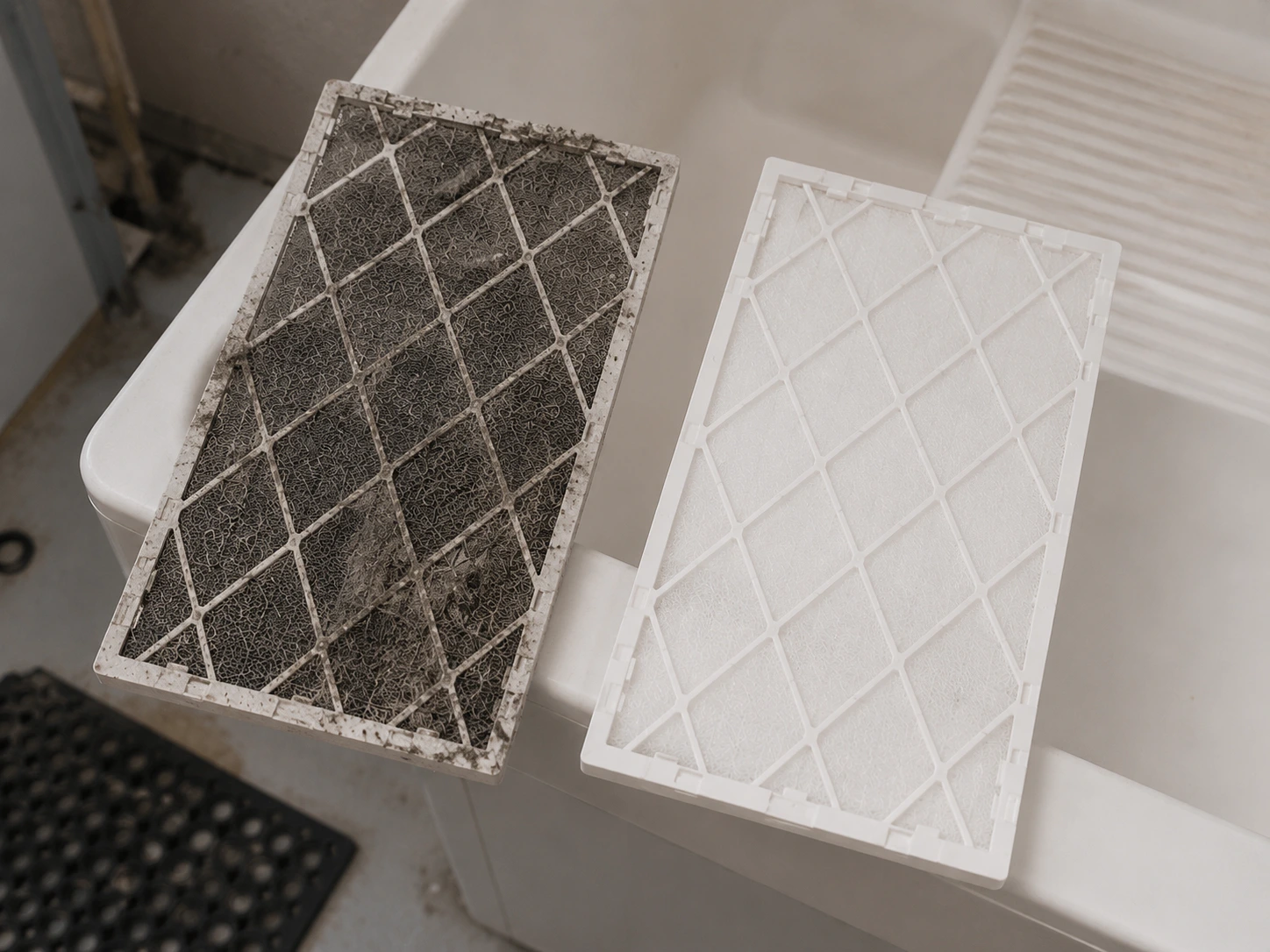
Rinsing the filter only cleans the parts you can see. It ignores the hidden piping network. Debris, fine dust, pet hair, and drywall dust choke these inlet runs over the years. This hidden buildup destroys your suction power. A simple home filter rinse cannot reach these clogs.
This confusion often leads to misunderstood quotes. A customer might expect a cheap filter-rinse price. However, our technician might discover pipes choked with a decade of debris. Clearing that out takes more time and effort. We never use bait-and-switch tactics. We just perform the deeper cleaning the system actually needs.
Did your suction drop recently? We can pinpoint whether you have a filter issue or a piping problem before starting any work. Get a quick assessment and a flat quote — no guesswork required on your end.
Repair Cost vs. Cleaning Cost — Why We Keep Them Separate
People often ask about central vacuum repair cost and central vacuum filter replacement cost. However, this post focuses strictly on cleaning. We separate these costs on purpose. A cleaning visit removes blockages from your system. A repair fixes a broken part, like a cracked inlet or a dead motor. Combining these prices would only confuse you.
Does your system have a specific mechanical fault? Check out our guide to common central vacuum problems. It explains what those warning signs usually mean.
Why Acreage and Older Bungalow Systems Price Differently
Your property type dictates what our technician finds inside your walls. You must understand this factor when estimating your central vacuum cleaner cost.
Older bungalows with original piping follow a predictable pattern. They feature narrow pipe runs and numerous joints. Decades of daily use leave behind massive debris piles at every inlet. Acreage and rural properties introduce different variables. They feature long piping runs between distant inlets. Homeowners also tend to patch or modify these rural systems over the years.
We easily handle both of these situations. Our technicians simply need this information before writing a quote. For this exact reason, we refuse to guess numbers over the phone.
Why We Don’t Post a Flat Number Online
We know that sounds frustrating on a pricing guide. However, a blind, flat number ignores your specific inlet count, buildup, and filter condition. A generic price offers less transparency and zero accuracy. A fake online price will always change once a technician arrives.
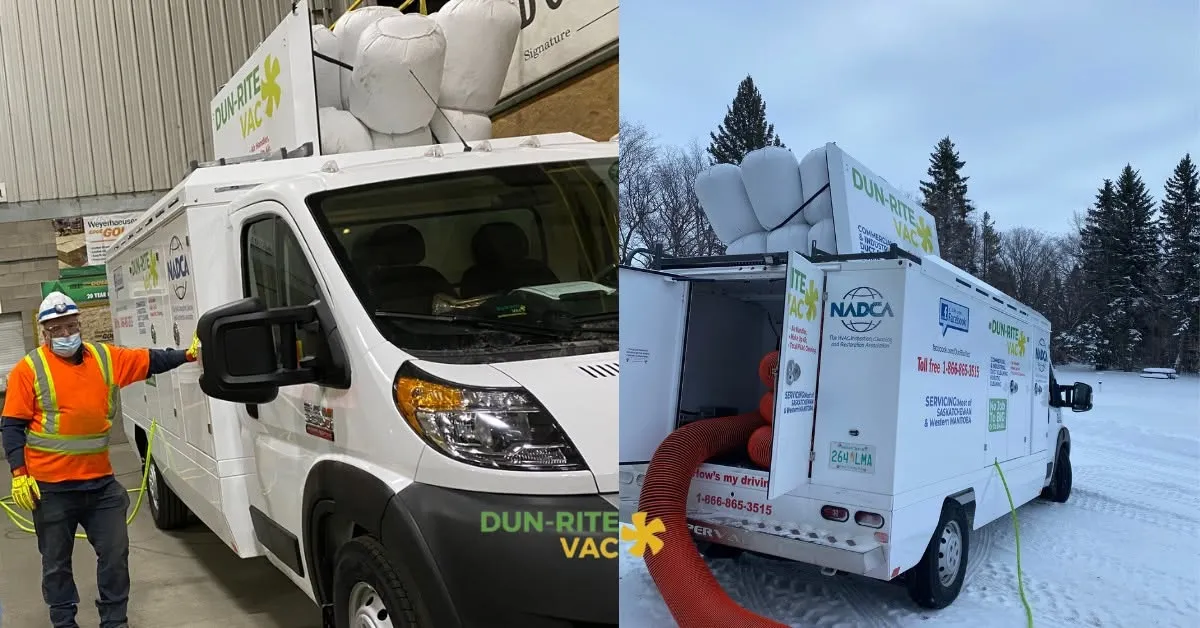
We take a better approach. Our technician assesses your system in person. Next, they provide a flat, itemized price before starting any work. That firm number never changes, regardless of how long the job takes. We reject hourly rates and surprise fees. As a NADCA-certified, ASCS-trained shop, our team has served Saskatchewan for over 27 years. During that time, we have successfully completed more than 50,000 jobs. This strict flat-quote approach applies to our central vac cleaning service and everything else we do.
FAQ
Will the technician give me a price before starting the cleaning?
Yes. The technician assesses your inlet count, buildup, and filter condition on site. Then, they hand you a flat quote before beginning any work.
Does my central vacuum cleaner cost include fixing broken parts?
No. Your central vacuum cleaner cost and repair cost remain strictly separate. A repair fixes a broken component. A cleaning removes clogs and debris. If we find a broken part during our visit, we will notify you immediately. We will quote the repair before starting any extra work.
Does having more inlets always mean a higher cost?
Inlet count plays a role, but it rarely dictates the final price. Buildup severity typically impacts your cost far more than the number of inlets. We can clean a well-maintained, ten-inlet system cheaper than a neglected, three-inlet system.
How often should a central vacuum system be professionally cleaned?
Most systems need a professional cleaning every few years. However, homes with pets or heavy daily use require faster maintenance. Renovation dust also forces early cleanings. Our technician will recommend a custom schedule after inspecting your system.
You Might Also Find This Helpful
Do you want to know your true central vacuum cleaner cost? Reach out to us today. We will provide a flat, no-surprises quote backed by our 100% Satisfaction Guarantee.